
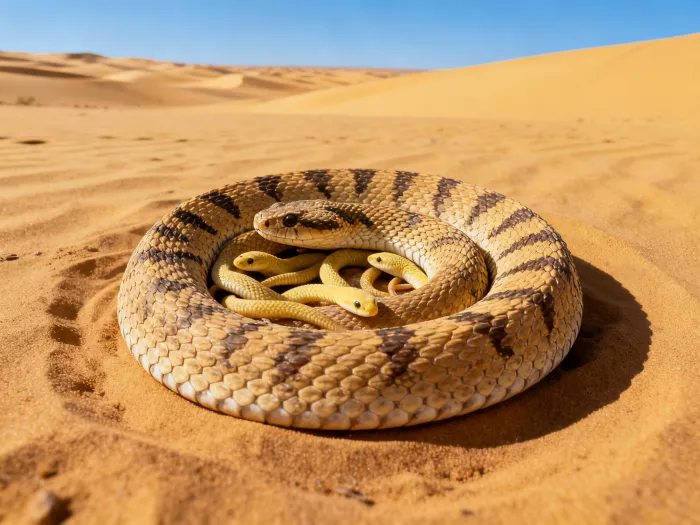
Imagine walking through a rainforest and spotting a snake slithering under a log. You might wonder, “Does this snake lay eggs, or does it give birth to live babies?” It’s a fascinating question that surprises even experienced reptile enthusiasts. Most people picture snakes as egg-layers, much like birds or turtles. But here’s the suspense: Some snakes break the mold and give birth to live young, just like mammals do. This process is called viviparity—a term that might sound complex but simply means “live birth.” Unlocking the secrets of which snakes have live births opens up an amazing world of reptile diversity. In this article, we’ll explore how viviparity works in snakes, why it evolved, and which species are famous for this trait. Don’t miss out—this is a story packed with cool facts and eye-opening analogies!
Understanding Viviparity: The Science Made Simple
So what exactly is viviparity? If you’ve ever seen a dog or a cat have puppies or kittens, you’ve witnessed viviparity in action. Now imagine that happening with snakes! Instead of laying eggs that hatch outside their bodies, some female snakes carry their babies inside until they’re ready to be born. Think of it like carrying groceries in a backpack instead of leaving them on the porch for later—much safer and more convenient!
Snakes reproduce in three main ways:
- Oviparous (egg-laying): The mother lays eggs, and the babies hatch outside.
- Ovoviviparous (egg-live birth): The mother keeps eggs inside her body, and the young hatch internally before being born alive.
- Viviparous (live birth): The mother nourishes the developing babies inside her body and gives birth to live young.
Viviparity is rare among reptiles but has evolved independently many times in snakes. Why? According to research from the University of Sydney (Shine, 1985), giving birth to live young helps snakes survive in cold climates, where eggs might freeze or not develop properly. It’s like wearing a thick winter coat during a blizzard—protective and practical!
Meet the Viviparous Snakes: Species That Give Birth to Live Young
Now for the exciting part—let’s meet some of the superstar snakes that have live births! We’ll highlight their names throughout so you can spot them easily next time you visit a zoo or read about reptiles online.
Boa Constrictors (Boa constrictor)
The boa constrictor is one of the most famous live-bearing snakes. Native to Central and South America, these reptiles are large, powerful, and admired by reptile keepers worldwide. Female boa constrictors give birth to litters ranging from 10 to 64 baby boas—imagine a room suddenly filled with tiny wriggling replicas! According to reptile expert Dr. David Barker, “Boas are amazing mothers—they curl protectively around their newborns for hours after birth.” (Barker & Barker, 1996)
Garter Snakes (Thamnophis sirtalis)
If you’ve ever flipped over rocks near streams in North America, you might have seen garter snakes. These small, slender reptiles are champions of viviparity. Garter snake mothers can have dozens of babies at once! They thrive in cooler climates where egg-laying would be risky.
Sea Snakes (Hydrophiinae)
Here’s a twist—some sea snakes also give birth to live young! Unlike most reptiles that need land for egg-laying, sea snakes such as the yellow-bellied sea snake (Hydrophis platurus) are fully aquatic and never come ashore. Giving birth underwater allows them to populate vast ocean regions without ever setting foot on land.
Rattlesnakes (Crotalus spp.)
Yes—you read that right! Many species of rattlesnake are viviparous. In North America’s deserts and grasslands, rattlesnake mothers give birth to groups of live young each summer. This adaptation helps them survive extreme temperature swings.
Anacondas (Eunectes spp.)
The mighty green anaconda, one of the largest snakes on Earth, also gives birth to live young. These South American giants can produce litters of up to 40 snakelets at a time! According to biologist Jesus Rivas, who studies anacondas in Venezuela, “Live birth gives anacondas a survival edge in flooded forests.” (Rivas et al., 2007)
Other Notable Species
Several other species practice viviparity or ovoviviparity:
- Vipers (such as European adder Vipera berus)
- Water snakes (Nerodia spp.)
- Ribbon snakes (Thamnophis sauritus)
- Red-sided garter snake (Thamnophis sirtalis parietalis)
All these reptiles are stars in their own right when it comes to live births!
Why Do Some Snakes Give Live Birth? Evolutionary Reasons Explained
You might be wondering: Why would some reptiles evolve such a unique way of reproducing? Let’s break it down with an easy analogy.
Imagine you’re baking cookies during winter. If you leave the dough outside on a freezing day, it won’t bake well—or might freeze solid! But if you keep it inside your warm kitchen oven, those cookies will come out perfect every time. That’s similar to why viviparous snakes carry their developing babies inside—a built-in “oven” that protects them from harsh weather.
Researchers like Dr. Rick Shine have shown that climate plays a huge role in snake reproduction. In cold regions or places with unpredictable weather, eggs left outside can be vulnerable to predators or temperature changes. By keeping embryos inside their bodies until birth, female snakes increase the chances that their offspring will survive.
Other advantages include:
- Better control over baby development: Mothers can regulate body temperature by basking in sunlight or seeking shade.
- Increased survival rates: Babies are born fully formed and ready to hunt or hide from danger.
- Flexibility: Viviparous mothers can move around while pregnant instead of guarding nests.
According to international reports on reptile evolution (Blackburn & Stewart, 2011), more than 100 species of snake have independently evolved viviparity—a testament to its effectiveness as a survival strategy.
The Journey from Birth to Independence: How Snake Babies Thrive
Let’s take a closer look at what happens after these remarkable reptiles give birth. Picture this: A boa constrictor mother gently releases her tiny offspring into the world. The baby boas don’t need parental care—they’re equipped from day one with instincts for hunting and hiding.
Unlike mammals that nurse their young for weeks or months, snake babies are independent almost immediately after birth. They slither away into grass or leaf litter, ready for adventure! If you compare them to human babies who need years of care before becoming independent—it’s astonishing how quickly reptile offspring adapt.
Some fun facts from real reptile keepers:
- “My garter snake gave birth during a thunderstorm—the babies scattered everywhere within minutes!” says Sarah L., a hobbyist from Illinois.
- Anaconda babies are known for swimming just hours after being born—a feat few other animals can match!
Live-born baby snakes also benefit from being larger and more developed than hatchlings from eggs. This gives them an edge when facing predators or searching for food right away.
Snake Viviparity Around the World: Regional Differences and Adaptations
Viviparous snakes aren’t spread evenly across all continents—they tend to be most common in areas where environmental challenges make egg-laying risky.
- North America: Garter snakes thrive in cool northern climates; rattlesnake populations flourish across deserts and prairies.
- South America: Anacondas dominate swampy forests; boa constrictors rule tropical jungles.
- Europe: The European adder is one of the continent’s best-known live-bearing vipers.
- Asia: Sea snakes populate warm coastal waters; some Asian pit vipers practice ovoviviparity too.
According to global surveys by herpetological societies (International Union for Conservation of Nature—IUCN), climate change may influence which regions favor viviparous species over time.
Regional anecdotes add color:
- In Canada’s Manitoba province, thousands of red-sided garter snakes gather each spring—forming writhing “mating balls” before giving birth later in summer!
- In South America’s Pantanal wetlands, green anaconda mothers must protect themselves from jaguars while carrying dozens of developing babies—a true test of survival!
These stories show how environment shapes both behavior and biology among viviparous reptiles worldwide.
Keeping Viviparous Snakes as Pets: Tips from Experienced Reptile Owners
If you’re thinking about keeping a viviparous snake as a pet—awesome choice! These species often make rewarding companions thanks to their hardy nature and fascinating reproductive habits.
Here’s what real keepers recommend:
- Garter Snakes: Easy for beginners; they adapt well to captivity and breed readily if kept warm year-round.
- Boa Constrictors: Need spacious enclosures due to size; handle gently during pregnancy periods.
- Water Snakes: Require access to water bowls; watch for signs of stress during gestation.
Live births mean you might witness nature’s wonders firsthand—but remember that baby care is minimal compared with mammals. Keepers suggest monitoring pregnant females closely but letting newborns find their own way after arrival.
As always, consult reputable sources like “The Complete Boa Constrictor” by Vincent Russo or seek advice from local herpetological clubs for best practices on reptile husbandry (Russo, 2007).
Don’t forget—ethical sourcing matters! Choose captive-bred animals whenever possible to support conservation efforts while enjoying your pet snake’s unique life cycle.
Conclusion: Celebrate Diversity Among Reptiles—Live Birth Is Just One Awesome Adaptation!
Now you know which snakes have live births—and why this trait is so remarkable among reptiles! Whether it’s boa constrictors ruling tropical forests or garter snakes thriving near your backyard stream, viviparity showcases nature’s ingenuity at every turn. Next time you spot a snake slithering through grass or swimming underwater, pause and wonder about its amazing journey from birth onward. Unlocking these secrets makes us appreciate wildlife—and reminds us how much there still is to learn about our planet’s living treasures!
For readers eager to explore more about reptile reproduction—from egg-layers to live-bearers—the world offers endless surprises just waiting beneath logs and leaves. Stay curious… because every species has its own story worth discovering!
Related topics: