
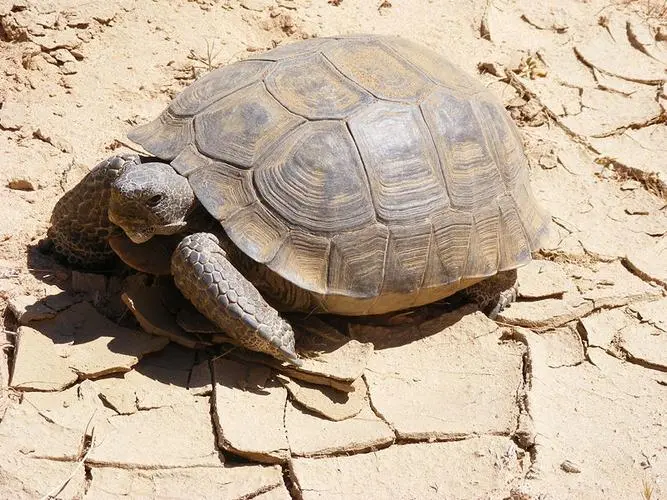
When you first encounter the Hermann’s tortoise (Testudo hermanni), you might be struck by its vibrant, contrasting shell colors and curious behavior. This small to medium-sized reptile is a true icon among European tortoises, easily recognized by its arched carapace adorned with bold yellow and black patterns—think of it as a living mosaic. As a member of the family Testudinidae, Hermann’s tortoise shares many features with other land-dwelling reptiles, yet it possesses unique traits that set it apart within its genus.
Physical Characteristics: Distinctive Shells and Cheek Spots
The shell of a Hermann’s tortoise acts much like a knight’s armor, providing essential protection against predators. Western subspecies (T. h. hermanni) typically display more intense coloration, with their shells showing strong yellow hues contrasting sharply against dark patches. Eastern subspecies (T. h. boettgeri) lean towards browner tones with yellow or greenish highlights and isolated black flecks—imagine the difference between a sunflower and an olive grove. Males can be distinguished by their longer tails ending in a horny spur, while females have shorter, slightly curved tail spikes. The head is often marked by a characteristic yellow fleck on the cheek, which serves as an easy identifier for enthusiasts and researchers alike.
Size Range: From Petite to Robust
Hermann’s tortoises vary in size depending on their subspecies and age. Western individuals rarely exceed 18 cm (7 inches), while eastern ones can reach up to 28 cm (11 inches) and weigh as much as 4 kg (nearly 9 lbs). Some adults remain as small as 7 cm (2.8 inches), making them one of the more diminutive members of the Testudo genus—a feature that helps them navigate dense Mediterranean undergrowth with ease.
Natural Habitat: Mediterranean Marvels
Native to southern Europe, Hermann’s tortoise thrives in regions characterized by mild climates and diverse plant life. Their range spans from eastern Spain through southern France, Italy, Corsica, Sardinia, Sicily, and into the Balkans—including Greece, Turkey, Bulgaria, Romania, Albania, Serbia, Kosovo, North Macedonia, Croatia, Montenegro, and Bosnia-Herzegovina. These reptiles are most commonly found in Mediterranean meadows dotted with shrubs and hedges—imagine sun-dappled landscapes where wildflowers bloom alongside rocky outcrops.
In these habitats, Hermann’s tortoises rely on their keen sense of smell to locate edible plants and navigate back to their nightly shelters—a behavior reminiscent of someone using landmarks to find their way home after sunset. Their daily routine involves basking in the morning sun to warm up before foraging for food; when midday heat becomes intense, they retreat to shaded hollows or thick vegetation for protection.
Ecological Role: Foragers and Seed Dispersers
As herbivores, Hermann’s tortoises consume a wide variety of wildflowers and leafy plants—think of them as nature’s gardeners helping maintain local flora diversity. Occasionally supplementing their diet with fruit or mushrooms found on forest floors adds nutritional variety but must be moderated due to potential toxicity from certain foods like legumes or buttercups.
Conservation Status: Vulnerable Yet Resilient
Currently listed as Vulnerable on the IUCN Red List and regulated under CITES Appendix II\,[1][2] Hermann’s tortoise faces threats from habitat loss and illegal trade. Conservation programs have been implemented across Europe to reintroduce populations into protected areas and reduce risks from traffic—a testament to ongoing efforts by scientists and local communities alike.
These fascinating reptiles not only enrich Mediterranean ecosystems but also captivate herpetologists worldwide with their resilience and adaptability.[3][4] Whether you’re an aspiring reptile keeper or simply curious about European wildlife diversity\, understanding the basic traits and habitat preferences of Hermann’s tortoise is key to appreciating this remarkable species.
Burrowing Behaviors: How and Why Hermann’s Tortoises Dig In
When you first encounter a Hermann’s tortoise (Testudo hermanni), you might notice its slow, deliberate movements and wonder how such a sturdy reptile copes with the challenges of its Mediterranean environment. One of the most fascinating aspects of this species is its burrowing behavior—a trait that not only helps it survive but also reveals much about its natural instincts and ecological needs.
Hermann’s tortoises are well-known among reptile experts for their ability to dig. This behavior is not just a quirky habit; it’s a critical survival strategy. In the wild, especially on islands like Majorca or throughout southern Europe, these tortoises use their strong, clawed limbs to excavate shallow burrows or scrapes beneath dense vegetation, hedges, or old wood. Think of these burrows as cozy hideouts—like a blanket fort you might build at home—offering protection from predators and extreme temperatures. According to the ARKive fact-file and field observations by keepers, Hermann’s tortoises tend to dig in loose, sandy soils where they can easily create a shelter without much effort (ARKive, n.d.).
The reasons behind this digging behavior are multifaceted. First and foremost, burrowing helps regulate body temperature. The Mediterranean sun can be intense during midday, so Hermann’s tortoises retreat to their self-made shelters to avoid overheating. Their burrows maintain cooler temperatures compared to the outside air, functioning much like a natural air conditioner for reptiles. Additionally, these shelters provide moisture retention during dry spells—a crucial factor for tortoises that rely on ambient humidity for hydration.
Burrowing also plays an essential role in hibernation. During winter months, Hermann’s tortoises dig deeper into leaf litter or soft earth to create insulated nests where they can safely lower their metabolic rates and enter a dormant state. This adaptation allows them to survive periods when food is scarce and temperatures drop below their comfort zone. In captivity, keepers often replicate this behavior by providing deep substrate layers where the tortoise can dig in and rest during colder months (Testudo Hermanni Care Guide).
Reproductive activities further highlight the importance of digging. Female Hermann’s tortoises construct flask-shaped nests in soil—sometimes up to 10 cm deep—to lay eggs between May and July. The depth and structure of these nests help protect the developing embryos from predators and environmental fluctuations. Just as humans might carefully tuck away valuables in a safe place, female tortoises instinctively ensure their offspring have the best chance at survival by burying their eggs securely.
Interestingly, not all burrows are created equal; individual tortoises often display unique preferences based on local conditions or personal experience. Some may favor shaded areas under bushes while others opt for open ground near rocks or logs. Keepers report that even captive Hermann’s tortoises will seek out corners of enclosures with softer substrate to dig into—a testament to how deeply ingrained this behavior is within the species.
In summary, burrowing is an essential part of Hermann’s tortoise ecology and daily routine. Whether seeking refuge from heat, preparing for hibernation, or ensuring successful reproduction, Testudo hermanni relies on its digging skills for survival across its vulnerable Mediterranean range.