
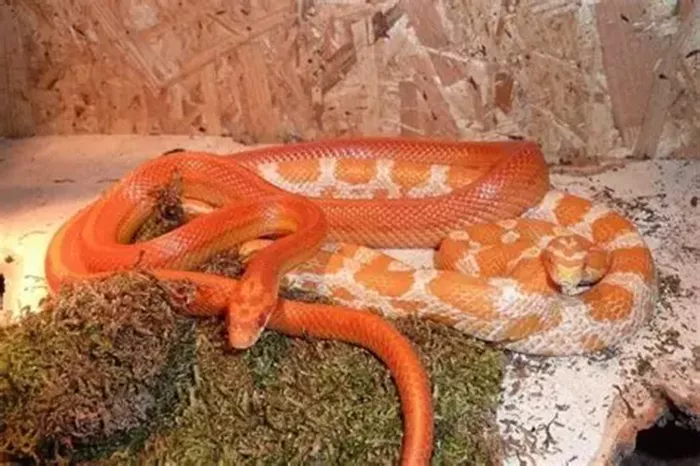
Snakes, in general, have long been regarded as mysterious creatures. Their slithering bodies, hypnotic movements, and ability to blend into their environments create an aura of intrigue. Among the many snake species, corn snakes (Pantherophis guttatus) stand out as one of the most popular pet choices due to their manageable size and docile nature. But beyond their appearances, one question that often arises among snake enthusiasts is: How intelligent are corn snakes?
In this article, we’ll explore the cognitive abilities of corn snakes, the factors that influence their intelligence, and what their behavior tells us about how they interact with the world. From the way they hunt to how they navigate their environment, we’ll dive into the fascinating world of snake intelligence.
Understanding Snake Intelligence: Is It Like Other Animals?
Before we dive deep into the specific intelligence of corn snakes, it’s important to understand how snake intelligence is different from mammals and birds. When you think of intelligence, you might immediately picture a dog or a dolphin solving problems or a crow using tools. However, the cognitive abilities of snakes are shaped by their unique biology and evolutionary needs.
In the case of corn snakes, their intelligence isn’t about solving complex puzzles or learning new tricks, but rather about how they survive and thrive in their environments. Just like how a cat’s intelligence is often judged by its ability to hunt and navigate spaces, a snake’s intelligence is judged by its survival skills—like finding food, avoiding predators, and adapting to its surroundings.
What Is Snake Intelligence Based On?
Unlike mammals, snakes don’t have complex social structures or advanced problem-solving abilities. However, they do display several types of behaviors that suggest they have a form of intelligence, including:
Learning and memory: Snakes can learn from their experiences and remember locations, which is crucial for finding food or avoiding danger.
Foraging strategies: Corn snakes are skilled at hunting and using their environment to find food. They rely heavily on instinct and memory to locate prey and determine the best time to strike.
Spatial awareness: Even without legs, snakes possess an impressive sense of spatial awareness, using their surroundings to help them navigate.
Adaptation to environments: Corn snakes can adapt their behaviors based on their habitats. In the wild, they might alter their hunting strategies or hide in new places depending on the presence of predators or prey.
Hunting Behavior: The Role of Memory and Learning
Corn snakes primarily hunt small mammals, birds, and reptiles, relying on constriction to subdue their prey. But how do they know where to find food, and how do they remember their hunting grounds?
The Power of Smell and Memory
Corn snakes use their Jacobsen’s organ (also known as the vomeronasal organ) to detect chemical cues in the air, which helps them track prey. This sense of smell is incredibly sharp and forms the basis of their hunting behavior. For example, a corn snake may learn to associate certain smells with a particular type of prey, strengthening its ability to hunt successfully in the future.
Interestingly, corn snakes possess a good memory. They can remember the locations where they have found food before, much like a human would remember the best spots for a picnic. If you’ve ever seen a snake return to the same spot over and over, it’s likely because they’ve learned that it’s a good place to find food.
Can Corn Snakes Solve Problems?
While corn snakes don’t engage in complex problem-solving like a dog might, they do exhibit adaptive behaviors. A common example is when a snake comes across an obstacle while hunting. Instead of just giving up, a snake might work around it, finding a new path or a way to climb over the obstacle. This kind of trial-and-error learning is indicative of basic problem-solving skills, although it’s not as advanced as what you would see in higher mammals.
Do Corn Snakes Form Emotional Connections?
Many pet owners wonder if corn snakes, like some other pets, can form emotional bonds with their owners. While it’s difficult to say whether corn snakes experience emotions in the same way humans do, some pet snake owners report that their snakes seem to recognize them. For example, they may behave differently when their owners approach the cage versus when someone else does. This suggests that corn snakes may be able to distinguish between familiar and unfamiliar people, showing a level of social awareness.
However, it’s important to note that this recognition is likely more instinctual and based on scent or familiarity rather than an emotional attachment. Corn snakes are solitary creatures by nature, so their interactions with humans are more about food and safety than companionship.
How Do Corn Snakes Navigate Their World?
One of the most remarkable features of corn snakes’ intelligence is their ability to navigate and adapt to their environment. Snakes don’t have legs or arms, yet they can maneuver through complex environments, from dense underbrush to tight spaces.
The Role of Vision and Vibration Detection
Though corn snakes have relatively poor eyesight compared to other animals, they use their senses of touch and vibration to navigate the world. Their heat-sensing pits, located on the sides of their heads, allow them to detect the body heat of warm-blooded animals. This gives them an edge when hunting, as they can “see” their prey even in complete darkness.
Additionally, corn snakes rely on their ability to sense vibrations in the ground to detect the presence of nearby creatures. This helps them avoid predators and locate potential food sources. In a sense, their environment becomes a map, and they use sensory cues to navigate through it effectively.
Cognitive Limitations of Corn Snakes
As much as we admire the intelligence of corn snakes, they have cognitive limitations. Their brains are relatively small compared to mammals, and they do not have the same type of complex reasoning skills that you might find in more social creatures.
Corn snakes also lack the social intelligence that many other animals possess. They don’t live in groups or engage in complex social behaviors. Their intelligence is primarily focused on survival: finding food, avoiding danger, and reproducing. While they may show basic learning abilities, they do not engage in tasks that require memory and thought over extended periods, like problem-solving challenges seen in some birds or mammals.
Corn Snake Intelligence and Pet Care
Understanding the intelligence of corn snakes can also help you become a better snake owner. By recognizing their needs for mental stimulation and environmental enrichment, you can create a more engaging environment for your pet. For instance, you can:
- Rotate hiding spots to encourage exploration.
- Use scent trails (like placing food in different locations) to engage their natural hunting instincts.
- Provide varied textures in their enclosure to encourage climbing and burrowing.
Fun Fact: Snake Enrichment
Many snake owners use enrichment techniques to keep their pets mentally active. Some even use puzzles that release food, challenging their snake to figure out how to access it. While corn snakes may not understand complex puzzles, they certainly enjoy the mental challenge, which keeps them active and engaged.
Conclusion
In conclusion, corn snakes are fascinating creatures with a unique form of intelligence that’s centered around survival. Their ability to learn from their environment, use memory to locate food, and adapt to different situations shows that intelligence in snakes is very much alive, even if it’s not like the problem-solving skills you might expect from mammals.
As a snake owner, understanding their cognitive abilities will help you provide a more enriching and fulfilling environment for your pet, allowing them to live a happy and healthy life. Whether you’re a seasoned reptile enthusiast or a first-time snake owner, appreciating the intelligence of corn snakes adds to the wonder and respect we have for these remarkable creatures.
Related topics: