
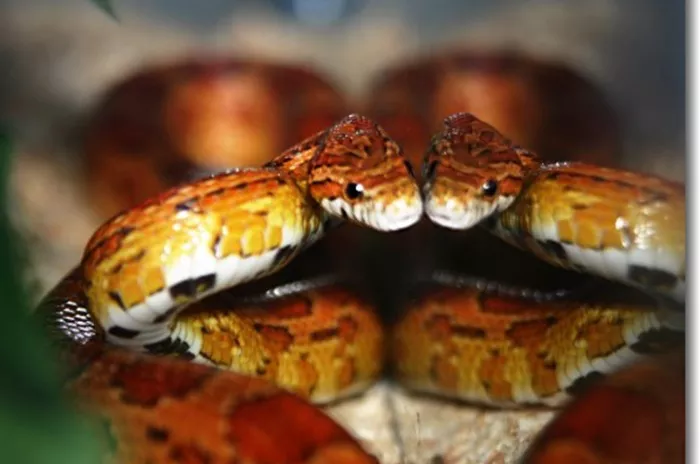
Corn snakes (Pantherophis guttatus) are popular pets in the reptile world, prized for their docile nature and stunning patterns. As a beginner in the reptile-keeping community, you might be asking, “Can corn snakes eat each other?” The thought of your pet eating another can be unsettling, but it’s important to understand their behavior in the wild and captivity. In this article, we’ll explore the factors that can lead to this behavior, debunk myths, and provide guidance on keeping your corn snakes safe and healthy.
What Makes Corn Snakes Unique?
Before diving into the main question, let’s start by understanding what makes corn snakes so special. Corn snakes are non-venomous constrictors native to the southeastern United States. Their name comes from their habit of inhabiting cornfields, where they help control rodent populations.
Corn snakes, like most reptiles, are solitary creatures. This means that, unlike social mammals, they don’t thrive in groups and are typically territorial. Understanding this basic trait is key when examining their behavior around each other.
Do Corn Snakes Eat Each Other in the Wild?
In the wild, corn snakes are primarily carnivores, feeding on small mammals, birds, and reptiles. But what about their own kind? While it might seem surprising, cannibalism is not entirely unheard of in the reptile world. However, it’s not a common occurrence among corn snakes in the wild.
Cannibalism can happen, but it is typically driven by circumstances such as scarcity of food, stress, or competition. In most cases, corn snakes will avoid interactions with other snakes unless they are mating or defending themselves.
To give you a better idea, imagine two snakes coming across each other in the wild—one might see the other as a potential threat, or worse, a potential meal if food is scarce. However, such instances are rare because corn snakes are usually capable of hunting small prey without needing to resort to eating their own kind.
What Happens in Captivity? Can They Eat Each Other?
When it comes to keeping corn snakes in captivity, the risk of one snake eating another is slightly higher. This is especially true if snakes are housed together in the same enclosure. However, let’s make it clear—corn snakes are generally not social animals, and their territorial nature often makes them more inclined to fight than to live peacefully in a group.
The risk of cannibalism increases in two primary scenarios:
Overcrowding: When there are too many snakes in one enclosure, they might feel threatened or stressed, which can lead to fights and, in extreme cases, one snake attempting to eat another.
Mismatched Sizes: If one snake is significantly smaller than the other, the larger snake may view the smaller one as potential prey, especially during feeding time. In these situations, a snake may attempt to constrict and eat the smaller one.
How to Prevent Cannibalism in Captivity?
As a responsible snake owner, you’ll want to make sure your corn snakes are safe and comfortable in their enclosure. Here are a few tips to prevent cannibalism:
1. Keep Snakes Alone
Corn snakes are solitary creatures by nature. Unless you’re specifically breeding them, it’s best to house them individually. This minimizes stress, territorial disputes, and the chance of one snake eating another.
2. Ensure Proper Sizing
Make sure that the snakes in your care are similar in size. Avoid keeping smaller juveniles with larger adults. If your snakes are different sizes, it’s better to house them separately.
3. Provide Adequate Space
Corn snakes need plenty of room to roam and explore. An overcrowded enclosure can lead to stress, which might trigger aggressive behavior. Give each snake its own territory to avoid conflict.
4. Monitor Feeding Times
If you have multiple snakes, feed them in separate areas. This ensures that one snake doesn’t feel threatened by the others during feeding time. Additionally, make sure each snake gets its own portion of food and is not competing for resources.
Can Stress Cause Corn Snakes to Eat Each Other?
Absolutely. Stress is one of the leading causes of aggressive or abnormal behavior in corn snakes. Snakes can become stressed for many reasons, including overcrowding, improper temperature, or even changes in their environment. Stress can also make them more likely to attack and consume another snake if they perceive it as a threat or if they’re simply looking for a way to relieve that stress.
To give you a relatable example: Imagine you’re feeling cramped in a small space with limited resources. You might become irritable, and your ability to interact with others might deteriorate. The same concept applies to corn snakes.
What Are the Signs of Stress in Corn Snakes?
As a responsible owner, it’s essential to spot the signs of stress early. Here are a few things to look for:
Aggressive Behavior: If your corn snake is hissing, striking, or constantly hiding, it may be stressed.
Refusal to Eat: A stressed corn snake might stop eating, or worse, become more aggressive toward its enclosure mates.
Frequent Shedding: Excessive or problematic shedding could be a sign that your snake is under stress.
Restlessness: Constantly moving or trying to escape the enclosure can indicate anxiety in your snake.
Real-Life Story: A Corn Snake Owner’s Experience
Meet Lisa, a first-time snake owner. She had two young corn snakes, Timmy and Tina, housed together in the same enclosure. Everything seemed fine until she noticed that Tina had become lethargic, and Timmy seemed overly aggressive. After a careful inspection, Lisa realized that Timmy was significantly larger and had been harassing Tina. She immediately separated the snakes into individual enclosures, and Tina seemed to relax, returning to her normal self.
Lisa’s story is a perfect example of how stress and size differences can lead to conflict among corn snakes. By understanding these behavioral traits and acting quickly, Lisa was able to avoid a potential disaster.
Conclusion
In summary, while corn snakes have the potential to eat each other, it’s not common behavior. As long as you provide them with proper care, individual space, and the right environment, you’ll minimize the chances of this happening. Stress, overcrowding, and mismatched sizes are the main factors that can lead to corn snakes exhibiting cannibalistic behavior, so it’s essential to ensure that your snakes are well-fed, housed separately, and provided with a stress-free environment.
Related topics: