
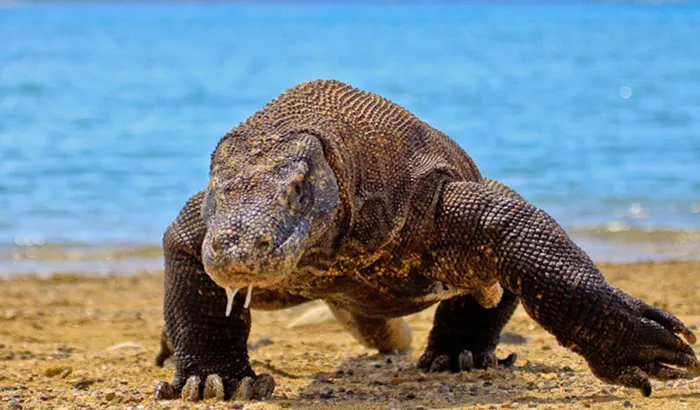
The Komodo dragon, one of the most iconic and feared reptiles on Earth, has sparked both fascination and fear among people for centuries. Known for their enormous size, razor-sharp teeth, and intimidating appearance, these creatures often inspire the question: Are Komodo dragons aggressive?
In this article, we’ll dive deep into this question, uncovering the facts about Komodo dragons’ behavior, how they interact with their environment, and what triggers their aggression. Whether you’re a reptile enthusiast or someone curious about this prehistoric predator, you’ll find the answers right here. So, let’s unlock the mystery of the Komodo dragon’s temperament and explore how these animals truly behave in the wild.
Introduction: The Komodo Dragon – A Legendary Predator
Komodo dragons (scientific name Varanus komodoensis) are the largest living lizards, and they hail from the islands of Indonesia, including Komodo Island, which gives them their name. These reptiles can grow up to 10 feet long and weigh over 150 pounds, making them quite an impressive sight.
The Komodo dragon’s fearsome reputation comes from their predatory skills. They are known to hunt and ambush their prey, which includes large animals like deer, wild boars, and even water buffalo. But beyond their hunting abilities, Komodo dragons have a unique defense mechanism that adds to their aggressive image—their venom.
However, not all Komodo dragons are aggressive. In fact, their behavior can vary significantly based on a range of factors, from environmental conditions to their individual temperament.
The Nature of Komodo Dragon Aggression
Natural Predators, Not Mindless Killers
While it’s tempting to think of Komodo dragons as constantly on the attack, the reality is more nuanced. Komodo dragons are opportunistic hunters, meaning they don’t hunt all the time, nor do they attack without reason.
Aggression in Komodo dragons is generally triggered by the need for food, territorial disputes, or mating competition. For example, when a Komodo dragon is hungry, it will become more focused and aggressive in its pursuit of prey. In these moments, their hunting strategy often involves stalking and ambushing rather than chasing.
Interestingly, Komodo dragons are not known to hunt in groups. They are solitary hunters, relying on stealth and patience to overpower their prey. In fact, their hunting style is much like that of a lion waiting to ambush its prey from the tall grasses, ready to strike when the time is right.
Territorial Aggression
Just like many other animals, Komodo dragons are territorial creatures. They mark their territory with scent glands located near their tail and will defend it against intruders. If another dragon enters their territory, especially one of a similar size or higher status, it can lead to intense fights. These fights often involve powerful bites and fierce tail swings, leaving both dragons with visible scars from these territorial battles.
Interestingly, young Komodo dragons are known to be more aggressive toward each other. As juveniles, they need to establish their position in the hierarchy of the dragon community, which may lead to more frequent skirmishes compared to adults. Older dragons are often more focused on maintaining their territory and can be less inclined to engage in unnecessary fights.
Aggression in Mating Season
Like many reptiles, Komodo dragons experience heightened aggression during mating season. Male dragons often engage in physical contests, using their massive size and strength to assert dominance over females. This type of aggression can sometimes result in severe injuries, as the dragons wrestle and bite each other to gain access to a mate.
Mating rituals can sometimes be violent, but this aggression is mostly directed toward other males rather than females. Once a male has successfully won a mate, he will often stay with her for a period to protect her from rivals.
The Myth of Komodo Dragon Venom
You might have heard that Komodo dragons have venomous bites, and while this is partially true, it’s important to clarify how this venom works.
Komodo dragons have glands in their mouths that secrete a toxic substance that can cause blood loss, shock, and even paralysis in their prey. When they bite an animal, this venom is introduced into the wound, and the effect is not immediate. The prey usually manages to escape initially, but after a few hours, the venom weakens the animal’s ability to escape, causing it to become an easy target for the Komodo dragon.
However, not every bite from a Komodo dragon results in death. In fact, the venom doesn’t always work instantly—it takes time to take full effect, which is why Komodo dragons are also known for following their prey over long distances. They have an incredibly strong sense of smell and can track down wounded animals from miles away.
How Venom Affects Aggression
The venom adds an interesting layer to the Komodo dragon’s aggression. When a Komodo dragon is engaged in a fight or a hunt, the venom is not the primary cause of its aggression—it’s just an additional tool to subdue its prey or rival. This means that while their bite can be deadly, their aggression is often driven by hunger, territory, or competition, not a desire to inject venom into everything they encounter.
What Triggers a Komodo Dragon’s Aggression?
Hunger and Hunting
The most common cause of aggression in Komodo dragons is hunger. Komodo dragons are opportunistic feeders, meaning they will eat anything they can overpower. When food is scarce, they become more aggressive in their hunt. However, they don’t constantly hunt for food. They often scavenge the carcasses of larger animals, which can lead to a more passive form of aggression when other animals attempt to claim the same food.
Protection of Young
Komodo dragons are also protective of their offspring, which can lead to aggression if a perceived threat comes too close. Females lay their eggs in burrows, and both parents typically stay away from their nests after the eggs are laid. However, if they sense any danger to the nest, they will react aggressively to protect the eggs and young hatchlings.
Stress and Habitat
Stress can also be a significant factor that leads to aggression in Komodo dragons. Like many animals, Komodo dragons become more irritable when their environment changes, especially when they are placed in captivity. Factors like a cramped living space, unfamiliar surroundings, or a lack of food can make Komodo dragons more aggressive and prone to defensive behaviors.
Are Komodo Dragons Dangerous to Humans?
While Komodo dragons are capable of inflicting serious harm, attacks on humans are rare. In the wild, Komodo dragons tend to avoid human contact, as they see humans as too large to be prey. However, attacks can occur if the dragon feels threatened or provoked.
Most incidents of Komodo dragon aggression toward humans have occurred when the animal is cornered or startled. For instance, when a Komodo dragon feels that its territory is being invaded, or if it is approached too closely, it may attack out of fear.
In the wild, tourists are often warned to maintain a safe distance from these animals. Although they can move quickly when provoked, they are not inherently aggressive towards humans unless directly threatened.
Can Komodo Dragons Be Tamed?
Due to their size, strength, and natural instincts, taming a Komodo dragon is not practical or advisable. These reptiles are not domesticated, and even in controlled environments, they maintain their wild instincts. As much as we might admire their power and size, it’s important to remember that they are still wild animals with behaviors that should be respected.
Some zoos or wildlife sanctuaries may be able to manage Komodo dragons in captivity, but even then, they are kept in controlled environments designed to mimic their natural habitats.
Conclusion
Komodo dragons are not the mindless killers they are often portrayed to be. While they certainly have the potential for aggression, it is usually triggered by hunger, territorial disputes, or mating competition. In the wild, they prefer to keep to themselves, only becoming aggressive when necessary to secure food or defend their territory.
Understanding the Komodo dragon’s natural behavior helps us appreciate these remarkable reptiles for their intelligence and adaptability, rather than fearing them without reason. Remember, like all wild animals, they are not inherently malicious but are simply following their instincts to survive and thrive.
Related topics: