
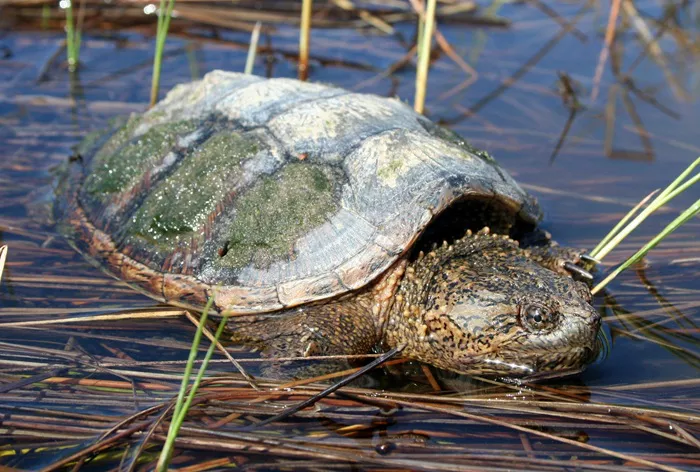
Snapping turtles are among the most interesting and often misunderstood creatures in the reptile world. If you’ve ever encountered one, you might have been startled by the hissing sound they make. But what’s the real reason behind this behavior? Why do snapping turtles hiss? In this article, we’ll explore the fascinating world of snapping turtles and uncover the truth behind their hissing, why they do it, and what it really means for their survival and communication.
Snapping turtles, known for their large size and powerful bite, are often considered “aggressive.” But this reputation comes mostly from misunderstanding their behavior. The hiss of a snapping turtle isn’t a random noise—it’s a vital part of their communication, defense mechanism, and survival strategies. In this article, we will break down why these reptiles hiss, what it signifies, and how their hissing behavior fits into their lifestyle.
Introduction to Snapping Turtles
Before we dive into why snapping turtles hiss, let’s first understand a little about these reptiles. The snapping turtle is a species that belongs to the family Emydidae, which consists of hard-shelled freshwater turtles. They are commonly found in North America, primarily in ponds, lakes, rivers, and swamps.
These turtles are easily recognized by their rugged appearance, with a large, rough shell, and a long tail. There are two main species: the Common Snapping Turtle (Chelydra serpentina) and the Alligator Snapping Turtle (Macrochelys temminckii). Both species share similar behavior, but the alligator snapping turtle, with its worm-like tongue, is often considered the more aggressive of the two. These turtles can grow quite large, with some reaching over 200 pounds in weight!
So, when a turtle hisses, does it mean it’s angry? Let’s find out!
The Physiology Behind Hissing
When a snapping turtle hisses, it’s not like the loud, sharp hiss you hear from a cat or snake. The sound produced by a snapping turtle is more of a wheezing, air-expelling noise. This sound is created when the turtle rapidly exhales through its glottis, a part of its throat. The glottis is responsible for the movement of air in and out of the turtle’s lungs, and in this case, it’s used to expel air quickly when the turtle feels threatened or startled.
But here’s the catch—turtles are air-breathers, and they rely on their lungs to take in oxygen. When they feel threatened, they might hiss to make themselves seem bigger, more intimidating, or to simply warn off the danger. It’s like when you puff out your chest to look more intimidating in a tense situation—it’s a display of strength.
Why Do Snapping Turtles Hiss?
1. A Defense Mechanism
The primary reason snapping turtles hiss is to defend themselves. When a turtle is cornered or feels threatened, it will make this hissing sound to warn potential predators or threats to back off. This is part of the turtle’s defense mechanism.
Imagine you’re walking through the forest, and you suddenly come across a big, tough-looking turtle. If it feels that you’re getting too close, it might hiss to let you know it’s ready to defend itself. Just like how some animals might growl or bark when they’re trying to protect their territory, the hissing turtle is sending a clear signal: “Stay away!”
2. To Communicate Aggression
Snapping turtles are known for their aggressive behavior, particularly when they feel cornered. They are not typically social animals, and the hissing sound they make can also indicate that they’re ready to fight if necessary. This is particularly true for Common Snapping Turtles. These turtles are known to become agitated when provoked and will often try to bite if they feel threatened. The hissing sound is a warning—letting you know that their next move might be a sharp bite.
When they hiss, it’s like a prelude to a warning shot. They’re telling you, “I’m not afraid to strike back.” This behavior is especially important in their survival, as they often share their habitat with larger predators that might not think twice about attacking them.
3. A Sign of Stress or Fear
Apart from defense and aggression, hissing can also be a sign of stress or fear. Snapping turtles, especially those in captivity, may hiss when they feel trapped or unable to escape from a situation. If a turtle is being handled too roughly or is placed in a stressful environment, it might hiss out of anxiety.
In the wild, if a snapping turtle feels that there’s no escape from danger, it might use the hiss as an instinctive response. It’s a bit like how some people might shout or scream when they feel trapped or frightened.
The Role of Hissing in Snapping Turtle Behavior
Hissing plays a key role in the snapping turtle’s overall behavior and survival strategy. Here are a few other things the hiss might signal:
1. Hissing as a Warning Signal to Other Animals
In the wild, other creatures may not always be aware of a snapping turtle’s presence. By hissing, the turtle is making sure that potential threats know it’s around. This warning can deter larger predators that might otherwise try to sneak up on the turtle.
Interestingly, hissing can also help a turtle establish its territory. It’s like an invisible boundary—a signal to other creatures that this turtle’s space is not to be intruded upon.
2. As a Response to Pain or Discomfort
Turtles are not immune to injury. If a snapping turtle is hurt or feels unwell, it may hiss as a response to the pain or discomfort it’s experiencing. Just like a human might groan or make sounds when they’re hurt, a turtle’s hiss can reflect physical distress.
3. Hissing in Mating Behavior
Hissing can also be a part of a turtle’s mating ritual, though it’s not as commonly observed in this context as it is in defensive situations. Male snapping turtles may hiss during courtship to assert dominance or to communicate with females. It’s like a display of confidence, signaling that they are strong enough to handle potential challenges.
What Happens After the Hiss?
After a snapping turtle hisses, what comes next depends on the situation. If the threat is not immediate, the turtle may retreat into its shell or attempt to swim away. If the threat persists, however, the turtle may become more aggressive and try to bite or strike.
Interestingly, snapping turtles are capable of both land and water combat. When they feel threatened on land, they can launch themselves into the water, where they are more comfortable and can escape potential dangers.
Real-Life Stories: Snapping Turtles in the Wild
In the wild, snapping turtles often encounter all kinds of situations that provoke their hissing. One fascinating example comes from a wildlife photographer who captured a snapping turtle’s reaction when a fox tried to get too close. The photographer noted that the turtle hissed loudly, and the fox, startled by the sound, retreated immediately. It was an awesome example of how effective hissing can be in protecting these turtles from predators.
In captivity, snapping turtles sometimes hiss at their owners when they’re not happy with being handled. Reptile enthusiasts often share stories of their turtles making hissing noises whenever they’re put into a tank with another turtle. These hissing episodes are usually followed by the turtles trying to assert dominance over each other.
Conclusion
To wrap things up, the hiss of a snapping turtle is a multi-purpose tool that helps the creature protect itself, communicate aggression, and express stress or fear. It’s a natural response that serves several important functions in the life of this fascinating reptile. Whether in the wild or in captivity, the hissing sound is a signal that shouldn’t be ignored, as it is an integral part of their survival strategy.
Next time you hear a snapping turtle hiss, you’ll know exactly why. Whether it’s a warning, a display of aggression, or a sign of distress, the hissing sound is just one of the many ways these incredible reptiles make their presence known.
Related topics: