
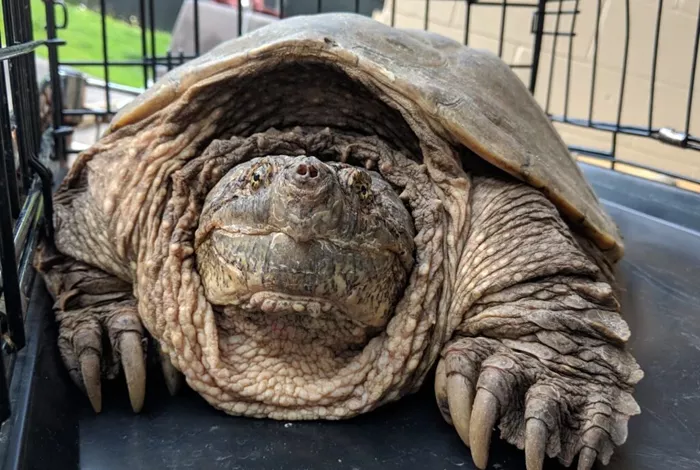
When you think of turtles, you probably imagine a slow-moving creature with a hard shell, swimming in calm ponds or basking in the sun. But what about their reproduction? Do snapping turtles, those tough, bitey reptiles, have a placenta, much like mammals? This is a question that can baffle both seasoned herpetologists and casual reptile enthusiasts alike. In this article, we’ll dive deep into the fascinating world of snapping turtle biology, unraveling the mystery of how these ancient creatures reproduce and whether a placenta is part of the process.
Let’s cut to the chase—No, snapping turtles do not have a placenta. However, the way they reproduce might still surprise you. While mammals rely on placentas to nourish their unborn young, snapping turtles, like all reptiles, have a very different method. To understand this better, let’s explore reptilian reproduction, the role of eggs in a turtle’s life cycle, and why placentas are absent from this process.
What is a Placenta and Why Do Mammals Have One?
Before we can fully understand why snapping turtles don’t have a placenta, let’s first explore what a placenta actually is. In simple terms, a placenta is an organ found in mammals, including humans, that connects the mother to the developing fetus. It allows nutrients and oxygen to flow to the baby and also removes waste products from its blood. Think of it like a “lifeline” that ensures the baby is well-fed and healthy during its development in the womb.
For example, when a human mother is pregnant, the placenta is the structure that forms inside the uterus to provide essential support for the developing baby. It is connected to the baby via the umbilical cord and is responsible for the baby’s growth until birth. The placenta also acts as a filter to keep harmful substances away from the developing fetus.
In the case of mammals, this kind of internal development is vital. However, reptiles like snapping turtles follow a completely different reproductive strategy. They don’t have the luxury of an internal life-support system like mammals do. Instead, they rely on external means for nurturing their offspring.
Snapping Turtles: Reptile Reproduction 101
Snapping turtles belong to a class of animals called reptiles, which includes alligators, snakes, and lizards. Unlike mammals, reptiles lay eggs that develop and hatch outside of their bodies. This means that, instead of carrying young in a womb, reptiles lay fertilized eggs that incubate in a safe, warm environment until they hatch.
For snapping turtles, the process begins when a female lays her eggs. The female snapping turtle will typically lay 20 to 40 eggs in a single clutch, depending on her size and age. She buries them in soft, sandy soil or loose dirt, where the eggs are left to incubate under natural conditions. Unlike mammals, there is no direct contact between the mother and the embryos during development.
The Absence of a Placenta in Snapping Turtles
Unlike mammals, snapping turtles do not develop their young internally. Instead, they rely on the environment to nurture the eggs until hatching. This is where the key difference between reptiles and mammals comes into play. Reptiles like snapping turtles have evolved to lay eggs outside their bodies, where the young develop in a form of “self-sufficiency,” relying on the nutrients stored within the egg yolk.
Without the need for a placenta, the snapping turtle embryo is fully self-contained inside its egg. The yolk provides the necessary nourishment to the growing turtle, while the eggshell serves as a protective barrier against the outside world. Temperature and humidity are the main factors that influence how quickly the eggs hatch, and if conditions are right, the baby turtles will emerge and begin their life outside the egg.
How Do Reptiles Take Care of Their Eggs?
Now, you might be wondering—if the baby snapping turtle develops completely outside the mother’s body, how does it get everything it needs to survive? Well, this is where the egg itself plays an important role. Inside the egg, the developing turtle is surrounded by a nutrient-rich substance known as yolk. This yolk provides the developing embryo with essential nutrients, much like how a seed relies on stored energy before it sprouts into a plant.
Just like a chick hatches from an egg, the baby snapping turtle hatches from its egg and is fully independent from the moment it breaks free. The yolk is the ultimate life support system, not a placenta. There is no direct exchange of nutrients or oxygen from the mother to the baby like there is in mammals.
Comparing Reptilian and Mammalian Development
Let’s take a moment to compare mammalian and reptilian reproduction to make it clearer. Imagine that mammals are like gardeners tending to a plant inside a greenhouse, while reptiles are like gardeners planting seeds in the ground. The greenhouse (in this analogy, the uterus) provides all the nutrients and protection, while the ground (for reptiles) simply provides the ideal environment for the seed (egg) to grow and thrive.
Here’s a breakdown:
Mammals: The embryo develops inside the mother, where the placenta connects the mother’s body to the embryo. It gets nourishment, oxygen, and waste removal all internally.
Reptiles: The embryo develops in an egg outside the body, relying on the yolk for nourishment. There’s no direct connection to the mother, and once the eggs hatch, the babies are on their own.
Why Don’t Snapping Turtles Have a Placenta?
Now that we’ve explored how snapping turtles reproduce, you might still be wondering, Why don’t they have a placenta? The answer lies in their evolutionary path. Placental reproduction is an adaptation found in mammals—a highly specialized form of reproduction that benefits creatures who give live birth. However, for snapping turtles and other reptiles, laying eggs outside the body allows for a simpler, more energy-efficient method of reproduction.
Furthermore, reptiles have evolved to use the environment as an incubator. The temperature and humidity of the soil, combined with the nutrients in the egg, provide everything a developing turtle needs. Nature has perfected this strategy over millions of years, and the absence of a placenta is simply a feature of how reptiles reproduce.
What Happens After the Eggs Hatch?
Once the snapping turtle eggs hatch, the tiny turtles must dig their way to the surface. At this point, they are fully independent, relying on their instincts to find food and survive. Unlike mammal babies, who require extensive care from their mothers, snapping turtle hatchlings are ready to face the world on their own.
They head straight for water and begin their life as tiny predators, often eating small invertebrates or even plants, depending on their environment. Over time, they’ll grow and eventually reach maturity, continuing the cycle of reproduction that has existed for millions of years.
Fascinating Facts About Snapping Turtle Reproduction
Turtles Are Ancient: Snapping turtles have been around for more than 90 million years, making them true survivors in the world of reptiles.
Temperature-Dependent Sex Determination: The temperature at which snapping turtle eggs incubate determines whether they’ll become males or females. Warmer temperatures tend to produce females, while cooler temperatures produce males.
Independence at Birth: Unlike mammals, which care for their babies, snapping turtle hatchlings are completely independent and can immediately start foraging for food.
Conclusion
In conclusion, snapping turtles, like many reptiles, have evolved to reproduce without a placenta. Instead, they lay eggs, and the developing embryos rely on the yolk for nourishment while incubating outside the mother’s body. While placental reproduction might seem more efficient, reptiles like snapping turtles have perfected their strategy over millions of years to suit their environment.
As you can see, the world of reptilian reproduction is fascinating and full of unique adaptations that allow species to thrive in their environments. The absence of a placenta in snapping turtles is just one of the many incredible differences between reptiles and mammals. By understanding these differences, we gain a deeper appreciation for the amazing diversity of life on Earth.
Related topics: