
When you first hear about blue poison dart frogs, the vibrant colors and their toxic nature might immediately come to mind. But there’s something else that makes these frogs even more intriguing: their behavior. One of the questions that often comes up is whether or not these frogs hibernate. For many amphibians, hibernation or brumation is a natural survival mechanism. But do blue poison dart frogs follow the same pattern? In this article, we will explore the unique habits of these striking creatures and uncover whether they really hibernate, or if their behavior is something entirely different.
The Basics: Understanding Blue Poison Dart Frogs
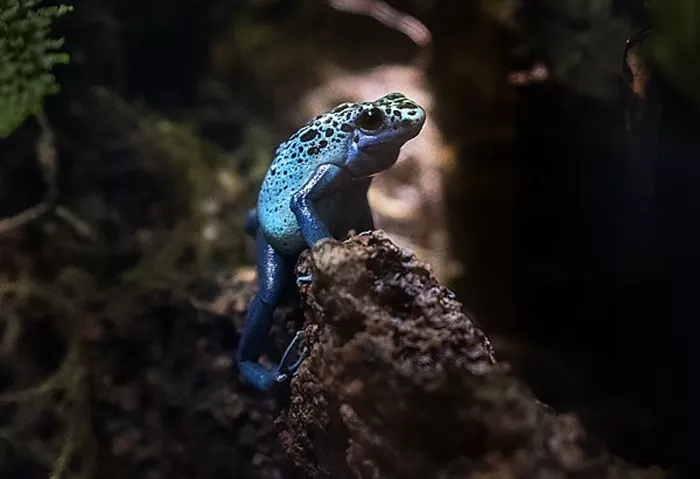
Before diving into the specifics of hibernation, let’s take a closer look at what makes blue poison dart frogs so unique. These frogs, scientifically known as Dendrobates tinctorius “azureus”, are a subspecies of dart frogs found in the tropical rainforests of Suriname, a small country in South America. With their bright blue coloration and distinctive black spots, they are a sight to behold. But their vivid color isn’t just for looks—it serves as a warning to potential predators about their toxicity.
Interestingly, blue poison dart frogs don’t produce their toxins on their own. Instead, they obtain them from the insects they consume, particularly ants and other small invertebrates. This means that dart frogs raised in captivity, away from these specific insects, won’t have the same toxic qualities.
So, what about hibernation? Let’s explore how these frogs survive in their native habitat and whether they undergo any seasonal changes that resemble hibernation.
Do Blue Poison Dart Frogs Hibernate?
Unlike some reptiles and amphibians, blue poison dart frogs do not hibernate in the traditional sense. Hibernation is a process where an animal enters a dormant state, typically in response to cold temperatures, and slows down its metabolic processes to survive harsh conditions. This is common among animals living in temperate climates where winter brings freezing conditions.
But the story is different for blue poison dart frogs. These frogs are native to tropical rainforests where temperatures remain relatively warm year-round, typically between 22°C to 27°C (72°F to 81°F). The weather in this region doesn’t have the drastic seasonal changes that would prompt hibernation.
Instead of hibernating, blue poison dart frogs adjust to the environmental conditions around them. They may become less active during the drier seasons when food is scarcer, but they don’t go into a full dormancy like some other amphibians.
So, What Happens During the Dry Season?
Although they don’t hibernate, blue poison dart frogs do go through periods of reduced activity. This usually happens during the dry season when rainfall is less frequent. In the wild, the frogs’ environment becomes harsher, and food sources like ants and other small insects become harder to find.
During this time, blue poison dart frogs may reduce their activity to conserve energy. It’s kind of like when you reduce your activity on a hot summer day—everything feels a little slower and you’re more likely to stay in one place to avoid the heat. However, unlike true hibernation, these frogs remain active enough to look for food and maintain their territory.
See Also: Blue Poison Dart Frogs: Exploring Their Natural Rainforest Homes
They might not be as visibly active as during the wet season, but they are still present and functional in their environment. This change in behavior is more akin to a slowdown rather than a complete hibernation.
Temperature and Environmental Factors
Temperature plays a significant role in the behavior of many amphibians, including blue poison dart frogs. In colder climates, frogs are known to enter a state of brumation (a similar process to hibernation). However, since the blue poison dart frog‘s native rainforest habitat doesn’t experience cold temperatures, it doesn’t face the need to hibernate or brumate.
Even during the dry season, temperatures in their environment don’t drop low enough to trigger dormancy. Instead, they rely on their ability to regulate their activity levels based on humidity, food availability, and temperature fluctuations.
For those keeping blue poison dart frogs in captivity, this means that you don’t need to worry about providing them with a “winter rest.” However, it’s important to maintain consistent temperatures, as drastic changes can lead to stress and affect their health.
How Do These Frogs Survive in Harsh Conditions?
Though blue poison dart frogs don’t hibernate, they do have a number of survival strategies that allow them to thrive in their environment. Here are a few:
1. Moisture Control
Blue poison dart frogs thrive in moist environments, often living near streams or ponds. In the dry season, they may retreat to damp, shaded areas to avoid dehydration. Their skin is highly permeable, and they absorb moisture from their surroundings. Without sufficient humidity, these frogs could struggle to survive, as they are highly sensitive to changes in moisture levels.
2. Food Source Adaptation
As food becomes scarce during the dry season, the frogs may reduce their activity levels to conserve energy. In some cases, they will even shift their diet, preying on insects that are more active during this time.
3. Territorial Behavior
Blue poison dart frogs are known for their territoriality. They will defend their space against others of the same species, and during periods of reduced activity, they may still engage in territorial calls to ward off intruders. This territorial behavior ensures that they have access to the resources they need to survive.
What Does This Mean for Pet Owners?
If you’re lucky enough to keep a blue poison dart frog as a pet, you won’t have to worry about setting up a hibernation period like you would for some other species of amphibians. However, it’s important to replicate the conditions of their natural habitat as much as possible. This means providing a humid, warm environment with a consistent temperature, simulating their natural cycle of wet and dry seasons.
Even though they won’t hibernate, these frogs do benefit from seasonal changes. You might notice that during the “dry” months in your frog’s enclosure, they may become less active or eat less. This doesn’t mean they are sick—it’s simply their natural response to environmental conditions.
Conclusion
To answer the question directly: no, blue poison dart frogs do not hibernate in the traditional sense. Instead, they adapt to changes in their environment by becoming less active during the dry season when food is scarce. Their ability to thrive in the tropical rainforests without needing to hibernate is one of the many fascinating aspects of their biology.
While they don’t enter a dormant state, they do adjust their behavior to survive, making them highly resilient and capable of navigating the challenges of their environment.
Related topics: