
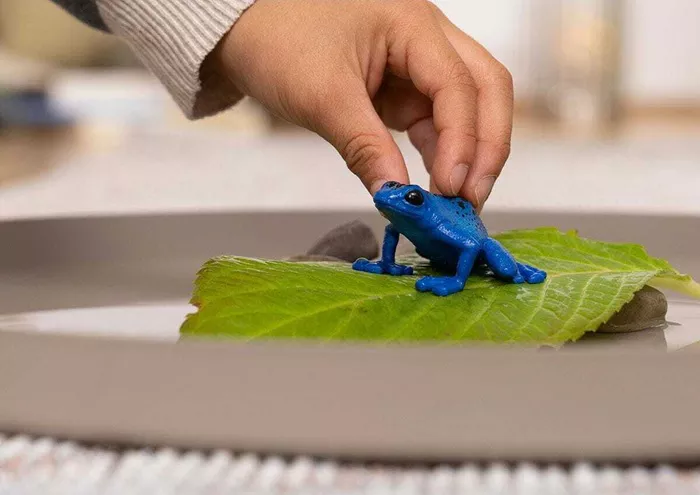
You’ve probably heard of the vibrant, tiny creatures known as blue poison dart frogs. With their striking cobalt-blue skin, they’re a true marvel of nature. But here’s a question that might send a chill down your spine: can these seemingly harmless little frogs actually kill a human?
It might sound like something straight out of a wildlife horror movie, but the truth is more fascinating (and complex) than you might think. In this article, we’ll explore whether the blue poison dart frog really has the potential to harm humans, what makes it so toxic, and how you should approach these colorful amphibians if you ever cross paths with them.
Let’s dive into the world of these exotic creatures and unravel their mysteries together.
What Makes Blue Poison Dart Frogs Dangerous?
The Power of Poison
The blue poison dart frog, scientifically known as Dendrobatoides tinctorius, is famous for the potent toxins it produces. These toxins, specifically batrachotoxins, are among the most powerful naturally occurring poisons. To put it in perspective, batrachotoxin is thousands of times more toxic than cyanide. One gram of it could kill several humans if ingested or absorbed.
But here’s the twist: these frogs don’t produce this poison naturally. They get it from their diet in the wild. In the rainforests of Central and South America, where they thrive, their diet primarily consists of ants, mites, and other small arthropods. These creatures carry alkaloid toxins, which the frogs absorb and store in their skin.
So, if you were to find a blue poison dart frog in the wild, yes, it could be dangerous. But does that mean you’re likely to die if you touch it? Keep reading!
Does the Frog’s Poison Affect Humans?
Now, let’s look at the risk of a human encountering these frogs. While their bright color is a warning to predators in the wild, the frog’s poison is usually not dangerous to humans unless consumed or if the toxins come into contact with open wounds.
Imagine that you’re walking through the rainforest, and you spot one of these gorgeous frogs perched on a leaf. If you were to touch it, you might not feel anything at first. However, if you had an open cut or an abrasion on your skin, the toxins could enter your bloodstream. That said, there have been very few documented cases of humans being harmed by these frogs.
But here’s the kicker: the poison’s strength can vary depending on where the frogs live. Frogs raised in captivity, without access to the same diet as their wild counterparts, typically don’t produce the same levels of toxins. So, a blue poison dart frog in a zoo or a pet shop is much less likely to harm you than one living in the wild.
How Dangerous Are These Frogs Compared to Other Poisonous Creatures?
A Deadly Comparison
To understand how serious the toxicity of blue poison dart frogs really is, let’s compare it to some other poisonous creatures you may have heard of. For instance, the box jellyfish and the inland taipan (a venomous snake from Australia) are often regarded as among the most poisonous creatures on Earth. However, despite its potent toxins, the blue poison dart frog isn’t quite as dangerous as these animals—at least when it comes to humans.
The box jellyfish, for example, can kill a person within minutes if stung. Similarly, the inland taipan can deliver a venomous bite that is fatal in just a few hours. In comparison, a blue poison dart frog’s poison is deadly primarily to smaller creatures that ingest it, not to humans.
However, just because a frog might not be as immediately lethal doesn’t mean we should take it lightly. As with any toxic animal, respect and caution are key.
The Role of Size in Danger
Size plays an important role in toxicity. The blue poison dart frog is very small—about 1 to 2 inches in length. This means that while it has enough poison to kill insects and small animals, the amount it can transfer to a human through mere touch or casual interaction is minimal. It’s like the difference between a wasp sting and being stung by a bullet ant, where the latter is much more likely to cause serious harm due to its venom’s volume.
What Happens if a Human Is Exposed to the Frog’s Poison?
Symptoms of Poisoning
If, hypothetically, a human were to come into direct contact with the poison—say, by handling the frog or rubbing its toxins into an open wound—what could happen?
Symptoms of batrachotoxin poisoning in humans would likely include:
Nausea or vomiting
Sweating
Headache
Muscle weakness
Respiratory issues in extreme cases
However, death from poison dart frog exposure is exceedingly rare and almost unheard of in humans. The most likely scenario is that you’d experience some discomfort but would recover, especially with proper medical attention.
Are There Known Cases of Human Deaths?
There are no recorded human fatalities from exposure to blue poison dart frog toxins. Most poison dart frog-related deaths occur in the wild, where smaller animals or predators ingest or touch the frogs and succumb to the toxins. But even in the wild, humans are rarely at risk of coming into contact with these frogs, as they tend to hide in dense vegetation.
How to Safely Interact with Blue Poison Dart Frogs
Handling Frogs with Care
So, how can you safely observe these frogs if you ever have the chance to see them in person? First and foremost, never attempt to handle a wild blue poison dart frog. They are best appreciated from a distance.
If you happen to visit a facility that houses these frogs, be sure to follow any safety guidelines. Remember, it’s the wild diet that makes them toxic, so captive frogs are typically far less dangerous.
Creating a Safe Habitat at Home
If you’re considering having a blue poison dart frog as a pet (with the proper permits and regulations), keep in mind that in captivity, these frogs don’t usually produce the same amount of toxins. You’ll also need to mimic their natural environment by providing a habitat that includes humidity, heat, and access to a diet of the right insects, all while ensuring that they’re kept out of reach from children and pets.
Conclusion
In conclusion, blue poison dart frogs, while fascinating and definitely toxic, are not a significant threat to human life under normal circumstances. Their toxicity is mostly a defense mechanism against predators in the wild, and as long as you avoid direct contact or ingestion, you’re likely to be just fine. So, don’t let their vibrant colors fool you—they’re far less dangerous than they may first appear.
Whether you’re a reptile enthusiast or just someone interested in the wonders of the natural world, these frogs offer a glimpse into the delicate balance of nature. With respect and care, you can appreciate these remarkable creatures without putting yourself at risk.
Related topics: