
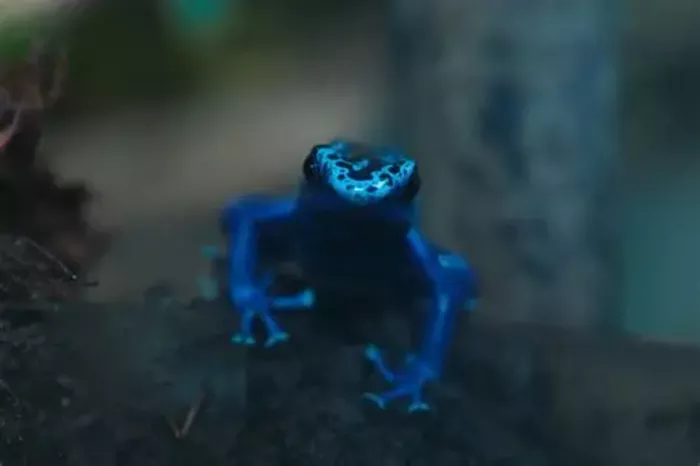
When you think about the dangers in the animal kingdom, you might imagine big predators, like lions or crocodiles. However, smaller creatures, such as the blue poison dart frog, have evolved their own unique ways to stay safe. These tiny amphibians are famous for their striking blue color, but what really sets them apart is the incredible protection they have developed over millions of years. Imagine being small and fragile but still managing to keep almost every predator at bay. Sounds like something out of a superhero movie, doesn’t it? In this article, we’ll dive deep into how this little frog uses its appearance, behavior, and even its toxic secrets to survive in the wild.
By the end of this read, you’ll understand why this tiny creature is often referred to as one of the rainforest’s best-protected species. But first, let’s start with the basics.
The Toxic Power of the Blue Poison Dart Frog
One of the first things that might come to mind when thinking about the blue poison dart frog is its bright blue skin. But this color isn’t just for show. It serves a key purpose in protecting the frog from predators. The blue coloration is a warning signal, also known as aposematism. This is a survival strategy where animals display bright colors to warn potential predators that they are toxic or dangerous to eat.
Why Are They Toxic?
You might be wondering: “How do they produce these toxins?” Well, blue poison dart frogs secrete toxic compounds through their skin. These toxins, primarily batrachotoxin, are incredibly potent. In fact, they are one of the most toxic substances found in nature. To put it simply, if a predator tries to eat a blue poison dart frog, it can get very sick or even die from the poison.
But how do the frogs get these toxins? It’s not actually the frog’s natural ability to produce these poisons—it’s what they consume in their diet. In the wild, these frogs eat small insects like ants and termites, which contain alkaloids (the chemicals responsible for the toxicity). When the frog eats them, the toxins build up in their system. This is why frogs in captivity, who don’t eat the same diet, are not toxic.
A Simple Analogy
Think of it like this: imagine wearing a glowing, bright-colored shirt that says, “I’m dangerous!” in neon lights. Anyone who sees you would immediately back off. This is exactly what the frog does with its blue skin—essentially, it’s saying, “Stay away, I’m not worth the risk!”
Camouflage and Habitat Selection
While the frog’s vibrant color is its primary defense, it also knows how to blend in with its environment when necessary. Although blue poison dart frogs are bright in color, they are often found hiding in thick vegetation where their color can mimic the surroundings. Their habitat choices in the wild, such as dense rainforest floors or near humid leaf litter, make it easier for them to hide from predators when they need to.
The Importance of Location
Blue poison dart frogs are commonly found in tropical rainforests, particularly in Central and South America, where the environment is rich in biodiversity. The dense vegetation offers plenty of places to hide, reducing the likelihood of predators spotting them. Imagine a hidden spot in a jungle where you’re the only one who knows where to hide—this is what the frog does. It doesn’t just rely on its color; it knows how to use its surroundings for extra protection.
Behavioral Defenses
Blue poison dart frogs don’t just rely on their bright color and toxins—they also exhibit some interesting behaviors that help protect them.
Being Fast and Alert
These frogs are quick on their feet. Their agility allows them to hop quickly away from predators when they sense danger. If you’ve ever tried to catch a frog in the wild, you know just how fast they can be! These frogs can leap several feet in a single jump, making it hard for predators to catch them.
Additionally, their keen senses allow them to detect threats long before they get close. Frogs rely heavily on their hearing and vision to stay alert to danger, especially from birds and larger animals that might see them as a tasty meal.
The Frog’s Escape Tactic
If a predator gets too close, the frog will often make a swift leap to escape danger. Think of it as a surprise move: just when you think you’ve got them, they’re gone! This escape tactic is crucial for survival. Even though the frog is toxic, it’s not immune to attacks, and sometimes the only defense it has left is its speed and jumping ability.
Social Behavior and Safety in Numbers
While blue poison dart frogs are generally solitary, they sometimes live in small groups, which can help them feel safer. There’s safety in numbers—this is true for many species, including frogs. Being part of a group reduces the chance of being targeted by predators, as the predator might go for the weakest or easiest target.
The Power of Group Dynamics
Imagine being in a crowd—there’s strength in that, right? The same idea applies to these frogs. When they’re in groups, it’s harder for predators to focus on one frog, which could save them from danger.
Other Interesting Protective Adaptations
Aside from their toxins, bright color, and behavioral tactics, blue poison dart frogs have other unique adaptations that help them survive in the wild.
Mucus as a Barrier
The skin of the blue poison dart frog is covered in a thin layer of mucus, which acts as an additional barrier against predators. This mucus helps in keeping predators at bay, as it can cause irritation to animals that try to handle the frog. Think of it like having a slippery, unpleasant surface that makes grabbing the frog less appealing.
Reproductive Strategies
When it comes to reproduction, the blue poison dart frog is also well-prepared. These frogs lay their eggs in moist, hidden areas, such as the leaves or small puddles in the forest. This protects the eggs from being easily discovered by predators. Once the tadpoles hatch, the mother will often carry them on her back to a safer location, such as a water-filled bromeliad plant, to continue developing.
Why Should We Care About Their Protection?
The blue poison dart frog’s methods of self-defense are not just fascinating—they’re also vital to the species’ survival. Unfortunately, their habitats are increasingly under threat due to deforestation and climate change. Protecting these frogs and understanding their survival strategies is crucial to conserving the delicate balance of the ecosystem they inhabit.
As humans, we can learn a lot from the blue poison dart frog. From its ability to warn off predators with bright colors to its clever use of the environment and group dynamics, this tiny creature is a master of self-preservation. If we look at nature through the lens of these remarkable adaptations, we can gain a greater appreciation for how life evolves in even the most challenging conditions.
Conclusion
The blue poison dart frog is a living example of how life finds ingenious ways to survive. Its color, toxins, behaviors, and clever use of its environment all come together to make it one of the most well-protected animals in the world. As we continue to study and learn from the natural world, the blue poison dart frog offers an incredible case study of adaptation and survival.
Related topics: