
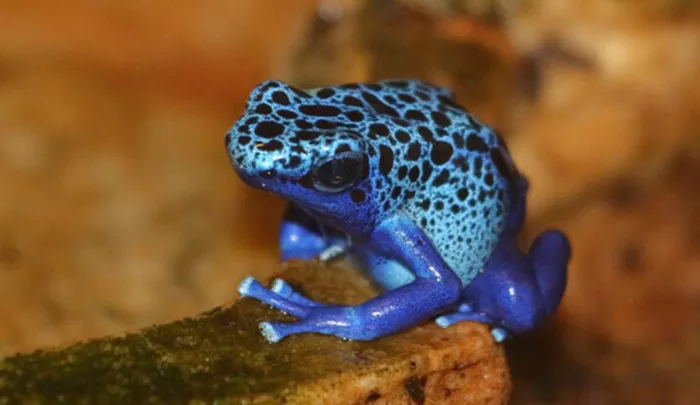
Imagine this: You’re wandering through the lush rainforests of Central America, surrounded by vibrant green leaves and the sounds of exotic creatures. Suddenly, a flash of bright blue catches your eye—a stunning blue poison dart frog, known for its brilliant color and unique toxicity. But have you ever wondered whether this colorful amphibian is a vertebrate or an invertebrate? The answer to this question is not as simple as it might seem. Let’s dive into the world of the blue poison dart frog and explore what makes it a vertebrate, how its biology works, and why it’s so important in the grand scheme of nature.
The Core Question: Vertebrate or Invertebrate?
First things first: what exactly does “vertebrate” and “invertebrate” mean? Let’s break it down into bite-sized pieces. Vertebrates are animals that have a backbone or a spinal column. This group includes animals like humans, dogs, and birds. Invertebrates, on the other hand, lack a backbone and make up a vast majority of animal species, including insects, worms, and jellyfish.
Now, let’s bring it back to our blue poison dart frog. You might have already guessed the answer: it’s a vertebrate! Yes, this colorful little frog belongs to a larger group of animals that includes mammals, birds, and reptiles, all of which share the common feature of a backbone. But why exactly is it classified as a vertebrate? Let’s dig deeper.
A Quick Overview of the Blue Poison Dart Frog
Before we delve into the science, let’s take a moment to appreciate this fascinating creature. The blue poison dart frog (scientific name: Dendrobatoides tinctorius) is native to the tropical rainforests of Central and South America, particularly in regions like Panama, Colombia, and Costa Rica. Known for its striking blue color, this frog is an iconic example of the vibrant wildlife that thrives in these ecosystems.
What makes the blue poison dart frog so special? Its skin contains potent toxins, making it one of the most poisonous creatures in the world—don’t worry, though, these toxins are only dangerous if consumed. Interestingly, frogs born in captivity do not produce these toxins, as they are derived from their natural diet, which includes ants and other small insects.
What Does It Mean to Be a Vertebrate?
Now, let’s return to the crux of the issue—why is the blue poison dart frog a vertebrate? Let’s break it down with a bit more detail:
1. Backbone (Spinal Column)
A vertebrate animal, as we mentioned earlier, has a backbone. The backbone is made up of a series of bones known as vertebrae that form the spinal column. This structure supports the body and houses the spinal cord, which is a vital part of the nervous system. The blue poison dart frog has a spinal column just like humans, elephants, or even birds. This is the first and most important reason why it is classified as a vertebrate.
2. Internal Skeleton
Along with a backbone, vertebrates also have an internal skeleton made of bone or cartilage. This internal skeleton provides support for the body, facilitates movement, and protects vital organs. For the blue poison dart frog, this structure helps it move swiftly across the forest floor and leap from one place to another. Its bones, while not as robust as those of larger vertebrates, play a crucial role in its survival.
3. Nervous System
Vertebrates, including our little frog, have a complex nervous system that is protected by the vertebral column. This system includes a well-developed brain, spinal cord, and nerves that transmit information to and from the body. The presence of this advanced nervous system allows the blue poison dart frog to perform complex behaviors, like finding food or avoiding predators.
How Do Vertebrates Like Frogs Compare to Invertebrates?
So, now that we know the blue poison dart frog is a vertebrate, how does it compare to invertebrates? To help you understand, let’s use an analogy. Think of a vertebrate as a building. The backbone acts as the foundation, holding everything up and providing structure. The invertebrate, on the other hand, can be thought of as a tent. While it can still stand and function, it doesn’t have the same solid support system. Instead, invertebrates rely on different methods to support and protect their bodies.
Let’s take a look at some of the key differences between vertebrates and invertebrates in a simple way:
| Feature | Vertebrates | Invertebrates |
|---|---|---|
| Backbone | Yes, they have a backbone | No, they lack a backbone |
| Skeleton | Internal skeleton made of bone | External skeleton or no skeleton |
| Nervous System | Advanced, centralized nervous system | Less developed nervous system |
| Size | Usually larger and more complex | Often smaller, simpler body systems |
As you can see, vertebrates are generally more complex and have specialized systems for survival. Invertebrates, while incredibly diverse and numerous, have simpler bodies and rely on external structures (like shells) for protection.
The Frog’s Anatomy: Vertebrate Features in Action
Let’s take a deeper look at the anatomical features that classify the blue poison dart frog as a vertebrate. Understanding these features will help solidify why it belongs to the vertebrate group:
1. The Skeleton and Support
The blue poison dart frog’s skeleton, though small, provides internal support for its body. Its backbone consists of vertebrae that support the structure of the frog’s body. This allows the frog to move with agility and strength, whether it’s leaping from branch to branch or swimming through water.
2. Muscle System
The muscles of vertebrates are connected to the skeleton, allowing for efficient movement. The muscles in the blue poison dart frog’s legs are especially strong, enabling it to leap great distances. This muscular system is a key feature of vertebrates, as it works together with the bones to facilitate movement.
3. Respiratory and Circulatory Systems
Frogs, like all vertebrates, have specialized respiratory and circulatory systems. They breathe through their skin and lungs, and their circulatory system is more complex than that of invertebrates. The presence of a heart that pumps blood through arteries and veins is another hallmark of vertebrate anatomy.
See also: How Do Blue Poison Dart Frogs Survive Without Teeth?
The Blue Poison Dart Frog’s Adaptations
Being a vertebrate means that the blue poison dart frog has evolved a number of fascinating adaptations that help it survive in the wild. Let’s look at some of the coolest adaptations of this amazing creature:
1. Toxic Skin
The blue poison dart frog’s bright blue skin serves as a warning to potential predators: “Don’t eat me, I’m toxic!” This toxicity is a defense mechanism against predation. In the wild, the frog’s diet consists of small insects, including ants, which provide it with the chemicals needed to produce the toxic compounds in its skin.
2. Camouflage and Bright Colors
While the blue color may seem like a bright warning signal to predators, it also helps the frog blend in with the brightly colored plants and leaves of its rainforest home. This camouflage provides the frog with some protection, allowing it to hide from potential threats.
3. Efficient Jumping and Swimming
The blue poison dart frog is a fantastic jumper, thanks to its strong and flexible legs. It also has the ability to swim, thanks to its streamlined body and webbed feet. These adaptations make the frog highly mobile, helping it escape predators or catch its prey.
Fun Facts About the Blue Poison Dart Frog
Size: The blue poison dart frog is relatively small, typically measuring only about 1 to 1.5 inches (2.5 to 4 cm) in length.
Diet: These frogs feed primarily on ants, termites, and other small insects that are rich in alkaloid toxins.
Longevity: In the wild, blue poison dart frogs live for about 6 to 10 years, though their lifespan can be shorter in captivity.
Toxicity: The frog’s skin contains batrachotoxin, one of the most potent toxins in the animal kingdom, making it deadly to potential predators.
Conclusion
In summary, the blue poison dart frog is indeed a vertebrate, and its classification is supported by its backbone, internal skeleton, and complex nervous system. While it may be small and often overlooked in the wild, this little amphibian is a prime example of how vertebrates have evolved to thrive in the most diverse and challenging environments on Earth. From its toxic skin to its powerful jumping abilities, the blue poison dart frog is a fascinating creature that never fails to impress.
Related topics: