
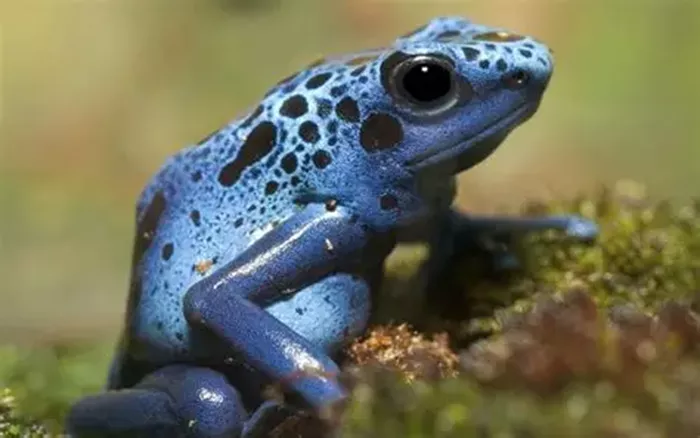
The blue poison dart frog is one of the most fascinating creatures on Earth, instantly recognizable by its striking blue color. If you’ve ever wondered where these beautiful yet venomous creatures are found, you’re not alone. These frogs seem almost like something out of a fairytale, but they live in the real world, thriving in specific regions of Central and South America. In this article, we’ll delve into where exactly these frogs are found, what their natural habitat is like, and why they’ve earned their “poisonous” reputation.
Let’s take a journey into the wild world of the blue poison dart frog (scientific name: Dendrobatoides tinctorius), exploring their environment, distribution, and the factors that make these creatures so special. Are you ready? Let’s hop right in!
The Natural Habitat of the Blue Poison Dart Frog
Before diving into the specifics of where these frogs are found, it’s essential to understand the kind of environment that supports their survival. Blue poison dart frogs, like many other species, are highly selective about where they live. Their habitat needs are so precise that even small changes in temperature, humidity, and vegetation can affect their survival.
Tropical Rainforests: The Perfect Home
The blue poison dart frog is primarily found in the rainforests of Central and South America, particularly in countries like Panama, Colombia, and Costa Rica. These frogs thrive in the humid, wet conditions of tropical rainforests, where rainfall is abundant and the vegetation is dense.
Imagine a rainforest after a rainstorm: the air thick with humidity, the ground covered in soft, moist soil, and the trees alive with the sounds of wildlife. This environment is a paradise for the blue poison dart frog. The dense vegetation provides plenty of hiding spots, and the constant moisture helps keep their skin hydrated—an essential factor for amphibians like these, who rely on moisture to survive.
The constant rainfall of tropical rainforests ensures that the blue poison dart frog has plenty of water sources nearby, as they depend on small pools of water for breeding. These frogs lay their eggs on the moist forest floor or on vegetation near water sources, and when the tadpoles hatch, they will make their way to the water.
Elevation and Geography Matter
Though blue poison dart frogs are found in various parts of Central and South America, they tend to live at specific elevations. Most of them are found at altitudes ranging from sea level to 1,000 meters (about 3,280 feet) above sea level. These elevations offer the perfect mix of humidity, temperature, and accessibility to water, making them the ideal homes for these frogs.
But not all parts of the rainforest are equal! The frogs seem to prefer specific microhabitats, like the edge of a forest or the lowlands near rivers and streams. Their behavior and location can vary depending on the terrain and other factors like food availability and the presence of predators.
The Blue Poison Dart Frog’s Range: Where Are They Found?
The blue poison dart frog is mostly found in the lowland rainforests of western Panama, Colombia, and parts of Costa Rica. These regions are known for their lush vegetation, tropical conditions, and abundant rainfall. In fact, Colombia is home to some of the most famous populations of this species.
The species is often associated with the Pacific coast of these regions, where dense forests, rivers, and streams provide the ideal conditions. You won’t find blue poison dart frogs in just any part of the rainforest. They have a specific range within the larger tropical forest zones. They thrive in well-protected and stable environments, which is why they can sometimes be quite challenging to find.
The Forest Floor: Where the Magic Happens
While these frogs may be found throughout the trees and shrubs of the rainforest, they tend to live close to the forest floor. This part of the forest is rich in organic matter, including decaying leaves, bark, and fallen fruit, providing a wealth of food sources for these little amphibians. The moist, shaded floor is also perfect for hiding from predators and helps to regulate the frogs’ body temperature.
Their habitats often contain a high amount of leaf litter, a term for the decomposing plant material that builds up on the forest floor. This layer of leaves and twigs provides cover, warmth, and humidity, making it the perfect microhabitat for the blue poison dart frog. The frogs often use this litter as a place to rest and lay their eggs.
Interestingly, their diet is closely tied to their environment. These frogs feed on small invertebrates such as ants, termites, and beetles, which they find in the leaf litter. These insects provide the toxins that give the blue poison dart frog its iconic poison. So, the frogs’ relationship with their environment is very much a give and take: the environment provides shelter and food, while the frogs’ diet helps create the toxicity for which they are famous.
Rainforests and Their Role in Biodiversity
Tropical rainforests are known for their biodiversity, meaning they are home to a vast array of species. This high biodiversity is one of the reasons why blue poison dart frogs thrive in these regions. The diversity of life in the rainforest creates a complex food web that supports not only the frogs but also the many predators and competitors that live there.
For instance, the frogs’ primary predators are birds and larger amphibians, but they use their bright blue coloration as a warning signal to potential predators. The bright color of the frog, known as aposematism, acts as a visual cue that the frog is toxic and should not be eaten. This colorful warning is an important survival mechanism.
Why Are Blue Poison Dart Frogs Rare?
While the blue poison dart frog is a striking and famous species, they are not easy to find. This is partly due to their relatively small geographic range and the dense, often difficult terrain in which they live. Their populations can also be sparse, and the frogs are highly territorial, meaning they don’t travel far from their home areas.
Human activity, including deforestation, poses a significant threat to their habitat. As rainforests are cleared for agriculture, logging, and urbanization, the natural environment that these frogs depend on is disappearing. This means that the frogs have fewer areas to live and breed, reducing their population and making them even harder to spot.
How the Blue Poison Dart Frog Got Its Name
The name “blue poison dart frog” is a bit of a mouthful, but it’s based on the frog’s physical characteristics and its unique defense mechanisms. These frogs are called “dart frogs” because Indigenous people in South America used their toxic secretions to poison the tips of their blow darts for hunting. While not all dart frogs are blue, the species we are discussing here is particularly famous for its striking, vivid blue coloration.
The toxins found in the skin of the blue poison dart frog are derived from its diet of ants, termites, and other small insects that secrete alkaloids. These alkaloids accumulate in the frogs’ skin, making them highly poisonous to predators. While the frogs are immune to their own poison, the toxins act as a powerful deterrent to potential predators.
Conservation Efforts and What You Can Do
Sadly, the blue poison dart frog is facing the threat of habitat loss due to human activities like deforestation and climate change. As the forests they depend on are destroyed, these frogs are left without a safe place to live. However, efforts are being made to protect these fragile ecosystems.
Conservation programs are focusing on protecting the rainforests and educating the public about the importance of these habitats. Additionally, breeding programs and research on the frogs’ diet and habitat preferences are helping scientists better understand how to conserve them in the wild.
If you’re passionate about wildlife conservation, consider supporting initiatives that protect rainforests and the species that inhabit them. Every little effort helps.
Conclusion
The blue poison dart frog is a creature of striking beauty and danger, found primarily in the tropical rainforests of Central and South America. Its unique toxic defense mechanism, colorful appearance, and specific habitat requirements make it one of the most fascinating amphibians on the planet. While they face serious threats, conservation efforts continue to help protect these fragile creatures and their habitats. If you’re ever lucky enough to see one in the wild, know that you’re witnessing one of nature’s most incredible masterpieces.
Related topics: