
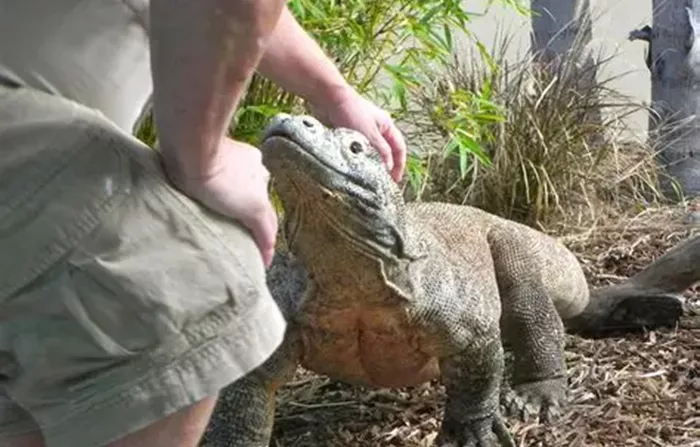
Imagine owning one of the most powerful reptiles on Earth — the Komodo dragon. A giant lizard that can grow up to 10 feet long, with a bite strong enough to bring down large prey. Sounds like a dream for many exotic animal lovers, right? But wait — is it really possible or even legal to keep such a beast as a pet? Before you get your hopes up, let’s dive into what it means to own a Komodo dragon and why it’s far from a typical pet story.
What Exactly Is a Komodo Dragon?
First off, what are we talking about? The Komodo dragon (Varanus komodoensis) is the largest living lizard species. Native to a few small Indonesian islands, including Komodo Island, this reptile is like the dinosaur of today — huge, powerful, and a top predator in its environment.
Think of it as the “king of lizards,” much like a lion is the king of the jungle. It’s not just big; it’s built to hunt large animals, with a venomous bite that causes blood loss and weakness in its prey. So, keeping a Komodo dragon isn’t just about having a big lizard in your backyard — it’s about managing a wild animal with serious needs and dangers.
See Also: Hermann Tortoise Habits: A Complete Guide
Why People Dream of Owning a Komodo Dragon
There’s no doubt the Komodo dragon captivates the imagination. It’s like having a real-life dinosaur, a living piece of prehistoric history. For many, owning one is a symbol of ultimate exotic pet ownership — rare, powerful, and extraordinary.
But owning such an animal is not like owning a dog or even a large snake. It’s more like trying to keep a wild animal that demands huge space, specialized care, and can pose significant risks.
Legal Barriers: Why You Probably Can’t Own a Komodo Dragon
Here’s the big truth: in most places in the world, owning a Komodo dragon is illegal.
Why? Because Komodo dragons are endangered and protected under international law. The Convention on International Trade in Endangered Species (CITES) restricts their trade strictly. This means they cannot be bought, sold, or owned by private individuals without special government permits — and those permits are nearly impossible to get.
Even in Indonesia, their home, Komodo dragons are protected by law and live in national parks. The goal is to protect them from extinction, not to put them in someone’s living room.
So, if you think you can just find one and bring it home, think again. It’s like trying to own a tiger or a panda. The laws are there for good reasons — conservation and safety.
Safety Concerns: Why You Should Think Twice
Imagine you had a Komodo dragon in your home. Sounds cool? Sure. But these animals can be very dangerous.
They have sharp teeth and claws.
Their venom causes paralysis and heavy bleeding.
They are strong and fast despite their size.
They can be unpredictable and aggressive.
In fact, many zoos and wildlife parks keep Komodo dragons behind secure fences, and only trained keepers with years of experience handle them. You would need extensive training, special facilities, and a team of experts to care for one safely.
Owning a Komodo dragon is not a casual hobby; it is a full-time, high-risk responsibility.
Space and Habitat Needs: More Than a Big Terrarium
When you think of keeping a Komodo dragon, don’t picture a terrarium or a small backyard pen. These creatures roam large territories in the wild.
A single Komodo dragon in captivity needs:
A very large enclosure, often the size of a small house or larger.
Controlled temperature and humidity to mimic their natural habitat.
Specialized diet including fresh meat and supplements.
Environmental enrichment to prevent boredom and stress.
Without the right space and conditions, the Komodo dragon can suffer health problems or become aggressive out of frustration.
The Cost: Not Just Money, But Time and Effort
Even if you ignore the legal and safety issues, the cost of keeping a Komodo dragon is astronomical.
Building a secure, climate-controlled enclosure costs tens of thousands of dollars.
Feeding them is expensive since they eat large amounts of meat.
Veterinary care for exotic animals is specialized and costly.
Time commitment is huge, as they require constant care and monitoring.
It’s not a pet you can buy and then leave alone for days. It’s like caring for a large, wild animal every single day.
Alternatives: How to Experience Komodo Dragons Safely
If you are fascinated by Komodo dragons, the good news is that you don’t need to own one to get close to the experience.
Visit accredited zoos or reptile parks with Komodo dragons.
Watch documentaries or live streams from trusted wildlife organizations.
Support conservation efforts to help protect their wild populations.
This way, you can enjoy learning about and observing Komodo dragons without putting yourself, the animal, or the ecosystem at risk.
Conclusion
To be clear, owning a Komodo dragon as a private individual is practically impossible and extremely unadvisable. It is illegal in most countries, dangerous to both humans and the animal, and requires vast resources to care for properly.
Instead of trying to own one, you can admire Komodo dragons from afar and support conservation efforts to keep these magnificent creatures thriving in the wild.
So next time you dream about having a Komodo dragon as a pet, remember — this is a wild animal that belongs in its natural home, not in a backyard or private collection.
Related topics: