
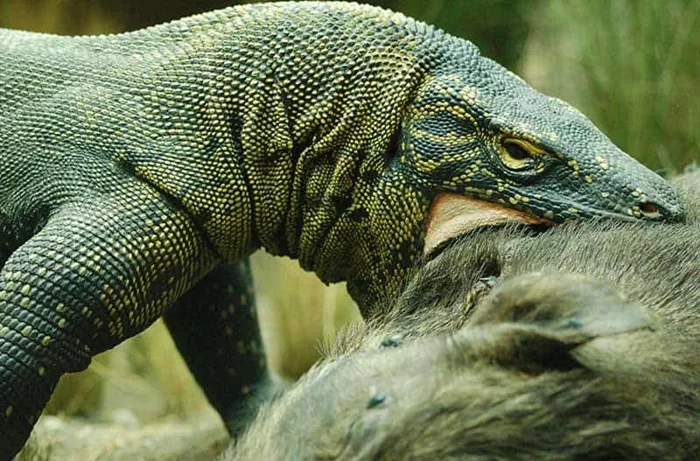
Imagine standing face-to-face with a 10-foot lizard weighing over 150 pounds. Its powerful limbs dig into the earth as it slowly approaches, tongue flicking, sensing every movement around it. That’s the Komodo dragon—a cold-blooded giant, a living relic from prehistoric times, and one of nature’s most fearsome predators. So, here’s a question that might surprise you: What eats a Komodo dragon?
It sounds almost absurd, doesn’t it? This is a creature with venom-laced saliva, armor-like skin, and jaws that can tear flesh like butter. You might assume it sits at the very top of the food chain—and for the most part, you’d be right. But even apex predators aren’t entirely safe in nature. Let’s dig deep into this mystery together. By the end, you’ll see the surprising truth behind what, if anything, dares to mess with a Komodo dragon.
Understanding the Komodo Dragon’s Place in the Ecosystem
To understand what might eat a Komodo dragon, we first need to understand what makes it such a dominant creature. The Komodo dragon (Varanus komodoensis) is the largest living species of lizard. It lives mainly on five islands in Indonesia: Komodo, Rinca, Flores, Gili Motang, and Padar.
Komodo dragons are carnivores—they eat meat, and lots of it. They’re known to hunt deer, wild boar, water buffalo, and even smaller Komodo dragons. Yes, they’re cannibalistic. This is a major clue when we ask what eats them.
Before we go any further, here’s a quick analogy to help:
Think of the Komodo dragon like a tank on the battlefield—big, armored, and powerful. Tanks usually dominate the terrain, but in the right situation, even a tank can be outmaneuvered, surrounded, or outgunned. The Komodo dragon isn’t totally unbeatable either.
Natural Predators: Are There Any?
In the wild, adult Komodo dragons have very few natural predators. This is largely due to their massive size, tough scales, sharp claws, and toxic bite. Most animals steer clear of these reptiles.
But let’s not forget the golden rule of the wild: Even the strongest can be vulnerable under the right conditions.
Here’s where things get interesting.
1. Komodo Dragons Eat Each Other
Let’s start with the most straightforward predator: other Komodo dragons. In fact, up to 10% of a young Komodo dragon’s diet comes from smaller dragons, particularly the juveniles. That’s right—they eat their own kind.
This cannibalistic behavior has shaped the way young dragons behave. After hatching, baby Komodo dragons immediately climb trees. Why? Because adults can’t climb as easily. Up in the branches, they are safer from being devoured.
This is an evolutionary trick—imagine if your instinct from birth was to climb for your life. It’s a brutal world, but that’s nature.
2. Predatory Birds and Mammals (For Hatchlings)
While adult Komodo dragons are nearly untouchable, hatchlings and juveniles aren’t so lucky. When Komodos are born, they’re only about 16 inches long—tiny, fragile, and easy prey for other animals.
Predators of young Komodo dragons include:
Birds of prey such as eagles and hawks
Wild pigs, which dig up and eat eggs
Snakes, which also target eggs and hatchlings
Feral dogs and cats introduced by humans
The idea is simple: If it can fit in the mouth of a local predator, it’s fair game. That’s why so many young Komodos never survive past their first year. According to some field studies, only 10% of hatchlings make it to adulthood. That’s nature’s harsh math.
Human Beings: A Modern Threat
Now here’s something you might not expect: Humans are the biggest threat to Komodo dragons today. While humans don’t hunt adult dragons to eat them, our activities have a major impact on their survival.
1. Habitat Destruction
As human populations expand, forests are cleared for settlements, farming, or tourism. When the dragon’s habitat shrinks, so does its food supply and living space. Without a wide hunting ground, these reptiles face starvation and territorial battles.
2. Poaching and Illegal Trade
Although killing Komodo dragons is illegal, poachers still capture and smuggle them, either for exotic pet markets or for their skins. This black-market trade reduces their wild numbers.
3. Climate Change
Rising sea levels threaten their island habitats. One study by the IUCN (International Union for Conservation of Nature) predicts that climate change could reduce the Komodo dragon’s habitat by at least 30% in the next few decades.
So, while humans don’t typically eat Komodo dragons, we are indirectly contributing to their decline. You could say we’re an apex predator with invisible claws—our effect is slower, but potentially more devastating.
The Dragon’s Defense Mechanisms
Now that we know who the threats are, let’s flip the script: Why are Komodo dragons so hard to eat in the first place? What makes them such tough targets?
1. Venomous Bite
Unlike snakes that inject venom with fangs, Komodo dragons have venom glands in their lower jaws. Their saliva carries toxic proteins that:
Lower blood pressure
Prevent clotting
Cause shock in prey
Once bitten, even a large prey like a deer or buffalo can die within hours. Imagine being bitten and slowly fading away—most predators would rather avoid that risk.
2. Rough, Reinforced Skin
Komodo dragon skin is covered in tiny bone-like plates called osteoderms. These act like armor, making it very hard for teeth or claws to puncture their hide. It’s as if they’re wearing built-in chain mail.
3. Size and Strength
An adult Komodo dragon can take down prey larger than itself. With strong jaws, sharp claws, and explosive bursts of speed (up to 13 mph!), they’re built for dominance. If you’re a predator and considering a Komodo dragon for dinner—think again.
Are They Ever Eaten by Crocodiles or Sharks?
Here’s a curious thought: What about other massive predators like crocodiles or sharks? Could they take down a Komodo dragon?
While Komodo dragons live close to the ocean, they rarely swim far out to sea. And in Indonesia, saltwater crocodiles and Komodo dragons don’t share much territory. So encounters are extremely rare.
There are no verified reports of sharks eating Komodo dragons either. However, a dragon that falls into the water and drifts too far might end up as a snack—but that’s hypothetical at best. The ocean is dangerous, but Komodos are smart enough to avoid venturing too far.
Young Komodos: A Life of Constant Danger
We’ve talked a lot about the adults, but for young Komodos, the world is a constant death trap.
They’re born in burrows and dig themselves out after hatching. Then the race begins—climb or die. They have to avoid:
Hungry adults
Snakes
Wild pigs
Raptors from the sky
To survive, they eat insects, small lizards, and birds. It’s not until they’re about 5 years old that they grow big enough (around 6 feet long) to defend themselves.
Think about that—five years of hiding, climbing, and staying invisible. It’s like living in a horror movie with predators at every corner.
Conclusion
So, what eats a Komodo dragon? The answer is layered.
Adult Komodo dragons have almost no natural predators—except for each other.
Juveniles and hatchlings are eaten by birds, snakes, mammals, and adult dragons.
Humans, while not direct predators, have become their greatest long-term threat through habitat loss, climate change, and illegal trade.
The Komodo dragon is a symbol of survival, strength, and ancient power. But even the king of lizards isn’t safe from the threats of modern life. Whether it’s their own kind, an eagle overhead, or an encroaching tourist resort—danger comes in many forms.
Next time you see a Komodo dragon documentary or visit a zoo exhibit, remember the journey each one took just to survive. These creatures aren’t just predators—they’re survivors of a brutal, beautiful, and often unforgiving world.
Related topics: