
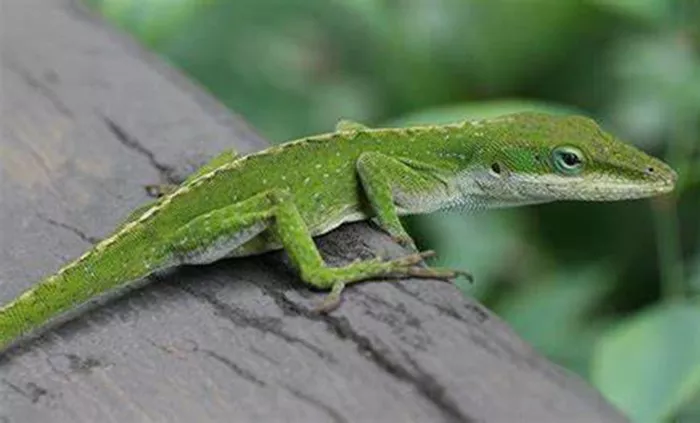
When you think about lizards, one of the most fascinating features they possess is their ability to regrow lost limbs. You may have heard stories about lizards that lose their tails or legs but seem to bounce back with a new, functional one. But how exactly does this process work, and which species of lizards can do it? It’s an incredible feat of nature, and the science behind it is just as amazing.
This article will dive deep into the biology of limb regeneration in lizards, explaining what happens at the cellular level and why some species are better at it than others. We’ll also explore the surprising similarities between lizards and humans when it comes to regrowth, and why this phenomenon could have far-reaching implications for medicine. So, if you’ve ever wondered if lizards really can regrow limbs, you’re in the right place!
The Basics of Limb Regeneration in Lizards
Limb regeneration is one of the most remarkable biological processes found in nature. For many species, losing a limb would mean a lifetime of disability. However, for certain lizards, the story is very different. When they lose a limb—whether due to an attack from a predator, an accident, or even self-defense—they can regenerate the lost appendage.
But what exactly does it mean to “regrow” a limb? In simple terms, it means that the body has the ability to recreate a fully functional and structurally similar limb from the tissues that remain. It’s as if a lizard’s body is a master craftsman, capable of rebuilding a lost part almost as if it never disappeared in the first place.
Imagine your arm being cut off, and then a few weeks later, a new one grows back in its place. Sounds like something out of a science fiction movie, right? Well, that’s precisely what some species of lizards can do. And the process is not only fascinating but also complex, involving intricate cellular activities that scientists are still studying today.
Which Lizards Can Regrow Limbs?
Not all lizards have this magical ability. The species that can regrow limbs most effectively are typically from the family Lacertidae, which includes many common lizard species. Geckos, for example, are well-known for their impressive regenerative abilities, particularly in the tail region. Other lizards, like certain species of skinks and anoles, can also regenerate lost tails and, in some cases, limbs.
However, the ability to regrow limbs varies widely across different species. Some lizards can regenerate their entire leg or tail, while others can only regenerate specific parts of their bodies. Interestingly, the regeneration ability is not unlimited—there are limits to how many times a lizard can regrow a limb.
How Do Lizards Regrow Limbs? The Biology Behind the Magic
At the heart of the regeneration process is a phenomenon known as epimorphic regeneration. In simple terms, this means that the lizard’s body is able to regenerate complex tissues like muscles, bones, and nerves. Let’s break it down step by step:
Injury and Initial Response: When a lizard loses a limb or tail, its body begins to respond immediately to the injury. The cells at the site of the injury start to break down and reorganize into a structure known as a blastema, which is a mass of undifferentiated cells. Think of it like a “blank canvas” that the body will use to rebuild the lost limb.
Cellular Reprogramming: The cells in the blastema are special because they have the ability to transform into different types of cells, such as muscle, bone, and nerve cells. This is what sets lizards apart from other creatures; their bodies can turn “ordinary” cells into “regenerative” cells, which can transform into the precise tissue needed.
Growth and Differentiation: Over time, the blastema begins to grow and differentiate. The cells start to form into structures that resemble the original limb. For example, if the lizard lost a leg, the blastema would eventually form bone, muscle, and skin that reconstruct the limb with remarkable precision.
Maturation: The final stage of limb regeneration involves the complete maturation of the new limb. It becomes fully functional, with muscles capable of movement and joints that allow for flexibility. The process can take several weeks to a few months, depending on the species and the size of the limb being regrown.
Why Can’t All Lizards Regrow Limbs?
While many species of lizards can regenerate their tails, not all of them have the ability to regrow entire limbs. The key to this ability lies in the genetic makeup and cellular capabilities of the species in question.
Some lizards, like geckos, have evolved specifically to regenerate lost tails as a defense mechanism. Tails can be shed in moments of danger, allowing the lizard to escape while the predator is distracted. However, regenerating an entire limb requires more advanced cellular and genetic abilities, and only a few species have this skill.
Scientists believe that limb regeneration in lizards is tied to specific genes and signaling pathways that are activated during injury. In some species, these pathways are not as active or do not trigger the complex regeneration process needed for full limb regrowth.
The Limits of Limb Regeneration
It’s important to note that lizards do have limits when it comes to limb regeneration. The first regenerated limb will typically be a bit different from the original. For example, it might be smaller or structurally less complex than the first one. In some cases, the regenerated limb may lack certain features, like the exact number of bones or nerve connections.
Additionally, the more times a lizard loses and regenerates a limb, the more difficult it becomes to regenerate it effectively. The process is energetically costly for the lizard’s body, and over time, the regenerative abilities may diminish. This is one of the reasons why you don’t see lizards constantly losing and regenerating limbs.
Implications for Human Medicine
One of the most exciting aspects of lizard limb regeneration is its potential application in human medicine. Imagine a future where humans can regenerate lost limbs or even damaged tissues. While humans cannot currently regenerate entire limbs, the study of lizard regeneration has provided valuable insights into how we might one day unlock this capability.
Scientists are already investigating how the regenerative pathways in lizards work and how these processes might be applied to human medicine. For example, the molecular signaling that controls limb regeneration in lizards could help scientists develop therapies for spinal cord injuries, bone fractures, and even heart damage. By understanding how lizards regenerate limbs, we may one day be able to encourage similar healing in humans.
Conclusion
Limb regeneration in lizards is a testament to the amazing adaptability of nature. Through the miraculous process of epimorphic regeneration, lizards can regrow entire limbs, offering a glimpse into the future of medical science. While not all lizards have this ability, the species that do provide a fascinating insight into the complexities of cellular biology and the potential for regenerative medicine.
As we continue to study these incredible creatures, we move closer to unlocking the secrets of limb regeneration, which could one day revolutionize how we treat injuries and disabilities in humans. Until then, the lizards will keep doing what they do best—shedding tails and growing new limbs, in a world where nature’s wonders never cease to amaze.
Related topics: