
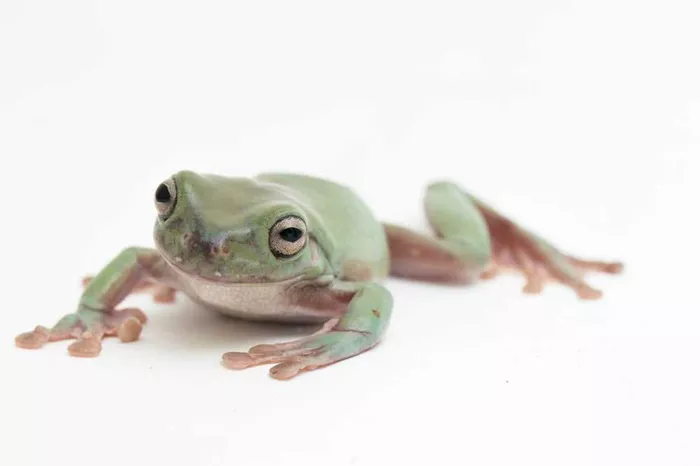
White’s tree frogs (also called Litoria caerulea or dumpy tree frogs) are one of the most popular pet amphibians. Their charming appearance, hardy nature, and calm behavior make them great for both beginners and experienced keeper
This article explores the importance of UVB lighting for White’s tree frogs. It covers their natural habitat, lighting in captivity, how UVB affects their health, and how to create an optimal lighting environment.
Understanding the Natural Habitat of White’s Tree Frogs
White’s tree frogs are native to Australia, New Guinea, and parts of Indonesia. They are primarily arboreal, spending most of their time in trees, shrubs, and forested areas. In the wild, they are exposed to natural sunlight, including ultraviolet B (UVB) rays. These rays are part of the light spectrum and are essential for synthesizing vitamin D3 in many reptiles and amphibians.
However, White’s tree frogs are also nocturnal. This means they are most active at night and tend to seek shelter during the day. They often rest in shaded areas like tree hollows, under leaves, or inside crevices where direct UVB exposure is minimal. This has led many keepers to assume that UVB lighting is not necessary for this species in captivity.
Still, we must consider that even indirect sunlight in their natural environment provides some level of UVB exposure. So while they may not bask in the sun like lizards, White’s tree frogs do receive some ambient UVB radiation in the wild.
What Is UVB and Why Is It Important?
Ultraviolet B (UVB) is a type of ultraviolet light that ranges from 280 to 320 nanometers. It is essential for the synthesis of vitamin D3, which helps animals absorb calcium from their diet. Without sufficient vitamin D3, calcium cannot be metabolized properly, leading to serious health issues like metabolic bone disease (MBD).
MBD is a common and painful condition in captive reptiles and amphibians. It causes weakened bones, deformities, lethargy, muscle tremors, and in extreme cases, death. For many species, UVB lighting is used to prevent this disease when dietary supplements alone are insufficient.
In the case of amphibians, the necessity of UVB has been a subject of scientific debate. Unlike reptiles that often bask in the sun, amphibians like frogs and salamanders usually live in humid, shaded habitats. This makes it less obvious whether UVB plays a critical role in their biology. Nevertheless, research and anecdotal evidence suggest that moderate UVB exposure can be beneficial for amphibians, including White’s tree frogs.
Do White’s Tree Frogs Need UVB in Captivity?
Technically, White’s tree frogs can survive without UVB lighting, as long as they are provided with adequate vitamin D3 through dietary supplements. Many keepers raise healthy frogs this way. However, saying they don’t need UVB can be misleading. “Need” implies survival, but in captivity, we aim for optimal health, not just survival.
Studies and long-term observations indicate that frogs exposed to low levels of UVB light often show:
Brighter coloration
More natural activity cycles
Stronger bone development
Better calcium metabolism
Increased overall vitality
So while it’s possible to raise a White’s tree frog without UVB lighting, providing low-intensity UVB can contribute to its long-term health and wellbeing.
What Happens Without UVB or D3?
If a frog receives neither UVB exposure nor sufficient vitamin D3 supplementation, it may begin to show early signs of calcium deficiency. These can include:
Soft or rubbery limbs
Difficulty jumping or climbing
Jaw deformities
Lethargy
Tremors or twitching
Loss of appetite
Over time, the bones weaken further, and the frog becomes prone to injuries and deformities. This condition, known as metabolic bone disease, is often irreversible and can be fatal if not corrected.
Fortunately, MBD is preventable with proper husbandry. The two ways to do that are:
Provide a vitamin D3 supplement through food
Use UVB lighting to enable natural synthesis of D3
Using both methods in combination offers an even stronger defense against deficiency.
Benefits of UVB Lighting for White’s Tree Frogs
Even though White’s tree frogs are nocturnal, they benefit from having a consistent day-night cycle in their enclosure. Including UVB in the lighting system supports their circadian rhythm and adds the following benefits:
Improved Calcium Absorption
UVB enables the conversion of cholesterol in the skin into vitamin D3, which the body then uses to absorb dietary calcium. This process helps maintain strong bones and proper nerve and muscle function.
Reduced Risk of MBD
As mentioned earlier, frogs with insufficient vitamin D3 are at high risk of developing metabolic bone disease. A UVB light provides a natural way to prevent this condition, especially if dietary supplementation is inconsistent.
Stimulated Natural Behaviors
Frogs exposed to UVB tend to exhibit more natural postures and behaviors. Some keepers report more frequent climbing, calling, and exploration when UVB is introduced.
Stronger Immune Function
There’s growing evidence that UVB light also plays a role in supporting immune health in amphibians. While more research is needed, preliminary findings suggest that exposure to UVB may help frogs resist infection and stress.
How Much UVB Do White’s Tree Frogs Need?
White’s tree frogs don’t need strong UVB light like desert reptiles. Too much UVB can cause stress or damage their eyes and skin. The key is to provide low-level, gentle UVB exposure.
Ideal UVB Range
A 2.0 or 5.0 UVB bulb is usually appropriate for tree frogs. These bulbs emit mild UVB radiation similar to that found in shaded forest environments.
The UV Index (UVI) in a White’s tree frog terrarium should be 0.5 to 1.0 in areas where they rest or climb. This mimics the UVB levels they might receive through filtered sunlight in the wild.
Positioning the Bulb
Place the UVB bulb above the enclosure, outside of any glass or plastic lids, as these materials block UVB rays. Use a fine mesh screen top instead, and ensure there are perches or branches near the top where frogs can rest if they choose to get closer to the light.
Always allow a gradient within the tank, so the frog can choose between more or less UV exposure. Providing both lit and shaded areas is essential.
UVB Bulbs: Types and Placement
Types of UVB Bulbs
There are several kinds of UVB bulbs on the market:
Linear Fluorescent Tubes – Best for even coverage; available in T5 and T8 formats.
Compact Fluorescent Bulbs (CFLs) – Useful for smaller enclosures, but often provide a narrower beam of UV.
Mercury Vapor Bulbs – Too intense for amphibians; not recommended for White’s tree frogs.
A T5 5.0 UVB tube mounted horizontally across the tank provides excellent, low-level UVB exposure when installed properly.
Bulb Lifespan
Most UVB bulbs lose their effectiveness over time, even if they still emit visible light. Replace them every 6 to 12 months, depending on the manufacturer’s guidance.
Use a UV meter if available, to test UV output regularly.
Supplementation: Should You Still Use D3?
Even with UVB lighting, many experts recommend continuing to use a calcium supplement with D3 occasionally, especially if your lighting setup is mild. Over-supplementation can be harmful, but moderate use ensures that the frog’s needs are met.
A typical feeding schedule might look like:
Calcium with D3 – 1–2 times per week
Plain Calcium – 2–3 times per week
Multivitamin Supplement – Once a week
The exact balance can vary depending on the frog’s age, health, and diet. Consult a herp veterinarian for personalized advice.
Common Misconceptions About UVB and Frogs
“They’re Nocturnal, So They Don’t Need UVB”
It’s true that White’s tree frogs are most active at night, but that doesn’t mean UVB has no role in their biology. In the wild, they still experience ambient UVB during the day while resting or partially exposed to sunlight.
“My Frog Is Healthy Without UVB”
Some frogs do fine without UVB, especially if they receive proper supplements. But others may develop subtle health issues over time. Providing UVB lighting reduces this risk and promotes more natural physiology.
“UVB Lights Are Dangerous”
Overexposure to intense UVB can harm amphibians. But low-output UVB lights, properly installed and monitored, are safe and beneficial.
Setting Up a UVB System for Your Frog
Here is a quick guide to creating a UVB-friendly enclosure:
−Choose a low-output UVB bulb (2.0 or 5.0)
−Use a mesh top to allow light to enter
−Mount the bulb 10–14 inches above the basking area
−Provide branches and ledges so the frog can regulate its exposure
−Replace the bulb every 6–12 months
−Monitor behavior and health regularly
Adding a UVB fixture is a small investment compared to the potential health benefits for your frog.
Conclusion: Should You Provide UVB to White’s Tree Frogs?
In summary, White’s tree frogs don’t absolutely require UVB to survive, but they benefit greatly from it when used correctly. UVB supports vitamin D3 synthesis, aids calcium metabolism, and contributes to overall vitality.
If you’re dedicated to providing the best care for your frog, a low-level UVB setup is a wise addition to your terrarium. It can improve your frog’s bone health, activity, and long-term well-being.
Whether you choose UVB lighting, dietary supplements, or both, consistency and balance are key. Keep your frog’s enclosure well-maintained, provide a varied diet, and observe its behavior closely. When in doubt, consult an exotic animal vet who specializes in amphibians.
Related topics: