
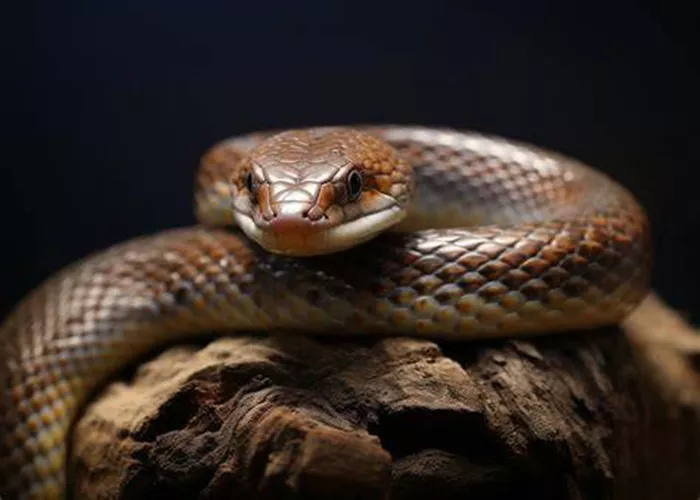
Snakes are one of the most fascinating creatures in the animal kingdom, often surrounded by myths and misconceptions. One common misconception is that snakes are blind, but is there any truth to this? Do snakes really live without sight? Understanding how snakes perceive their world, especially in terms of vision, is crucial to debunking myths and appreciating the complexity of their sensory systems. In this article, we will explore the question, Are snakes blind? and provide a detailed look at the snake’s vision, how they use their senses, and the roles their eyesight plays in their survival.
Introduction to Snake Vision
When it comes to snakes, the idea that they might be blind comes from several sources, including their often-shrouded, mysterious behavior and their inability to use their eyes in ways that seem familiar to us. Snakes live in a variety of environments, from deserts to rainforests, and their ability to sense and respond to their surroundings is integral to their survival. While it is true that many species of snakes have a unique visual system that differs from that of humans and other animals, it is not accurate to say that all snakes are blind. Some species have excellent vision, while others have limited sight that is adapted to their lifestyle and habitat.
This article will take a deep dive into the science of snake vision, including the anatomical and functional aspects of their eyes. We will also discuss the different types of vision found in snakes, the environmental factors influencing their sight, and how they use their vision in hunting and navigation. Furthermore, we will examine whether there are species that might be considered “blind” in the conventional sense.
Anatomy of a Snake’s Eyes
To understand whether snakes are truly blind, it’s important to first look at the anatomy of their eyes. Unlike humans, who have highly specialized eyes capable of distinguishing a wide range of colors and fine details, snakes’ eyes have evolved to suit their specific needs.
Eye Structure in Snakes
The eyes of a snake are relatively simple compared to those of mammals. Snakes do not have eyelids; instead, they have a transparent scale, known as a spectacle or brille, that covers their eyes and protects them. This spectacle is shed periodically as part of the snake’s skin shedding process. The spectacle functions similarly to an eyelid, but it is not movable. The absence of movable eyelids does not mean that snakes cannot see, but it does limit their ability to keep their eyes moist and clear like mammals.
Pupil Shape and Function
The shape of a snake’s pupil plays an important role in how they see. Depending on the species, a snake’s pupil can be round, elliptical, or vertical. These shapes are often linked to the snake’s activity patterns.
Vertical Slit Pupils: Many nocturnal or ambush predators, like vipers and cobras, have vertically elongated pupils. This allows them to control the amount of light entering the eye more efficiently, which is particularly useful in low-light environments like underbrush or caves.
Round Pupils: Some snakes, particularly those that are more active during the day, have round pupils. This type of pupil helps them adjust to bright daylight by controlling the amount of light entering the eye.
Snake Retina and Vision Resolution
The retina of a snake contains cells called rods and cones, just like in humans. However, the distribution of these cells in snakes is different from mammals. Snakes generally have more rods than cones, which are responsible for vision in low-light conditions. This means that while some species of snakes might have poor color vision, they are often able to detect movement and shapes in dim environments, giving them an advantage when hunting at night or in dimly lit areas.
Do All Snakes Have Good Vision?
Not all snakes have the same level of vision. The degree to which a snake can see depends largely on its ecological niche and evolutionary adaptations. Some snakes have excellent eyesight, while others have poor vision and rely more on other senses, such as smell or heat detection.
Diurnal Snakes and Their Vision
Snakes that are active during the day tend to have better-developed vision than nocturnal species. These snakes need to see clearly to locate prey and avoid predators. For example, many species of colubrids (a family of snakes) and elapids (like cobras and kraits) that are active during daylight hours rely heavily on their vision to hunt. These snakes are often equipped with round or slightly elliptical pupils that help them focus on their environment and detect movement.
Nocturnal Snakes and Low-Light Vision
Nocturnal snakes, on the other hand, tend to have more specialized eyes designed for low-light vision. These snakes have eyes that are adapted to operate in the dark, using their large pupils to let in as much light as possible. Even though their vision may be limited in terms of clarity or color, they are very good at detecting motion, which is crucial for hunting at night. Species like vipers and pit vipers have well-developed, heat-sensitive pits on their faces, which help them locate prey in the dark, even when their visual acuity is not sharp.
Species with Limited Vision
There are some species of snakes that have a very limited sense of vision, but they are not necessarily blind. The blind snake, or Brahminy Blind Snake (Indotyphlops braminus), is an example. These snakes spend most of their time underground and rely more on their sense of touch and smell to navigate. Their eyes are small, underdeveloped, and often covered by scales, but they are still capable of perceiving light. Blind snakes don’t have functional eyesight to the degree that other species do, but they are not entirely blind.
Pit Vipers and Heat-Sensing Vision
A unique and fascinating feature of some snakes, particularly pit vipers, is their ability to detect infrared radiation through specialized pits on their faces. While this is not the same as regular vision, it allows them to sense the heat of nearby animals, even in complete darkness. This form of infrared vision is incredibly useful for hunting warm-blooded prey like rodents.
How Snakes Use Their Vision for Hunting and Survival
Understanding how snakes use their vision is key to appreciating their role in the ecosystem. Snakes employ their sight in various ways depending on their hunting strategies and the environment they inhabit.
Hunting Techniques and Vision
Ambush Predators: Many snakes, such as vipers and pythons, are ambush predators. These species rely on vision to detect potential prey from a distance. They typically use their eyesight to track movement in the environment. Once prey comes within striking distance, they strike with remarkable speed.
Active Foragers: Snakes that actively hunt, like rat snakes, use their sight to track and chase after prey. These species may use their vision in combination with other senses, such as smell, to locate and capture prey.
Navigating the Environment
Snakes also use their sight to navigate their environment. They can detect the shapes and movements of objects around them, allowing them to avoid obstacles, predators, and navigate through complex terrains. Vision helps them locate hiding places, especially during the molting process when they shed their skin.
Conclusion: Are Snakes Blind?
While it is true that some species of snakes have poor vision or are effectively “blind” in the traditional sense, the majority of snake species do possess some form of vision, ranging from excellent to limited. Snakes have evolved a wide range of adaptations that allow them to thrive in different environments. Their vision is often specialized, allowing them to detect movement or navigate in low-light conditions, which is crucial for hunting and survival.
In summary, the idea that snakes are universally blind is a myth. While some species have limited eyesight, others have excellent vision that is well-suited to their particular lifestyles. Snake vision is diverse and complex, and it plays a crucial role in their survival, allowing them to be efficient hunters and navigators in the wild.
Related topics: