
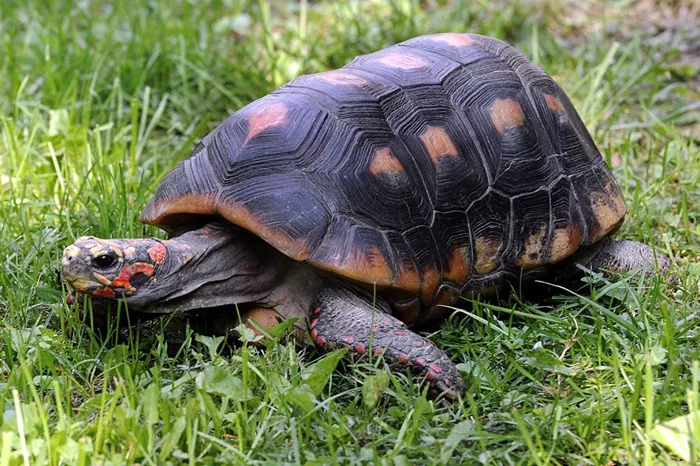
Redfoot tortoises (Chelonoidis carbonarius) are popular pets and fascinating reptiles. They are native to tropical regions of South America, including countries like Brazil, Venezuela, Colombia, and parts of the Caribbean. These tortoises are known for their striking shell patterns and the distinctive red or orange scales on their limbs, which give them their common name.
One common question among tortoise enthusiasts and pet owners is whether redfoot tortoises hibernate. Hibernation is a well-known survival strategy used by many cold-blooded animals, including some tortoise species. However, the answer is not straightforward for redfoot tortoises. Understanding whether redfoot tortoises hibernate requires looking at their natural habitat, biology, and behavior.
This article will explore the concept of hibernation, the natural environment of redfoot tortoises, their activity patterns, and how these factors influence their behavior in the wild and captivity. We will also discuss the implications for redfoot tortoise care, including whether owners should attempt to induce hibernation and how to manage the health of these tortoises throughout the year.
What Is Hibernation?
Before focusing on redfoot tortoises, it is important to understand what hibernation means. Hibernation is a state of prolonged inactivity and metabolic depression that animals enter to survive adverse conditions, usually cold winters with scarce food. It allows them to conserve energy by significantly lowering their body temperature, heart rate, and breathing.
Many reptiles, amphibians, and mammals use hibernation to survive cold or dry seasons. In reptiles, a similar process called brumation occurs. Brumation is like hibernation but adapted to cold-blooded animals. During brumation, reptiles become less active, stop eating, and retreat to safe places until conditions improve.
Not all tortoise species hibernate or brumate. Whether they do depends heavily on the climate and seasonal changes in their natural habitat.
Natural Habitat of Redfoot Tortoises
Redfoot tortoises are native to tropical and subtropical environments. They live in humid forests, grasslands, and savanna-like regions. Unlike many tortoise species found in temperate zones, the natural habitat of redfoot tortoises does not experience freezing temperatures or long, harsh winters.
In the wild, these tortoises face seasonal variations such as wet and dry seasons. The temperature remains relatively warm throughout the year, ranging typically between 75°F and 90°F (24°C to 32°C). The humidity is also consistently high, often exceeding 70%.
This warm and moist environment supports year-round activity for the tortoises. Unlike tortoises from colder climates, they do not need to enter prolonged inactivity to survive winter. Instead, their behavior adjusts primarily to rainfall and food availability during the dry season.
Do Redfoot Tortoises Hibernate in the Wild?
Because redfoot tortoises come from tropical regions, they do not hibernate in the true sense. Their environment rarely becomes cold enough to trigger hibernation or brumation. Instead, they remain active year-round but may reduce activity during extreme dry spells.
During the dry season, when food and water are less abundant, redfoot tortoises tend to be less active. They may seek shelter under logs, leaf litter, or burrows to conserve moisture and avoid heat stress. However, this is not a deep, prolonged hibernation state but rather a shorter period of reduced activity.
In some areas, redfoot tortoises have been observed to be more crepuscular or nocturnal during dry periods to avoid daytime heat and dehydration. When the rains return, the tortoises become more active, feeding and breeding.
In summary, redfoot tortoises do not hibernate because their tropical habitat does not require them to survive cold winters. Their behavior adapts to wet and dry seasons instead.
Comparison With Other Tortoise Species
To better understand redfoot tortoise behavior, it helps to compare them with other species that do hibernate.
Tortoises from temperate climates, such as the Russian tortoise (Agrionemys horsfieldii) or the Hermann’s tortoise (Testudo hermanni), regularly enter hibernation during cold winters. These species experience freezing temperatures and must survive long periods without food.
Hibernation in these tortoises involves burrowing underground or finding sheltered spots where the temperature remains above freezing. Their metabolism slows dramatically, and they do not eat or drink until spring.
In contrast, redfoot tortoises, from tropical climates, do not face freezing conditions. Therefore, they have no evolutionary need to develop hibernation behaviors. Instead, they have adapted to seasonal changes in rainfall and food availability.
What About Captive Redfoot Tortoises?
Many people keep redfoot tortoises as pets. When kept in captivity, especially in temperate regions with colder winters, owners often wonder if their tortoises should be allowed or encouraged to hibernate.
The short answer is no. Redfoot tortoises do not need to hibernate, and forcing them to do so can be dangerous. Since they are tropical animals, their bodies are not adapted to withstand prolonged cold or fasting during winter.
If a captive redfoot tortoise is exposed to cold temperatures or left without food for an extended period, it risks health problems, including respiratory infections, starvation, and weakened immune function.
Instead, captive redfoot tortoises should be kept in conditions that mimic their natural warm and humid environment as much as possible. This includes providing adequate heat, humidity, lighting, and access to fresh food throughout the year.
Temperature Requirements for Redfoot Tortoises in Captivity
To prevent health issues, maintaining proper temperature ranges is crucial. Ideally, redfoot tortoises should have daytime temperatures between 85°F and 95°F (29°C to 35°C) with a basking spot that can reach 95°F to 100°F (35°C to 38°C).
Nighttime temperatures should not drop below 70°F (21°C). If temperatures fall below this, the tortoise’s metabolism will slow down, and it may enter a lethargic state that resembles brumation but is not natural or healthy for long periods.
If your region experiences cold winters, keeping your tortoise indoors in a temperature-controlled environment is best. This includes using heat lamps, under-tank heaters, or heated enclosures.
Signs of Brumation or Reduced Activity in Redfoot Tortoises
While redfoot tortoises do not hibernate, they may show signs of reduced activity during unfavorable conditions such as prolonged cold or dry periods.
Owners might notice:
−Less appetite or refusal to eat
−Spending more time hiding or burrowing
−Decreased movement and lethargy
−Reduced basking behavior
These signs do not necessarily indicate hibernation but may be a stress response to environmental conditions. It is important to check temperature and humidity levels and adjust the enclosure accordingly.
If a tortoise stops eating for more than a few days or shows signs of illness, veterinary consultation is advised.
Managing Redfoot Tortoise Health Through Seasonal Changes
Proper husbandry is essential to keep redfoot tortoises healthy year-round. Since these animals do not hibernate, they need consistent care with attention to diet, hydration, temperature, and lighting.
Diet and Nutrition
Redfoot tortoises are omnivorous. In the wild, they eat a variety of plants, fruits, and small invertebrates. In captivity, their diet should be rich in leafy greens, fruits, and occasional protein sources.
During dry seasons or when tortoises reduce activity, it is important to keep offering fresh food and clean water. Dehydration is a common risk, so soaking tortoises in shallow warm water can help maintain hydration.
Lighting and UVB Exposure
UVB lighting is critical for tortoise health. It enables them to produce vitamin D3, which is necessary for calcium absorption and shell growth. A lack of UVB can cause metabolic bone disease and other health problems.
Tortoises should receive 10-12 hours of UVB exposure daily. In natural conditions, they get this from sunlight year-round.
Enclosure Humidity
Redfoot tortoises thrive in high humidity, around 70% or more. Dry conditions can cause shedding problems, respiratory infections, and general stress.
Misting the enclosure, using substrate that retains moisture, and providing hiding places with leaf litter can help maintain humidity.
Risks of Forced Hibernation in Redfoot Tortoises
Some owners may try to force their redfoot tortoises to hibernate, especially if they misunderstand the species’ natural needs. This practice is dangerous.
Forcing hibernation through cooling or starvation can cause:
−Immune suppression and infections
−Organ failure due to lack of nutrition
−Death from cold exposure
−Irreversible metabolic damage
Veterinarians and reptile experts generally advise against hibernating redfoot tortoises. If a tortoise becomes lethargic due to environmental stress, improving care conditions is the best course of action.
Summary and Recommendations
−Redfoot tortoises do not hibernate in the wild because they live in warm tropical environments without cold winters.
−They remain active year-round but may reduce activity during dry seasons.
−In captivity, redfoot tortoises should never be forced to hibernate.
−Maintaining proper temperature, humidity, diet, and UVB lighting is essential to keep them healthy.
−Signs of reduced activity are usually stress responses, not natural hibernation.
−Forced hibernation can be fatal for redfoot tortoises.
For anyone keeping redfoot tortoises as pets, understanding their tropical origins and natural behaviors is key to providing good care and a long, healthy life for these beautiful reptiles.
Related topics: