
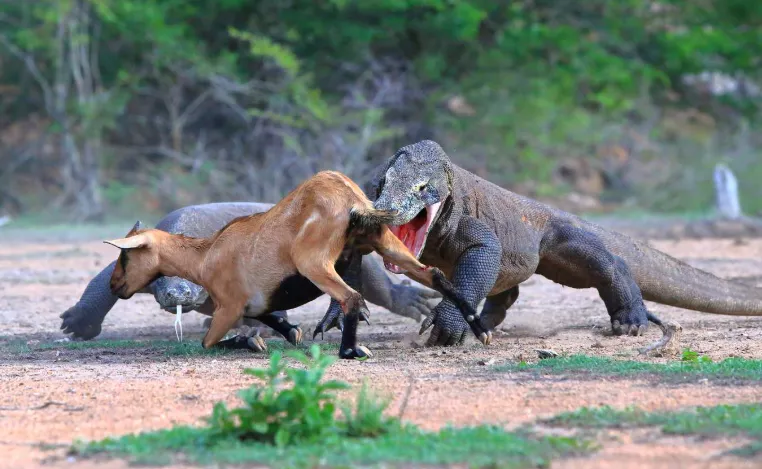
Komodo dragons are some of the most fearsome creatures in the animal kingdom. These large lizards are apex predators, which means they sit at the top of the food chain in their habitat. Despite their power and size, one might wonder if there are any creatures that could pose a threat to them. In this article, we will explore the potential predators of Komodo dragons, their survival tactics, and how they maintain their dominance in the wild.
Understanding Komodo Dragons
Komodo dragons are the largest living lizards, reaching lengths of up to 10 feet and weighing over 300 pounds. These reptiles are native to the Indonesian islands of Komodo, Rinca, Flores, and Gili Motang. They are known for their strength, sharp claws, and venomous bite, making them dominant predators in their ecosystem.
Komodo dragons primarily hunt and scavenge for food, preying on animals such as deer, wild boars, and even smaller Komodo dragons. Their powerful jaws can crush bones, and their venomous saliva helps incapacitate prey. Despite these adaptations, they are not invincible and face threats from other animals, including humans.
Komodo Dragon’s Position in the Food Chain
As apex predators, Komodo dragons sit at the top of the food chain. Their diet consists of a variety of animals, including mammals, birds, and reptiles. They are opportunistic feeders, often scavenging from the kills of other predators. This position allows them to dominate their environment with few natural enemies.
Predators of Juvenile Komodo Dragons
While adult Komodo dragons have few natural predators, juvenile Komodo dragons are more vulnerable. In their early stages of life, young Komodo dragons are small and not as equipped for survival. They are often targeted by larger animals, including birds of prey, wild pigs, and even adult Komodo dragons.
Juvenile Komodo dragons face the threat of being eaten by their own species. Komodo dragons are known to engage in cannibalistic behavior, with larger dragons sometimes hunting and consuming smaller ones. This is particularly common when there is competition for food or territory.
Potential Threats to Adult Komodo Dragons
Adult Komodo dragons are formidable predators, but they are not completely free from threats. The main dangers they face come from other large predators, environmental factors, and human activities.
Humans as a Threat
One of the most significant threats to Komodo dragons is human activity. Habitat destruction, poaching, and climate change all pose risks to the species. Humans often encroach on Komodo dragon habitats, leading to a loss of territory and food sources. Poaching is also a serious concern, as some people hunt Komodo dragons for their skin and other body parts.
Other Large Predators
Komodo dragons are top predators in their habitat, but they still face occasional threats from other large animals. For instance, some large wild cats, such as the Bengal tiger, may pose a threat to young or injured Komodo dragons. However, these encounters are rare due to the geographical separation of the two species.
Other Reptilian Threats
Other reptiles, such as crocodiles, could also pose a threat to Komodo dragons. Saltwater crocodiles, which inhabit the same regions as Komodo dragons, are capable of taking down large animals, including lizards. However, these reptiles typically do not prey on adult Komodo dragons, as the lizards are large and powerful enough to defend themselves.
How Komodo Dragons Defend Themselves
Komodo dragons are not only powerful predators, but they also have several defense mechanisms that help them avoid being killed by other animals. These include their size, speed, and venomous bite, which makes them difficult targets for most predators.
Venomous Bite
Komodo dragons are equipped with venomous saliva that contains toxins capable of immobilizing their prey. This venom can also deter potential predators. When a Komodo dragon bites its prey, the venom causes the animal to weaken and eventually die, making it easier for the dragon to consume it.
Camouflage and Stealth
Komodo dragons also use camouflage to avoid detection by other animals. Their scales blend well with the environment, allowing them to remain hidden from predators and prey alike. This helps them avoid dangerous encounters with other animals.
Size and Strength
The size and strength of adult Komodo dragons make them formidable opponents. A fully grown Komodo dragon is capable of defending itself from most animals, including other predators. Their sharp claws and powerful jaws give them an advantage in combat situations.
Conclusion
In conclusion, while Komodo dragons are apex predators in their ecosystem, they do face some threats, particularly in their juvenile stages. Adult Komodo dragons have few natural predators due to their size, strength, and venomous bite. However, they still face dangers from humans, habitat loss, and other large predators. Despite these challenges, Komodo dragons remain one of the most dominant species in their habitat, continuing to thrive through their impressive survival adaptations.
Related topics