
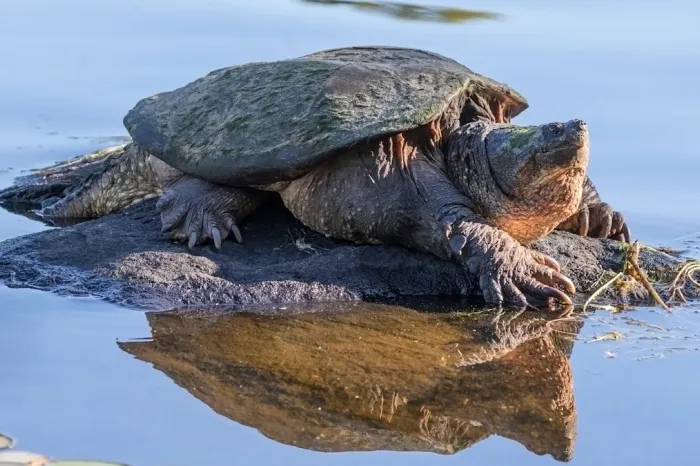
Snapping turtles are among the most recognizable freshwater turtles in North America. They have powerful jaws and a rugged appearance, but many people wonder just how big these turtles can get. Understanding their size involves looking at different species and growth patterns. This article will guide you through the typical sizes of snapping turtles and what affects their development.
Average Size of Snapping Turtles
The most common species, the common snapping turtle (Chelydra serpentina), usually reaches about 8 to 18 inches in shell length as adults. Their weight can range from 10 to 35 pounds, although some individuals grow larger under ideal conditions. The larger the turtle, the longer its lifespan tends to be.
Another species, the alligator snapping turtle (Macrochelys temminckii), is notably bigger. This species can grow up to 26 inches or more in shell length and weigh over 200 pounds in rare cases. Their size makes them one of the largest freshwater turtles in the world.
Factors Influencing Size
Several factors influence how big a snapping turtle grows. Genetics play a significant role, determining the maximum potential size. Environmental conditions such as availability of food, water quality, and habitat space also affect growth rates. A well-fed turtle with plenty of space will generally grow larger than one in a crowded or resource-poor environment.
Age is another crucial factor. Snapping turtles grow slowly but steadily throughout their lives. It can take many years for them to reach full size, with some continuing to grow even after reaching adulthood.
Physical Characteristics Related to Size
The size of a snapping turtle isn’t just about length or weight; it also includes its shell shape and limb strength. The shell is usually rough and ridged, providing protection against predators. Larger turtles have stronger jaws and limbs, which help them catch prey and defend themselves effectively.
Their size also influences their behavior. Bigger snapping turtles tend to be more territorial and assertive compared to smaller ones. This is especially true for alligator snapping turtles, which use their impressive size to dominate habitats.
Conclusion
In summary, snapping turtles vary widely in size depending on species, genetics, environment, and age. Common snapping turtles typically measure between 8 and 18 inches in shell length, while alligator snapping turtles can exceed 26 inches and weigh significantly more. These reptiles are slow-growing but can become quite large over time. Understanding their size helps us appreciate their role in aquatic ecosystems and highlights the importance of conserving their natural habitats.
Frequently Asked Questions
How long does it take for a snapping turtle to reach full size?
Snapping turtles grow slowly and may take 15 to 20 years or more to reach full size.
Can snapping turtles grow larger in captivity?
They can grow well if provided with adequate space, diet, and care but usually don’t exceed sizes seen in the wild.
What is the difference between a common snapping turtle and an alligator snapping turtle?
The alligator snapping turtle is larger, heavier, and has a more rugged shell with pronounced ridges compared to the common snapping turtle.
Are snapping turtles dangerous because of their size?
While they have strong jaws and can bite if threatened, they generally avoid humans unless provoked.