
Reptiles are a diverse group of animals that have existed for millions of years. They include snakes, lizards, turtles, and crocodilians. Among all reptiles, some have grown to enormous sizes. But which is the biggest reptile on Earth? Understanding the largest reptiles helps us appreciate their evolution, survival strategies, and role in the ecosystem.
In this article, we will explore the biggest reptiles, their physical characteristics, habitats, diet, and more. We will also compare different reptiles to determine which one truly holds the title of the largest.
The Definition of “Biggest Reptile”
The term “biggest reptile” can be interpreted in different ways. Some scientists measure size by length, while others consider weight. For example, a long snake may not weigh as much as a large crocodile. Therefore, when discussing the biggest reptiles, it is important to consider both length and weight.
The Saltwater Crocodile
The saltwater crocodile is widely recognized as the largest living reptile in the world. These massive predators are known for their incredible strength and size. Male saltwater crocodiles can reach lengths of up to 7 meters (23 feet) and weigh more than 1,000 kilograms (2,200 pounds).
Physical Characteristics
Saltwater crocodiles have a broad snout, powerful jaws, and a muscular tail that helps them swim. Their bodies are covered in tough, armored scales called scutes. These reptiles are built for both land and water hunting.
Habitat
Saltwater crocodiles are found in Southeast Asia, Northern Australia, and the eastern coast of India. They prefer rivers, estuaries, and coastal areas. These reptiles are excellent swimmers and can travel long distances in the sea.
Diet
These crocodiles are carnivorous. They eat fish, birds, mammals, and sometimes even sharks. Saltwater crocodiles are ambush predators, using their stealth and power to catch prey.
The Nile Crocodile
The Nile crocodile is another giant reptile that rivals the saltwater crocodile in size. Found in freshwater rivers and lakes across Africa, the Nile crocodile is highly feared for its aggressive nature.
Physical Characteristics
Nile crocodiles can grow up to 6 meters (20 feet) in length and weigh around 900 kilograms (2,000 pounds). Their skin is dark with a rough texture, helping them blend into murky waters.
Habitat
These crocodiles live mainly in the Nile River, as well as other rivers and wetlands throughout Africa. They require water bodies to regulate their body temperature and hunt for food.
Diet
Nile crocodiles feed on fish, antelope, birds, and sometimes larger mammals. They have powerful jaws capable of crushing bones and are known to use cooperative hunting techniques in some areas.
The Komodo Dragon
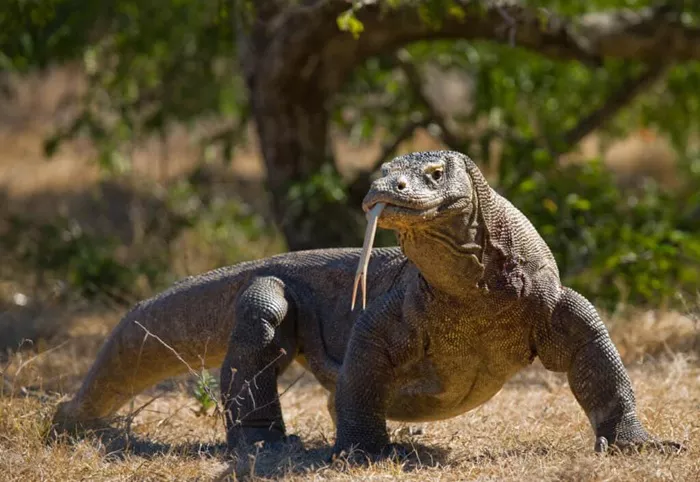
The Komodo dragon is the largest living lizard on Earth. Unlike crocodiles, it is terrestrial, meaning it lives primarily on land. Komodo dragons are found on a few Indonesian islands, including Komodo, Rinca, and Flores.
Physical Characteristics
Komodo dragons can reach lengths of up to 3 meters (10 feet) and weigh up to 90 kilograms (200 pounds). Their bodies are muscular, with long tails and sharp claws. Their skin is rough and resistant to injuries.
Habitat
Komodo dragons live in dry, tropical forests and savannas. They prefer areas with ample prey and hiding spots for ambushing.
Diet
These lizards are carnivorous and feed on deer, pigs, and smaller reptiles. Komodo dragons have a venomous bite that weakens their prey over time, making hunting more efficient.
The Green Anaconda
The green anaconda is the heaviest and one of the longest snakes on Earth. It is native to South America and primarily lives in swamps, rivers, and flooded forests.
Physical Characteristics
Green anacondas can grow over 6 meters (20 feet) long and weigh more than 200 kilograms (440 pounds). Their thick, muscular bodies allow them to constrict prey effectively.
Habitat
Green anacondas thrive in wet environments such as the Amazon and Orinoco basins. Water helps support their massive bodies and allows them to hunt aquatic and terrestrial animals.
Diet
Anacondas are non-venomous constrictors. They feed on fish, birds, mammals, and even caimans. Their ability to swallow large prey whole makes them formidable predators.
Comparison of the Largest Reptiles
When comparing the largest reptiles, it is important to consider both length and weight:
- Saltwater crocodile: Up to 7 meters long, over 1,000 kilograms.
- Nile crocodile: Up to 6 meters long, around 900 kilograms.
- Green anaconda: Up to 6 meters long, around 200 kilograms.
- Komodo dragon: Up to 3 meters long, around 90 kilograms.
From this comparison, the saltwater crocodile emerges as the biggest reptile when considering both length and mass. The green anaconda can rival the crocodile in length but is significantly lighter. Komodo dragons are much smaller but are the heaviest lizards on land.
Evolutionary Factors That Enable Large Size
The enormous size of reptiles such as crocodiles and anacondas is due to millions of years of evolution. Factors include:
- Abundant food sources: Access to large prey supports growth.
- Efficient metabolism: Cold-blooded reptiles use energy more efficiently, allowing larger sizes.
- Predatory advantages: Bigger size provides protection and hunting dominance.
- Habitat support: Water bodies and warm climates help support massive bodies.
Conservation Status of Large Reptiles
Many of the world’s largest reptiles face threats from habitat loss, hunting, and climate change. Saltwater crocodiles, for instance, were heavily hunted for their skins in the 20th century, but conservation efforts have helped their populations recover.
Komodo dragons are classified as vulnerable due to habitat loss and human encroachment. Green anacondas and Nile crocodiles also face pressures from deforestation and pollution.
Protecting these reptiles is essential, as they play key roles in their ecosystems by maintaining balance and controlling prey populations.
Interesting Facts About the Largest Reptiles
- Saltwater crocodiles can leap out of water to catch prey in surprising bursts of speed.
- Green anacondas can hold their breath for up to 10 minutes while submerged.
- Komodo dragons have a keen sense of smell and can detect prey from several kilometers away.
- Nile crocodiles have been known to cooperate in hunting, an unusual behavior among reptiles.
Conclusion
The title of the biggest reptile on Earth belongs to the saltwater crocodile. It surpasses all other reptiles in both length and weight. While green anacondas can reach impressive lengths and Komodo dragons dominate the land as lizards, saltwater crocodiles are unmatched in size and power. Understanding these magnificent creatures allows us to appreciate the incredible diversity of reptiles and the evolutionary adaptations that have made them some of the most formidable animals on Earth. Conserving their habitats ensures that future generations will continue to witness these living giants.
Related topics: