
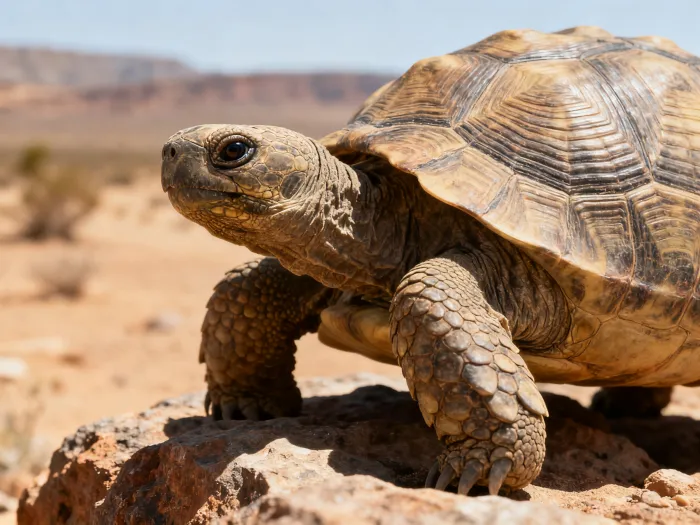
Have you ever watched a tortoise slowly make its way across your garden and wondered, “Are tortoises smart?” This is a question that intrigues both reptile experts and casual pet owners alike. At first glance, tortoises may seem quiet and simple, with their slow movements and calm demeanor. But is there more to these fascinating reptiles than meets the eye? What does science say about tortoise intelligence? In this article, we will dive deep into the world of tortoises, exploring their brainpower, problem-solving abilities, and how their intelligence compares to other reptiles. Prepare to be surprised—there’s much more going on inside that shell than you might think!
The Brain Behind the Shell: Understanding Tortoise Intelligence
To understand whether tortoises are smart, let’s start by looking at their brains. Compared to mammals like dogs or humans, tortoises have smaller and simpler brains. But don’t let size fool you! Just like a tiny phone can have amazing technology inside, a tortoise’s brain is perfectly designed for its lifestyle.
Tortoise brains are structured to help them survive in challenging environments. They remember where water sources are located and can find food even when it’s hidden under leaves or rocks. For example, some species of tortoise can recognize specific plants that are safe to eat and avoid those that might be poisonous. This kind of memory shows a practical form of intelligence.
Researchers have discovered that tortoises can solve simple puzzles. In laboratory tests, tortoises have been given mazes or obstacles to navigate. They often learn from trial and error, finding the fastest route over time. Think of it like playing a video game—you might not win on your first try, but you get better with practice!
When compared to other reptiles, such as snakes or lizards, tortoises often display better spatial memory and problem-solving skills. According to a study published in the journal “Animal Cognition,” red-footed tortoises demonstrated the ability to learn how to open doors by pushing them with their noses—a task that requires both memory and experimentation.
Everyday Examples: How Tortoises Show Their Smarts
You might wonder how all this scientific talk translates into real life. Let’s look at some everyday examples that show just how clever these reptiles can be.
Imagine owning a pet tortoise named Max. Every morning, Max knows exactly when you come outside with fresh lettuce. He even learns your routine—if you change the feeding time, he’ll be waiting for you at the new hour within a few days! This is called associative learning. Tortoises use this skill to remember patterns and routines in their environment.
Another fun example comes from zookeepers who train giant Galápagos tortoises using target sticks. By rewarding the tortoise with food when it touches a colored stick with its nose, keepers teach these reptiles to follow simple commands. Some keepers report that their Galápagos tortoises recognize individual caretakers—even turning toward familiar voices or faces!
Tortoises also show social awareness in group settings. When several tortoises share an enclosure, they sometimes cooperate to reach food placed on high platforms—stacking themselves up or nudging each other closer to the treat. This behavior might not be as dramatic as teamwork among dolphins or chimpanzees but shows a surprising level of adaptability.
Comparing Tortoise Intelligence: Reptiles Versus Other Animals
So how do tortoises stack up against other animals in terms of intelligence? While they may not rival dogs or parrots in learning tricks, their cognitive abilities are impressive for reptiles.
Let’s use an analogy: Imagine animal intelligence as a toolbox. Mammals might have many fancy tools (like problem-solving and empathy), birds may have clever gadgets (like vocal mimicry), but reptiles tend to have reliable basics (like spatial memory and survival skills). Tortoises stand out among reptiles because they use their “tools” efficiently.
For instance, studies comparing turtles and snakes found that turtles—including many species of tortoise—are better at navigating mazes and remembering locations of hidden food. According to research published in “Behavioural Processes,” Hermann’s tortoises were able to learn the location of rewards faster than corn snakes when given similar tasks.
Some scientists argue that reptile intelligence is often underestimated simply because it looks different from what we expect. Tortoises don’t fetch sticks or solve math problems—but they excel at tasks important for survival in the wild.
Anecdotes from experienced keepers support this view. One keeper recalls her Greek tortoise figuring out how to climb up onto a low wall by wedging itself between stones—a feat requiring both physical skill and creative problem-solving.
How Environment Shapes Tortoise Intelligence: Adaptation Over Time
A fascinating aspect of tortoise intelligence is how it has evolved over millions of years. The environment plays a huge role in shaping cognitive skills in all animals—including our slow-moving friends.
Tortoises live in diverse habitats ranging from deserts to rainforests. In dry regions like Africa’s Kalahari Desert, species such as the leopard tortoise must remember where water holes are during long droughts—a true test of spatial memory! Meanwhile, rainforest-dwelling red-footed tortoises must recognize hundreds of different plant types and avoid toxic ones.
This adaptability is reflected in their behavior as pets too. Owners who move furniture around or change feeding spots notice that their pet tortoise quickly learns new paths—even finding hiding places under couches or behind garden pots.
International reports highlight how wild populations use landmarks like rocks or trees to navigate back home after traveling long distances for food or nesting sites. This ability resembles how people use street signs or buildings to find their way around town!
Historical records show that ancient cultures admired these skills as well. In Greece and Egypt, stories were told about wise old turtles (and tortoises) who outsmarted predators by hiding in clever places or using camouflage—demonstrating not just instinct but learned behavior passed down through generations.
Problem-Solving Skills: Puzzles and Challenges for Pet Tortoises
You might be surprised by just how good pet tortoises are at solving problems! When keepers set up puzzles—like placing treats under cups or behind small barriers—tortoises will experiment with different strategies until they succeed.
For example, some Russian tortoises learn to push lightweight objects out of their way if there’s food behind them. Others figure out how to climb short ramps or squeeze through tight spaces by trial and error. According to Dr. Anna Wilkinson from the University of Lincoln (UK), red-footed tortoises she studied could learn new tasks after only a few tries—a sign of flexible thinking.
If you own a pet reptile yourself, try offering simple challenges: hide a strawberry under an overturned bowl and watch your shelled friend work out how to tip it over! These activities not only enrich your pet’s life but also reveal just how resourceful they can be.
Some keepers even report emotional responses—like frustration when faced with difficult puzzles or excitement when they succeed (rushing over for a treat). While scientists debate whether these feelings are comparable to those in mammals, it’s clear that complex behaviors exist in these slow-paced animals.
Social Interactions: Do Tortoises Communicate?
Communication is another way animals show intelligence—and yes, even solitary creatures like the sulcata (African spurred) tortoise communicate with others! While they don’t bark or chirp like other pets, they use body language: gentle nudges mean “move over,” while head bobbing can signal curiosity or mild annoyance.
During mating season or territorial disputes, male tortoises sometimes engage in “battles” using shell-bumping contests—a subtle but effective form of communication. Female desert tortoises may dig shallow nests together if space is limited—a rare example of cooperation among reptiles.
Pet owners notice unique personalities too! Some sulcata owners say their animals recognize individual family members—moving toward favorite people for attention or treats while ignoring strangers.
Stories from reptile enthusiasts around the world highlight creative interactions between different species as well: red-footed tortoises sharing basking spots with iguanas; box turtles playing tag-like games with fellow tank mates; even wild desert dwellers signaling warnings through rapid shell movements when predators approach!
These interactions suggest that social awareness exists even in solitary species—and provide yet another clue about the hidden depths of reptile intelligence.
Memory Matters: Long-Term Learning in Tortoises
Memory is one key area where reptile experts agree—tortoises excel! Unlike some pets who forget commands quickly (think goldfish), many species retain important information for years.
For instance, Aldabra giant tortoises living on islands off Africa can remember safe paths through forests decades after first traveling them as juveniles—a vital skill for avoiding predators and finding food during seasonal changes.
In captivity too, owners report that their Hermann’s or Russian tortoises recall specific hiding places year after year—even if enclosures are rearranged or new obstacles added! This ability makes them surprisingly adaptable despite slow movement speeds.
According to Dr. Wilkinson’s research cited earlier (Animal Cognition journal), red-footed individuals remembered solutions to complex tasks months after initial training sessions—a level of retention rarely seen outside birds and mammals.
This impressive memory has important implications for conservation efforts worldwide; released animals can find old nesting grounds even after years away—a trait crucial for preserving endangered populations amid habitat loss and climate change challenges.
Conclusion: Are Tortoises Smart?
So—are tortoises smart? Absolutely! While their intelligence may look different from what we see in dogs or cats (or even other reptiles), there’s no doubt these remarkable creatures possess skills essential for survival—and sometimes even surprise us with creativity and adaptability beyond expectations.
Whether solving puzzles at home or navigating wild landscapes across continents; communicating subtly with friends; remembering details for years on end—the humble shelled reptile deserves respect as one of nature’s clever survivors!
Next time you watch your own pet explore its world—or hear stories about wise old desert dwellers—remember: beneath every shell lies a mind built for adventure!
Related topics: