
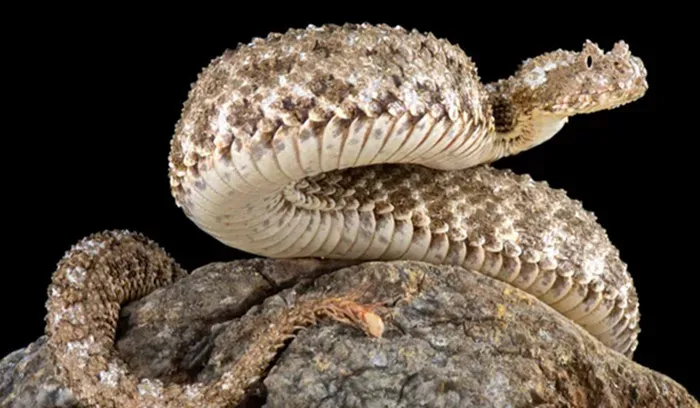
Imagine walking in the wilds of western Iran, where the rocky landscape hides secrets older than civilization itself. You might think you know snakes, but there’s one that could truly surprise you—the Spider-tailed Horned Viper (Pseudocerastes urarachnoides). This extraordinary reptile is famous for one of the most mind-blowing adaptations in the animal kingdom: its tail looks just like a spider! How cool is that? This article takes you on an adventure into the world of this viper, answering questions you might not even know you had about this unique snake. Why does it have such a strange tail? How does it use this adaptation to survive? What makes it different from other snakes?
Let’s unlock the mystery together. We’ll break down complex terms into simple explanations, use analogies to make things clear, and share real stories from reptile experts who have seen this creature in action. If you’ve ever wondered how reptiles like snakes manage to thrive in harsh environments or wanted to learn about nature’s most creative solutions for survival, you’re in the right place. Get ready—this is not your average snake story!
What Exactly Is the Spider-tailed Horned Viper?
The Spider-tailed Horned Viper is a species of snake in the family Viperidae—commonly called vipers. Vipers are famous for their venom and their triangular heads. But this particular snake stands out even among vipers because of its amazing tail. Let’s break down its scientific name: Pseudocerastes urarachnoides. The word “Pseudocerastes” means “false horned,” while “urarachnoides” comes from Greek roots meaning “tail that looks like a spider.” So, right in its name, scientists are telling us what makes it special.
This species was officially described only recently—in 2006—by researchers Bostanchi, Anderson, Kami, and Papenfuss. It lives mainly in western Iran and sometimes crosses into Iraq, specifically favoring rocky mountains and gypsum-rich landscapes. According to the International Union for Conservation of Nature (IUCN), it’s classified as Near Threatened. That means it’s at risk of becoming endangered if conditions worsen—a reminder of how precious and rare these snakes are.
Think of the viper’s habitat as a kind of fortress. The rocks and cracks act like safe houses where the snake can hide from predators and wait for prey. The climate here is harsh, with scorching summers and chilly winters, but the viper knows how to use shade and humidity trapped in rock crevices to stay comfortable—like how you’d find relief under a tree on a hot day.
The viper belongs to a group called “Squamata”—the order that includes all lizards and snakes. Its family, Viperidae, is known for having venomous species with long fangs. Within this family, the genus Pseudocerastes includes three species: Persian horned viper (Pseudocerastes persicus), Field’s horned viper (Pseudocerastes fieldi), and our star—the spider-tailed horned viper.
Analogies That Make It Simple:
- Vipers are like nature’s security guards—they protect themselves with venom.
- Gypsum rocks are their apartment buildings—they live in cracks and holes just like people live in rooms.
- The spider-like tail is their fishing lure—imagine using bait to catch fish; here, the bait catches birds!
According to molecular studies (Fathinia et al., 2014), this viper is most closely related to the Persian horned viper—not Field’s horned viper—even though they look similar.
Anatomy: What Makes This Snake Look Like a Spider?
Let’s talk about what really sets the Spider-tailed Horned Viper apart: its tail! If you ever get close enough (from a safe distance), you’ll see something that looks more like an insect than part of a snake—a bulb-shaped tip surrounded by long scales drooping like spider legs. It’s so convincing that early scientists thought they were looking at parasites or tumors!
This isn’t just for show—it’s a carefully crafted tool for hunting. Imagine holding up a toy spider to attract birds; that’s exactly what this snake does with its tail. When a hungry bird spots what looks like an easy meal—a juicy spider—it swoops down, only to become lunch for the snake instead.
Breaking Down Complex Terms:
- Subcaudal scales: These are scales under the tail; there are about 15 pairs on this snake.
- Horned appearance: Like cartoon villains with horns above their eyes—these scales stick up and give it a fierce look.
- Bulb-like tail tip: Picture an inflated balloon at the end of a string—that’s what the tail tip looks like.
- Caudal luring: “Caudal” means tail; “luring” means attracting prey—so it literally means using your tail as bait!
This viper also has rough body scales compared to its relatives, which help it blend into rocky surroundings (like camouflage clothing). Between its “horns,” there are 16–17 scales—a detail herpetologists use to identify it.
Real-life Anecdote:
A herpetologist once described watching a spider-tailed horned viper in action: “It was waving its tail just like a spider crawling on rocks. A lark flew down, thinking it found dinner—but instead became dinner itself!” This hunting trick has been filmed by BBC Earth for ‘Seven Worlds, One Planet,’ narrated by David Attenborough—don’t miss it if you’re curious!
Where Does It Live? Exploring Its Habitat and Range
If you’re wondering where you might find one of these amazing reptiles, start with western Iran—especially the Zagros Mountains. These mountains act as both home and hiding place for many snakes, but none quite as unique as Pseudocerastes urarachnoides. Sometimes they cross into eastern Iraq too.
Their favorite places are rocky slopes made mostly of gypsum—a mineral that helps keep crevices humid even during hot summers. Think about how cool basements feel compared to upstairs rooms when it’s hot outside; these cracks trap moisture and provide perfect shelter.
During daylight hours, these vipers prefer hiding under shrubs or inside rock holes where temperatures are milder—a smart move considering how hot deserts can get! At night or during cooler hours, they may emerge to hunt.
Their range isn’t huge—and according to researchers like Fathinia et al. (2020), climate change and habitat loss could make things worse. Conservationists track populations closely because shrinking habitats mean fewer places for snakes to live safely.
Overlap With Other Species:
Sometimes their range overlaps with two close relatives—the Persian horned viper (in Ilam Province) and Field’s horned viper (near Qasr-e Shirin). But thanks to their distinctive tails, experts can tell them apart easily.
Fun Fact:
Local villagers sometimes mistake these vipers for regular snakes or even spiders until they see them move—talk about an unexpected surprise!
The Science Behind Its Survival: Mimicry and Behavior Explained Simply
Here’s where things get really interesting—the Spider-tailed Horned Viper uses mimicry as its main hunting strategy. In simple terms, mimicry means pretending to be something else so you can trick others; magicians do it with illusions, but this snake does it naturally!
The technical term here is Peckhamian mimicry, named after scientists who first studied animal tricks like this. The snake waves its tail in complex patterns—sometimes even figure-of-eight shapes—to make birds think they’ve found a tasty spider crawling on rocks.
Why birds? Most birds in this region love eating insects and spiders—they’re easy prey compared to rodents or lizards hiding underground. By mimicking a spider so well, the viper increases its chances of attracting hungry birds right within striking range.
Other Snakes Use Similar Tricks…But Not Quite Like This:
There are other snakes that use their tails as lures—horned adder (Bitis caudalis), sidewinder (Crotalus cerastes), eastern copperhead (Agkistrodon contortrix), common death-adder (Acanthophis antarcticus)—but none have evolved such realistic “spider legs” on their tails! This makes Pseudocerastes urarachnoides truly special among reptiles.
Field studies by Fathinia et al. (2015) showed that when birds were nearby, these vipers waved their tails much more energetically—a sign that they know exactly when their trick will work best! It’s like turning up your charm when someone is watching.
Interactive Moment:
Next time you watch wildlife footage or visit an aquarium exhibit featuring snakes, look out for any unusual tails or behaviors—they might be using mimicry too!
Venom: A Potent Mix Designed for Birds…and More!
What happens when prey falls for the viper’s trick? That’s where venom comes into play! Like all vipers, Pseudocerastes urarachnoides has venom glands connected to long fangs—think of them as hypodermic needles filled with fast-acting poison.
But here’s what sets this snake apart: Its venom works especially well against birds! Most vipers have venom targeting mammals or amphibians—but studies by Brouw et al. (2021) show that this species has evolved toxins that rapidly destroy bird cells through cytotoxic effects (meaning they break down cells quickly).
Venom also acts as a procoagulant—it makes blood clot very fast (sometimes within 13 seconds!). For comparison, normal blood clotting takes much longer; imagine pouring glue onto paper versus superglue—it sticks almost instantly!
Interestingly, young snakes might target amphibians like toads—their venom works well on these animals too. Scientists think juveniles may eat more amphibians while adults focus on birds—a clever way to make sure every age group gets enough food.
Human risk? So far, there hasn’t been any recorded case of someone being bitten by one of these vipers in the wild. Their habitat is remote and encounters are rare—but lab studies show their venom could affect human blood clotting if bitten (affecting Factor X protein). Still, experts urge caution whenever dealing with any venomous reptiles!
Venom Variation:
Research reveals that individual vipers may have slightly different venoms depending on diet or region—a sign of how adaptable nature can be!
Awesome Fact:
BBC Earth featured footage of this snake luring migrating birds—proving just how effective its hunting strategy is!
Conservation Status: Protecting an Unusual Reptile Treasure
Now comes an important question: How safe is this amazing species? The Spider-tailed Horned Viper is currently listed as Near Threatened by IUCN Red List standards—which means it could face serious risks soon if things don’t improve. Conservation groups monitor populations closely because habitat loss due to farming expansion or climate change threatens their survival.
Their home range—the Zagros Mountains—is shrinking due to human activities such as mining gypsum or clearing land for crops. Fewer safe cracks mean fewer places for snakes to hide or hunt effectively.
International treaties like CITES list them under Appendix II—which restricts trade but doesn’t ban it outright; collectors must obtain special permits if transporting these reptiles across borders.
How You Can Help:
If you’re passionate about wildlife conservation or reptiles specifically:
- Support organizations working in Iran/Iraq on habitat protection projects.
- Educate others about why rare animals matter—even those that look scary!
- Share documentaries like BBC Earth’s episode featuring Pseudocerastes urarachnoides—it raises awareness globally.
- Avoid buying wild-caught reptiles as pets unless certified by responsible programs; captive breeding helps preserve wild populations.
- Report any illegal trade sightings online through trusted conservation channels—you could make a real difference!
According to Anderson & Papenfuss (2022), ongoing research is essential not only for saving individual snakes but also for maintaining balanced ecosystems where reptiles play key roles controlling pests and supporting biodiversity.
Don’t miss your chance to be part of protecting nature’s most creative survivors!
Conclusion: Why Is the Spider-tailed Horned Viper So Special?
In summary, the Spider-tailed Horned Viper stands out among all reptiles because of its incredible adaptation—a tail so convincingly shaped like a spider that it fools both prey and people alike! Its story teaches us about evolution’s power to create solutions almost beyond belief—from camouflage scales blending into gypsum rocks to venom tailored perfectly for bird prey.
This remarkable snake reminds us that nature is endlessly inventive—and sometimes downright jaw-dropping! Whether you’re an aspiring zoologist or simply fascinated by wildlife documentaries, learning about Pseudocerastes urarachnoides opens your eyes to new possibilities in animal behavior and adaptation strategies among reptiles worldwide.
So next time someone asks what makes snakes interesting—share the tale of the spider-tailed horned viper! Who knows—you might inspire someone else to unlock amazing discoveries in zoology too!
Related topics: