
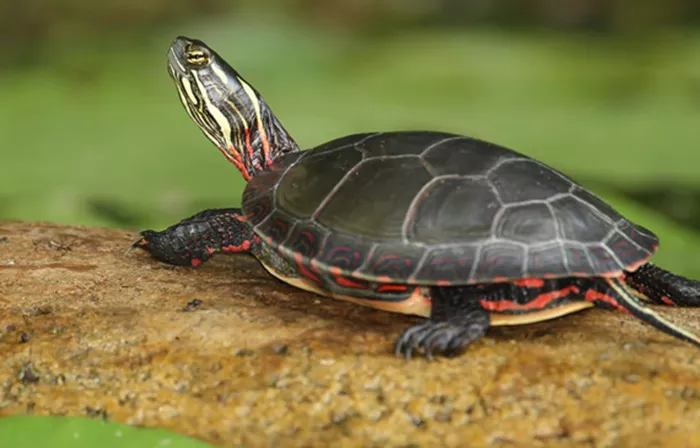
Painted turtles are some of the most recognized and studied reptiles in North America. Known for their colorful markings and habitat in freshwater ponds, lakes, and marshes, they provide a fascinating glimpse into the lives of aquatic reptiles. One common question that arises when discussing painted turtles is whether or not they have teeth.
While many animals are equipped with teeth to help them tear food or defend themselves, turtles have a different approach. This article will explore whether painted turtles possess teeth, how they consume food without them, and the structure of their mouths and jaws. The article will also delve into the broader anatomy of painted turtles, offering a deeper understanding of their unique adaptations and behavior.
Do Painted Turtles Have Teeth?
Painted turtles, like all turtles, do not have teeth. Instead, they have sharp, beak-like structures that they use for eating. These beaks are composed of keratin, the same material that makes up human nails and animal hooves. The lack of teeth is a characteristic shared by all turtles, as well as other reptiles like lizards and snakes. Turtles’ mouths are adapted to their diet, which typically consists of a mix of plants, small animals, and insects.
Instead of teeth, painted turtles have a sharp beak that helps them grip and tear food. The sharpness of the beak varies depending on the turtle‘s diet. For instance, carnivorous turtles might have sharper beaks compared to herbivores. Painted turtles, being omnivores, use their beaks to cut and crush their food.
The Structure of a Painted Turtle’s Mouth
A painted turtle‘s mouth, or oral cavity, is designed to meet the needs of its diet. The beak is hard and covered in a tough layer of keratin. The beak does not have the same structure as teeth, as it is not meant to tear food into smaller pieces through chewing. Instead, the beak helps the turtle cut or break apart its food in one motion.
The turtle’s mouth contains a series of grooves, ridges, and sharp edges on the beak that allow it to manipulate food. The upper and lower beaks meet in a way that helps the turtle tear apart soft vegetation, insects, and other small animals. This design makes it easier for the turtle to consume a variety of foods while avoiding the need for teeth.
How Painted Turtles Eat
Since painted turtles don’t have teeth, they rely on other mechanisms to break down food. They often use their sharp beaks to bite and tear food into smaller, manageable pieces. When eating plant material like aquatic plants, algae, or grasses, the turtle uses its beak to scrape or cut off portions of the plant. For animal matter such as insects, small fish, or even carrion, the beak is used to grip and tear flesh.
Interestingly, some species of turtles, including the painted turtle, may also use their strong jaws to crush harder foods, such as mollusks or crustaceans. Although they lack teeth, these turtles have powerful jaw muscles that can exert considerable force, helping them break down tough foods without the need for teeth.
The Role of the Beak
The beak of a painted turtle is more than just a tool for eating. It serves a variety of roles that are essential for the turtle’s survival. One of the most significant functions of the beak is its ability to pierce and grasp. This allows the turtle to capture prey, whether it is a small fish or a piece of aquatic vegetation. The sharp edges of the beak are also useful for scraping algae or tearing through soft vegetation.
The beak’s keratinous composition allows it to withstand the wear and tear of daily use. Unlike teeth, which require constant replacement throughout an animal’s life, the beak of a painted turtle grows continuously, and the keratin remains durable under normal conditions. This adaptability allows the turtle to continue feeding without the need for regular tooth regeneration.
Adaptations to Their Diet
Painted turtles are omnivores, meaning they eat both plant and animal matter. Their diet can include aquatic plants, insects, small fish, crustaceans, and even dead animals. The diversity of their diet demands a versatile feeding mechanism. Although they lack teeth, the structure of their beak enables them to handle a wide range of foods.
Aquatic plants: Turtles often graze on underwater vegetation, which requires them to use their sharp beaks to scrape or cut off the plants. The beak is also effective in tearing algae off rocks and other surfaces.
Insects and small animals: Painted turtles may hunt or scavenge for small insects and other creatures. Their beaks are useful for grasping and tearing the soft bodies of these animals. Additionally, turtles may use their jaws to crush hard-shelled animals, such as crustaceans.
Dead animals: Like many reptiles, painted turtles are opportunistic feeders and may eat carrion when available. Their beaks help them tear through the soft tissue of deceased animals without the need for teeth.
The Evolution of Turtles’ Lack of Teeth
The absence of teeth in turtles can be understood through evolutionary biology. Turtles are part of the order Testudines, which includes both land and aquatic species. This group of reptiles has evolved in a way that prioritizes protection and efficiency over the use of teeth. Rather than having teeth to grind or chew food, turtles evolved beaks that are better suited for cutting, scraping, and gripping. This adaptation provides the turtle with a strong defense mechanism while still allowing for an effective feeding process.
The beak’s design is more energy-efficient for a turtle’s survival. Teeth would require a different set of structural adaptations, such as the need for constant maintenance and the energy required to form tooth enamel. The beak, on the other hand, requires less energy to maintain and provides the necessary functionality for the turtle’s diet.
Comparing Turtles with Other Reptiles
Turtles are not the only reptiles without teeth. Other groups of reptiles, like lizards and snakes, have evolved beak-like structures or modified jaws that serve similar purposes. For example, some lizards have sharp jaws that function like beaks, while snakes rely on fangs to inject venom and capture prey.
In comparison to crocodiles or lizards, which possess teeth for tearing and chewing, turtles’ beaks are more specialized for their aquatic lifestyle. The structure of a painted turtle’s mouth allows it to thrive in an environment where food sources can vary from soft plants to hard-shelled prey, all without the need for teeth.
Do Painted Turtles Have Tongues?
While painted turtles do not have teeth, they do have tongues. Their tongues are not as prominent or flexible as those of mammals, but they are used in capturing food. The tongue of a painted turtle is small, and it helps to position food for the beak. In some cases, the turtle might use its tongue to pull soft prey or plants closer to its mouth.
The tongue is also used in sensing the environment. Like many other reptiles, turtles rely on their senses of taste and smell to locate food. Their tongues may be involved in this process, allowing them to better identify edible materials.
Health and Diet: A Crucial Link
The beak of a painted turtle plays an essential role in maintaining the health of the turtle. A well-maintained beak is critical for the turtle’s ability to feed properly. If the beak becomes damaged, the turtle may struggle to eat, which can lead to malnutrition and other health issues.
Turtle keepers must be mindful of the turtle’s diet, as inadequate nutrition can lead to issues like beak overgrowth. This condition occurs when the beak grows excessively and becomes too long or misshapen, which can interfere with feeding. Ensuring a balanced diet and providing opportunities for natural wear and tear on the beak can help prevent these problems.
Conclusion
In conclusion, painted turtles do not have teeth. Instead, they rely on their sharp, beak-like structures to tear, grasp, and manipulate their food. These adaptations make painted turtles uniquely suited for their omnivorous diet, allowing them to thrive in aquatic environments. Their lack of teeth is a characteristic shared by all turtles and serves as a reminder of the variety of ways animals evolve to meet their dietary needs.
Painted turtles’ reliance on their beaks, rather than teeth, demonstrates the diversity of feeding mechanisms in the animal kingdom. By understanding the structure and function of their beaks, we can gain a greater appreciation for these fascinating creatures and their evolutionary adaptations.
Related topics: