
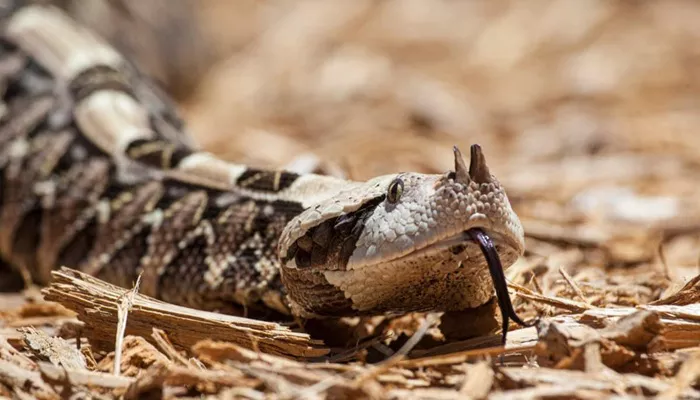
The Gaboon viper is one of the most fascinating and formidable snakes in the world. Known for its impressive size, distinctive appearance, and potent venom, this species has intrigued scientists, herpetologists, and snake enthusiasts alike. In this article, we will explore the Gaboon viper in depth—its biology, behavior, habitat, and its importance in the ecosystem. By the end, you will have a comprehensive understanding of what makes this snake so unique.
Introduction to the Gaboon Viper
The Gaboon viper (scientific name Bitis gabonica) is a venomous snake native to the rainforests and savannas of sub-Saharan Africa. It belongs to the family Viperidae, which includes many of the world’s most venomous snakes. This species is particularly well-known for its striking appearance, characterized by a heavy, stout body covered in complex patterns of browns, yellows, and purples. It also holds the distinction of having the longest fangs of any venomous snake, measuring up to 5 centimeters (2 inches) in length.
This snake’s scientific classification is as follows:
Kingdom: Animalia
Phylum: Chordata
Class: Reptilia
Order: Squamata
Family: Viperidae
Genus: Bitis
Species: Bitis gabonica
Gaboon vipers are often regarded as one of the most dangerous snakes in Africa due to their potent venom and large size. However, despite their fearsome reputation, they are generally shy and prefer to avoid confrontation with humans.
Physical Characteristics of the Gaboon Viper
One of the most striking features of the Gaboon viper is its size. Adult Gaboon vipers can reach lengths of 120 to 150 centimeters (4 to 5 feet), with some specimens growing even larger. They are heavy-bodied snakes, often weighing over 8 kilograms (about 18 pounds), making them among the heaviest vipers in the world.
Coloration and Pattern
The snake’s body is covered in an intricate pattern of geometric shapes, which serves as excellent camouflage in the leaf litter of its natural habitat. The pattern typically includes shades of brown, tan, yellow, and purple, arranged in a series of triangles and diamonds along the back. This coloration helps the snake remain hidden from both predators and prey.
The Head and Fangs
The Gaboon viper has a broad, triangular head that is distinct from its neck. The head is marked by two prominent horn-like scales above the nostrils, which contribute to its intimidating appearance. The large, forward-facing eyes provide good binocular vision, helping it judge distance effectively during hunting.
Perhaps the most famous characteristic of the Gaboon viper is its fangs. These are the longest of any venomous snake, measuring up to 5 centimeters in length. The fangs fold back when the snake’s mouth is closed and extend when it strikes, allowing the viper to inject venom deeply into its prey.
Habitat and Distribution
The Gaboon viper is native to the rainforests and dense woodlands of West and Central Africa. Its range extends from Guinea and Sierra Leone in the west to Uganda and western Kenya in the east, and southwards into northern Angola.
Preferred Environment
This snake prefers environments with dense foliage and plenty of ground cover. It thrives in primary and secondary rainforests, swampy areas, and sometimes in savanna woodlands with thick underbrush. The forest floor, covered with fallen leaves and plant debris, provides the perfect camouflage for the Gaboon viper to ambush its prey.
The Gaboon viper is largely terrestrial, spending most of its time on the ground. It is also a relatively slow-moving snake but uses its camouflage and patience to remain unnoticed.
Behavior and Lifestyle
Gaboon vipers are primarily nocturnal, becoming more active during the night or at dusk. During the day, they often remain motionless, relying on their camouflage to avoid detection.
Hunting and Diet
This species is an ambush predator. Instead of chasing prey, the Gaboon viper lies in wait for suitable animals to come close. When prey approaches, the snake strikes with remarkable speed and accuracy, injecting venom through its long fangs. The venom acts quickly to immobilize the prey, which usually consists of small mammals, birds, amphibians, and occasionally other reptiles.
The snake swallows its prey whole, using its flexible jaws to accommodate animals much larger than its head.
Venom and Defense
The venom of the Gaboon viper is a complex mixture of proteins and enzymes that can cause severe tissue damage, internal bleeding, and paralysis in prey. It is highly potent and delivered in large quantities due to the snake’s large venom glands. Despite this, bites to humans are rare because the snake is generally non-aggressive and will not attack unless provoked.
When threatened, the Gaboon viper may hiss loudly and coil into a defensive posture. If further provoked, it can strike with devastating effect, but it often prefers to retreat.
Reproduction and Lifespan
Gaboon vipers are ovoviviparous, meaning that the females give birth to live young rather than laying eggs. Mating usually occurs during the rainy season when food is abundant.
After mating, the female carries the developing embryos inside her body for about five to six months. When ready, she gives birth to a brood of 20 to 40 young snakes. The newborn vipers are fully independent from birth and possess venom, which they use immediately for hunting and defense.
In the wild, Gaboon vipers can live up to 20 years, although many do not survive that long due to predation and environmental hazards. In captivity, with proper care, they have been known to live even longer.
Importance in the Ecosystem
Gaboon vipers play an important role in their ecosystems as both predators and prey. By controlling populations of small mammals and birds, they help maintain ecological balance. Their presence can influence the behavior of other animals, which must be cautious around these ambush predators.
Additionally, Gaboon vipers contribute to the biodiversity of African rainforests, representing an important link in the food web.
Threats and Conservation Status
Despite their wide distribution, Gaboon vipers face several threats. Habitat destruction due to deforestation, agriculture, and urban expansion is a significant concern. As rainforests are cleared, the snakes lose their natural habitat and food sources.
Additionally, they are sometimes killed by humans out of fear or for their skins, which are used in the exotic leather trade.
Currently, the Gaboon viper is not classified as endangered, but its populations are declining in some areas. Conservation efforts that focus on habitat preservation and education about the ecological importance of these snakes are crucial for their survival.
Handling and Captivity
Gaboon vipers are occasionally kept in zoos and by experienced reptile keepers. Their large size and potent venom mean that they require special care and handling expertise. Keeping such snakes in captivity helps researchers learn more about their biology and behavior, and supports conservation by educating the public.
Medical Importance
The venom of the Gaboon viper is medically significant. Bites require prompt treatment with antivenom to prevent serious complications or death. Research on the snake’s venom has also contributed to medical science, including the development of drugs that can help treat blood disorders and other health conditions.
Conclusion
The Gaboon viper is a remarkable snake, known for its size, powerful venom, and beautiful camouflage. As a key predator in the African rainforests, it helps maintain the balance of ecosystems. Although feared by many, this snake is generally shy and avoids confrontation.
Understanding the biology and ecology of the Gaboon viper is important for appreciating its role in nature and ensuring its conservation for future generations. As with many wild animals, respect and caution are necessary when encountering or studying this impressive reptile.
Related topics: