
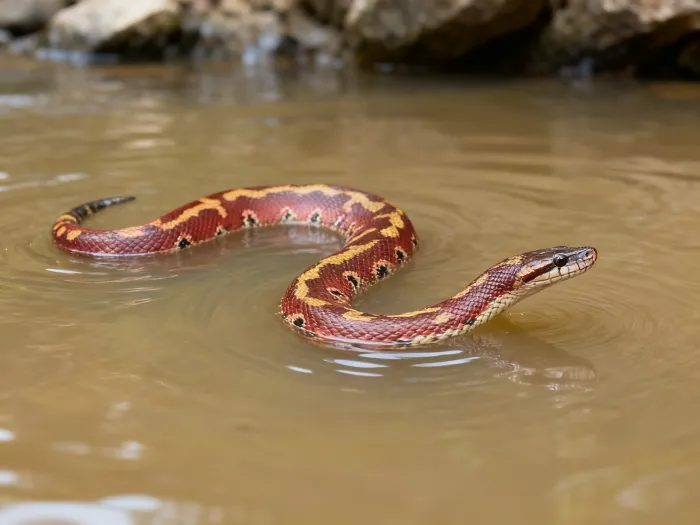
Have you ever wondered if blood pythons—those hefty, vividly colored reptiles—are comfortable in water or if they’re strictly land lovers? It’s an awesome question, especially for reptile enthusiasts and new keepers alike. Let’s dive into the world of Python brongersmai, commonly known as the blood python, and unlock the secrets behind their swimming skills. Don’t miss it—what you learn might surprise you!
Meet the Blood Python: A Marshland Marvel
Blood pythons are a striking species of reptiles, instantly recognizable by their robust bodies and dazzling red, orange, or rusty coloration. Native to Southeast Asia—including Malaysia, Sumatra, Thailand, and Vietnam—they thrive in marshes and tropical swamps (Grismer & Chan-Ard, 2012). Imagine a marsh as nature’s own shallow swimming pool, teeming with mud and water. If you picture a blood python slithering through this habitat, it’s not too different from seeing a person wading through a shallow pond.
Habitat Preferences: Why Water Matters
Blood pythons (Python brongersmai) aren’t just occasional visitors to watery places—they actually prefer them! Their natural habitats are low-lying swamps and marshes, which means water is a constant feature of their environment. Just like ducks are designed for ponds, these reptiles have evolved to handle wet conditions. Their strong, muscular bodies are like powerful canoes: built to navigate both muddy banks and shallow waters.
Swimming Skills: Can Blood Pythons Really Swim?
Here’s where things get interesting. Blood pythons are not aquatic specialists like sea snakes or eels, but they are capable swimmers. When faced with water—whether crossing flooded marshes or escaping predators—they can propel themselves forward using serpentine movements. Think of it as the way you might wriggle through a ball pit at an amusement park: not always graceful but definitely effective!
In captivity, keepers often report that blood pythons will enter water bowls and soak for extended periods (Barker & Barker, 2007). Some individuals even seem to enjoy swimming short distances when given access to larger pools. However, swimming is typically not their primary mode of travel; they prefer solid ground but won’t shy away from water if necessary.
Physical Adaptations: Built for Wet Terrain
Blood pythons have several features that help them handle wet environments:
- Heavy Bodies: Their thick build allows them to anchor in muddy bottoms without floating away.
- Short Tails: Compared to other snakes, their tails are short and stubby—think of it as having a paddle that helps with balance more than speed.
- Smooth Scales: These scales reduce drag when moving through water, similar to how swimmers wear sleek suits to glide faster.
Despite these adaptations, blood pythons aren’t marathon swimmers. They can cross small water bodies but rarely venture into deep or fast-flowing streams.
Behavioral Insights: What Keepers Say
Reptile keepers often share anecdotes about blood pythons soaking in water bowls during shedding cycles or hot weather. One keeper compared their python’s swimming style to “a giant sausage rolling gently across a kiddie pool”—clumsy but determined! Another noted that while their blood python didn’t seek out water for fun, it showed no distress when placed in shallow tubs for cleaning (Weimert, Bloody Pythons Care Guide). Such real-life observations reinforce that these reptiles are comfortable with occasional swimming but aren’t truly aquatic animals.
Comparing Species: Blood Python vs Other Reptiles
When comparing blood pythons to other reptiles like green iguanas or reticulated pythons (which are excellent swimmers), Python brongersmai sits somewhere in the middle. They’re more water-friendly than dry-land snakes like corn snakes but less adept than species adapted for rivers and lakes. This makes them versatile survivors in their native marshy homes.
Why Swimming Matters for Blood Pythons
Swimming isn’t just about mobility—it’s also about survival. Water offers escape routes from predators and helps regulate body temperature during hot spells. For captive blood pythons, access to clean water supports hydration and skin health. If you own one of these reptiles, providing a sturdy bowl or shallow tub is key; just make sure it’s big enough for soaking but not so deep that your snake struggles to get out safely.
Conclusion: The Balanced Swimmer
So, do blood pythons swim? The answer is yes—but with limitations! These fascinating reptiles are built for life in marshes and swamps where swimming is sometimes necessary but rarely the main event. Like walking through puddles on a rainy day rather than diving into the ocean, blood pythons handle water well enough when needed but prefer solid ground.
Understanding the aquatic abilities of Python brongersmai helps us appreciate their adaptability as reptiles and informs responsible care for those keeping them in captivity. Whether you’re a seasoned herpetologist or just starting your reptile journey, knowing your snake’s comfort zone—including its relationship with water—is essential for a happy and healthy pet.
Related topics: