
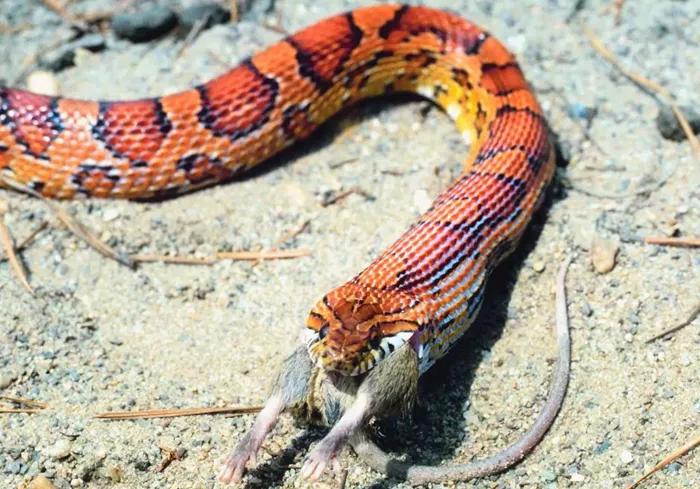
Imagine watching your corn snake glide silently across its enclosure, its bright orange and red scales catching the light. Suddenly, you wonder: can this beautiful reptile enjoy a fish snack? This question might surprise some, but it is actually quite common among reptile owners. Corn snakes, scientifically known as Pantherophis guttatus, are popular pets because of their manageable size, calm temperament, and fascinating feeding habits. Understanding whether they can eat fish is crucial to keeping them healthy and happy.
Fish might seem like an easy and nutritious food option. After all, many animals thrive on fish in the wild. But corn snakes are specialized feeders with diets adapted to rodents and other small land animals. This article dives deep into whether corn snakes can eat fish, the risks involved, and best practices for feeding them. By the end, you’ll know exactly how to make informed decisions for your scaly friend.
Corn Snakes’ Natural Diet
Corn snakes are native to the southeastern United States. In the wild, their diet mainly consists of small mammals like mice, rats, and sometimes birds. They are constrictors, meaning they coil around their prey and suffocate it before eating. Their digestive system is adapted to handle mammalian protein and fat efficiently.
In the wild, fish are rarely a natural food source for corn snakes. Their habitats—woodlands, grasslands, and abandoned structures—are not typically aquatic. While some snakes, like water snakes or garter snakes, frequently eat fish, corn snakes do not. This is an important point to understand: just because an animal can technically swallow something doesn’t mean it should.
Even though corn snakes occasionally might encounter amphibians or small reptiles, their bodies are not equipped to process fish consistently. Fish have different protein structures and fat composition than rodents, which can create digestive issues for your snake.
Can Corn Snakes Eat Fish? The Risks Explained
Technically, corn snakes can eat fish, but there are several risks that make it less than ideal. Let’s break them down:
1. Nutritional Imbalance
Fish have a higher water content and lower fat content than rodents. Corn snakes rely on the fat in rodents for energy. Feeding them fish too often can lead to malnutrition. For example, a diet of fish might lack calcium, which is essential for bone health.
2. Parasites and Contamination
Wild-caught fish can carry parasites that are harmful to snakes. Even frozen fish can carry bacteria if not properly handled. Corn snakes have delicate digestive systems and can develop infections if the fish is contaminated.
3. Digestive Issues
Fish bones are different from rodent bones. While corn snakes can handle rodent bones because they are soft and small, fish bones can sometimes puncture the snake’s digestive tract. This is especially risky with smaller corn snakes.
4. Behavioral Problems
Feeding fish can confuse your corn snake’s natural hunting instincts. They may start refusing their regular diet of mice or rats, which can lead to long-term feeding issues.
Even with these risks, some corn snake owners have reported occasional feeding of fish without immediate problems. But these are exceptions rather than the rule. It’s generally safer to stick to the tried-and-true rodent diet.
Types of Fish Corn Snakes Might Safely Eat
If you still consider offering fish, it is crucial to choose the safest types:
Frozen-thawed fish: Always thawed and never raw from unknown sources.
Boneless fillets: Avoid whole fish with bones, as they can injure the snake.
Low-fat species: Such as tilapia or cod, which are closer to the fat content of rodents.
Never feed oily fish like salmon or tuna, which can cause digestive upset. Always ensure the fish is fresh, free of spices, and properly stored.
How Often Can Corn Snakes Eat Fish?
Even if fish is safe, it should only be an occasional treat. Feeding fish more than once a month can cause nutritional imbalances. Most corn snake owners stick to rodents as the primary diet, occasionally offering a small, safe piece of fish for variety.
A good rule of thumb is: think of fish as dessert, not dinner.
Preparing Fish for Corn Snakes
If you decide to offer fish, preparation is key:
Thawing: Never feed frozen fish directly. Thaw in the refrigerator or under cool running water.
Portioning: Cut the fish into small, snake-friendly pieces.
Checking for bones: Remove all bones meticulously.
Temperature: Serve at room temperature, not cold, to mimic natural prey.
Handling fish properly reduces the risk of bacterial infections or digestive problems.
Observing Your Corn Snake’s Reaction
After offering fish, watch your snake carefully. Look for signs of:
Regurgitation
Lethargy or reduced activity
Unusual feces
If any of these occur, discontinue fish feeding immediately. Always revert to a rodent-based diet to stabilize health.
Alternative Diet Options
If you’re interested in variety, there are safer alternatives:
Frozen-thawed rodents: Standard diet and safest choice.
Quail chicks or small birds: Occasionally for advanced feeding.
Reptile-approved supplements: To provide minerals without fish.
These options ensure your corn snake receives the nutrients it needs without the risks associated with fish.
Stories from Real Owners
One corn snake owner, Jake from Florida, shared: “I once tried feeding my corn snake a tiny piece of cod. It ate it, but the next day it refused mice. That’s when I realized fish isn’t a natural part of their diet.” Another owner, Maria from Texas, observed: “After a few fish treats, my snake developed mild digestive issues. I went back to frozen mice and it bounced back immediately.” These stories reinforce that fish should be treated with caution.
Conclusion
Corn snakes can technically eat fish, but it’s not recommended as a regular food source. Their digestive systems, nutritional needs, and natural behavior align more closely with rodents. Occasional fish treats, if prepared carefully, can be safe, but the main diet should always consist of frozen-thawed rodents.
Understanding your corn snake’s natural diet helps you provide a healthy, balanced life for your reptile friend. Keep in mind that nutrition is just as important as a clean habitat and proper temperature. By choosing the right food, you ensure that your corn snake remains healthy, active, and vibrant.
Related topics: