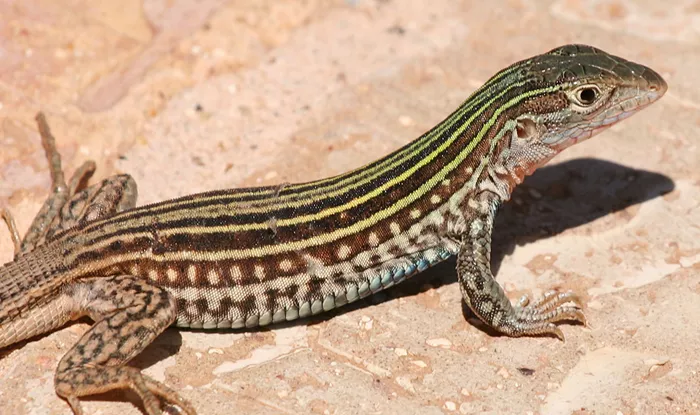
Lizards are one of the most diverse groups of reptiles, with more than 5,000 species found across various climates worldwide. As a fascinating group, lizards exhibit a wide range of reproductive strategies. Some species reproduce sexually, while others have adopted alternative methods. One of the most intriguing questions in the study of lizard biology is: Can lizards reproduce asexually?
At first glance, asexual reproduction in reptiles may seem like something straight out of science fiction, but it’s a real phenomenon that has been observed in certain lizard species. So, let’s dive into the heart of the topic and explore the world of asexual reproduction in lizards!
What Is Asexual Reproduction?
Before we can fully appreciate how lizards may or may not reproduce asexually, it’s important to understand what asexual reproduction is. Asexual reproduction refers to a process where offspring are produced without the involvement of male fertilization. In simpler terms, the offspring are created from a single parent.
There are several ways asexual reproduction can occur, including binary fission (where a single organism splits into two) and parthenogenesis (where an egg develops into an organism without fertilization). While asexual reproduction is common in some organisms like bacteria or certain plants, it is relatively rare in the animal kingdom.
For reptiles like lizards, the concept of asexual reproduction brings up some interesting questions. Can a lizard reproduce on its own? Does this mean lizards can live in environments where finding a mate is difficult? Let’s look at how this fascinating process works in the world of lizards.
How Common Is Asexual Reproduction in Lizards?
Asexual reproduction in lizards, known as parthenogenesis, is a rare but fascinating occurrence. While parthenogenesis is more common in some reptiles like snakes and certain species of geckos, it’s not something that most lizard species exhibit. The phenomenon has been recorded in several lizard species, particularly those that live in isolated environments, where males may be scarce or absent.
Parthenogenesis in lizards occurs when an unfertilized egg develops into a new individual. This process typically happens under specific environmental conditions or genetic factors. In some species, female lizards are capable of producing offspring without mating. This allows them to reproduce even in the absence of males, which is a survival mechanism for populations in isolated or low-density areas.
Which Lizards Are Capable of Asexual Reproduction?
While it’s not common across the entire lizard family, certain species are known for their ability to reproduce asexually. Some of the most well-known lizards that exhibit parthenogenesis include:
Whiptail Lizards (Aspidoscelis)
One of the most famous examples of parthenogenesis in lizards is the whiptail lizard. In these species, females have been observed to reproduce without males, producing genetically identical offspring. What’s even more fascinating is that some whiptail lizard species are entirely female, meaning there are no males at all in their populations!
Komodo Dragons (Varanus komodoensis)

While not a common occurrence, female Komodo dragons have been known to reproduce through parthenogenesis in captivity. This phenomenon was first observed in a female dragon at a zoo in 2006. Though rare, it shows that even large reptiles like Komodo dragons can use asexual reproduction as a fallback mechanism when mates are unavailable.
New Mexico Whiptail (Aspidoscelis neomexicana)
Another example is the New Mexico whiptail lizard, a hybrid species formed by the crossbreeding of two other whiptail lizard species. Interestingly, these hybrids are all female, and they reproduce exclusively through parthenogenesis.
Though parthenogenesis is rare, these examples demonstrate that some lizards are not bound by the traditional rules of sexual reproduction.
How Does Parthenogenesis Work in Lizards?
So, how exactly does parthenogenesis work in lizards? The process involves a female lizard’s egg developing into a full organism without the need for male fertilization. But what causes this to happen?
In most animals, including lizards, a fertilized egg gets a set of chromosomes from both the male and the female parent. However, in asexual reproduction, only one set of chromosomes is required—usually from the female lizard. The egg, while technically unfertilized, still has the ability to develop into a fully formed lizard.
There are a few different mechanisms through which this can happen in lizards:
Automixis
In some species, the female lizard’s egg undergoes a process called automixis, where the chromosomes in the egg fuse with other chromosomes within the same egg to restore the diploid number of chromosomes, essentially mimicking sexual reproduction. However, this doesn’t involve male fertilization. The result is offspring that are genetically similar to the mother.
Gynogenesis
In other cases, the egg develops into a lizard without any genetic material from another individual. This process, known as gynogenesis, results in offspring that are genetic clones of the mother.
These mechanisms allow some lizards to reproduce on their own when males are unavailable. In a way, it’s a backup plan for the survival of the species.
Why Do Some Lizards Reproduce Asexually?
One of the key reasons for asexual reproduction in lizards is the lack of males in certain environments. Some species of lizards, like the all-female whiptail lizards, live in areas where males are rare or absent, and the need for a mate may be minimal. In such cases, the females turn to parthenogenesis to ensure that they can continue to produce offspring, even without the involvement of males.
In some isolated environments, such as islands or remote deserts, populations may become separated, making it harder for individuals to find mates. In these situations, parthenogenesis can be an effective way to maintain the population.
Moreover, parthenogenesis can be advantageous in certain environmental conditions. For instance, if there is a sudden shift in the environment, and the population is suddenly sparse, the ability to reproduce without mates can help the species survive. By producing genetically identical offspring, females can quickly repopulate the area, especially if they are well-adapted to the local conditions.
What Are the Benefits and Drawbacks of Asexual Reproduction in Lizards?
Like any biological process, asexual reproduction in lizards has its pros and cons.
Benefits
Efficiency in Isolated Environments: Asexual reproduction allows female lizards to reproduce even in environments where males are not available. This is a key survival mechanism for populations in remote areas.
Rapid Population Growth: In the absence of males, a single female can produce a large number of offspring, ensuring that the species can thrive, even in low-density environments.
Drawbacks
Lack of Genetic Diversity: Since the offspring produced through parthenogenesis are genetic clones of the mother, there is little to no genetic diversity within the population. This can make the population more susceptible to disease outbreaks or environmental changes.
Vulnerability to Environmental Shifts: If the local environment changes in ways that the species is not well-adapted to, the lack of genetic variation can make it difficult for the species to adapt or evolve.
While parthenogenesis allows for short-term survival, in the long term, it might limit the species’ ability to adapt to changing environments. Evolutionary biologists view sexual reproduction as a key method for increasing genetic variation and allowing species to evolve in response to environmental pressures.
Conclusion
In conclusion, while most lizards reproduce sexually, there are certain species that have evolved the ability to reproduce asexually through parthenogenesis. This ability is a fascinating and unique adaptation that allows some lizards to survive in environments where finding a mate is difficult or even impossible. However, asexual reproduction comes with both advantages and drawbacks, primarily concerning genetic diversity.
It’s amazing to think that a single female lizard, with no need for males, can create an entire new generation of offspring, but it’s clear that nature always finds a way to ensure survival. Whether you’re a reptile enthusiast or just curious about the world of lizards, the phenomenon of asexual reproduction in these creatures is truly remarkable.
Related topics: