
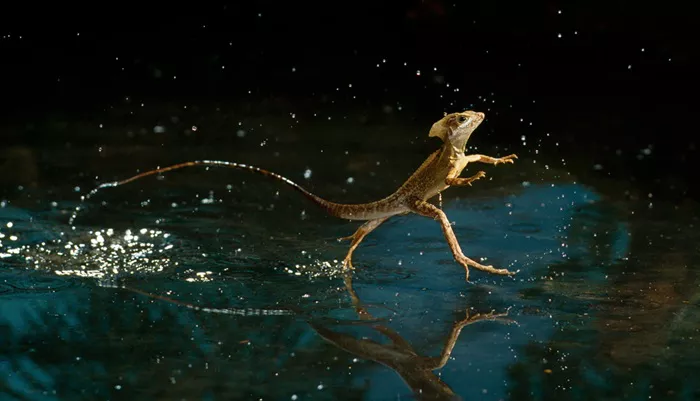
In the natural world, some animals seem to defy the laws of physics with their extraordinary abilities. Among these, one lizard stands out as a true marvel: the basilisk lizard. Sometimes called the “Jesus Christ lizard,” this reptile is famous for its unique talent to run or walk across the surface of water for short distances. This incredible feat has fascinated scientists, nature lovers, and curious minds alike.
But how does a lizard, a creature without wings or specialized flotation devices, manage to stay above water without sinking? What adaptations allow it to accomplish this rare skill? This article will explore the biology, physics, and ecology behind the basilisk lizard’s water-walking ability. We will also look at its natural habitat, behavior, and the role this skill plays in its survival.
By understanding the basilisk lizard, we gain insight into the fascinating diversity of life and the many ways animals adapt to their environment. This article aims to provide a clear and detailed explanation, using simple language and logical flow, to make this complex subject accessible to all readers.
The Basilisk Lizard: An Overview
The basilisk lizard belongs to the genus Basiliscus, a group of reptiles in the family Corytophanidae. These lizards are native to Central and South America, where they inhabit rainforests near rivers, streams, and other bodies of water.
There are four species of basilisk lizards, but the most well-known for walking on water is the Basiliscus basiliscus, commonly called the common basilisk or green basilisk. This species can reach up to 70 centimeters (about 27 inches) in length, including its long tail.
The basilisk is a slender, agile lizard with distinctive crests on its head, back, and tail. These crests give it a striking appearance and help with balance during its rapid movements. The lizard’s skin is usually green or brownish, allowing it to blend into the leafy environment of the rainforest.
How Does the Basilisk Walk on Water?
The basilisk lizard’s ability to walk on water is not magic but a remarkable example of evolutionary adaptation. The key factors behind this skill include the lizard’s physical features, movement techniques, and the properties of water.
Physical Adaptations
The basilisk lizard has long toes with fringed scales on the edges. These fringes spread out when the lizard’s foot strikes the water, increasing the surface area. This wider surface helps to create a temporary platform to support the lizard’s weight momentarily.
The lizard’s lightweight body also helps reduce the force pressing down on the water surface, preventing it from breaking through immediately.
Movement and Speed
Walking on water requires rapid, precise movements. The basilisk runs across the water at speeds of up to 1.5 meters per second (about 3.3 miles per hour). Each footfall creates a small air pocket beneath the foot, which adds buoyancy and prevents sinking.
The lizard moves with a bouncing gait, pushing down and forward on the water, then lifting the foot quickly to repeat the process. This fast, alternating motion keeps the basilisk supported long enough to cross rivers or ponds.
Surface Tension and Water Properties
Water has surface tension, a property caused by the attraction between water molecules at the surface. Surface tension can support small, light objects, but it is usually not enough to hold the weight of larger animals.
The basilisk uses its speed and foot structure to take advantage of surface tension temporarily. The combined effect of the expanded foot, air pockets, and rapid movement allows it to “run” across water before gravity causes it to sink.
Why Does the Basilisk Walk on Water?
The ability to walk on water is not just a cool trick; it has important survival benefits for the basilisk lizard.
Escape from Predators
The rainforest is full of predators such as snakes, birds, and mammals. When threatened, the basilisk can sprint to the water’s edge and then run across the surface to safety. This escape method is faster and safer than swimming or climbing trees alone.
Access to Food and Territory
By crossing water quickly, the basilisk can reach food sources or new territory that might otherwise be unreachable. This mobility gives it an advantage in the dense and competitive rainforest environment.
Thermoregulation and Habitat Use
Water bodies help regulate temperature. The basilisk’s ability to move between land and water environments lets it manage its body temperature and find suitable microhabitats.
Other Lizards and Water Interaction
While the basilisk is the only known lizard capable of running on water, many other lizards interact with water in various ways.
Some species swim well and dive to escape predators. Others use water bodies for hunting or cooling off. However, none have evolved the specialized fringed toes and rapid gait needed to mimic the basilisk’s unique skill.
The Science Behind the Basilisk’s Water-Running Ability
Scientists have studied the basilisk lizard extensively to understand the mechanics of water running.
High-speed cameras and detailed biomechanical analysis have shown that the lizard’s foot slaps the water surface with a quick downward force, generating an upward reaction force called hydrodynamic force. The fringed toes act like mini paddles, maximizing the reaction force and delaying sinking.
The air pocket created on each step also contributes to buoyancy. However, this effect only lasts milliseconds, requiring the basilisk to maintain high speed and rhythm to remain above water.
Evolutionary Background of the Basilisk Lizard
To understand how the basilisk lizard evolved its water-walking skill, we must look at its evolutionary history. The genus Basiliscus belongs to a group of lizards called iguanids, which originated millions of years ago in the Americas.
Over time, natural selection favored individuals that could better escape predators and explore new environments. In the dense tropical forests, water bodies often serve as natural barriers. The ability to run across water offered a huge survival advantage.
The fringed toes of the basilisk likely developed gradually from ancestors with slightly broader feet. Lizards that could move faster on slippery or unstable surfaces had better chances of survival and reproduction. Eventually, this led to the highly specialized foot morphology and rapid locomotion seen in today’s basilisks.
This evolutionary adaptation shows how environmental pressures shape the anatomy and behavior of animals, creating remarkable solutions to survival challenges.
The Mechanics of Water Walking: A Closer Look
Scientists have broken down the basilisk’s water-walking into several mechanical phases. Understanding these phases helps explain why no other lizard has yet evolved this skill.
Initial Foot Strike
When the basilisk’s foot hits the water surface, it slaps down forcefully. This action compresses the water, pushing molecules downward and creating a small cavity or air pocket beneath the foot.
Midstance Support
The expanded fringes on the toes increase the contact area, spreading the force over a larger surface. This helps the foot support the lizard’s weight temporarily. The air pocket acts like a cushion, providing upward buoyant force.
Propulsion and Lift-Off
After pushing down, the lizard sweeps its foot backward against the water, generating forward propulsion. The foot then lifts off quickly, ready to repeat the process with the other foot.
Cycle Continuation
By alternating feet rapidly, the basilisk maintains momentum. This fast gait ensures it does not sink between steps. The motion resembles a running or bounding gait rather than walking.
Limitations and Constraints of Water Walking
While the basilisk’s water-running is impressive, it does have limits. The lizard can only maintain this movement for short distances, usually up to 10 to 15 meters (about 30 to 50 feet).
The speed is essential; if the basilisk slows down too much, it will break through the water’s surface tension and sink. This means water running is an escape or crossing behavior, not a means of sustained travel.
Environmental factors like water turbulence, surface disturbances, or obstacles can also affect the lizard’s ability to run on water. Calm water surfaces offer the best conditions for success.
The Basilisk’s Habitat and Distribution
Basilisks are native to the tropical rainforests of Central and South America. Their range stretches from southern Mexico through Costa Rica, Panama, Colombia, Venezuela, and parts of Brazil.
They prefer habitats near fresh water sources, such as rivers, streams, ponds, and swamps. These aquatic environments provide the necessary setting for their water-walking behavior.
The dense forest canopy provides shelter and abundant food, while the water bodies act as natural highways and escape routes. The basilisk’s lifestyle is closely tied to this unique combination of land and water ecosystems.
Diet and Feeding Behavior
Basilisk lizards are omnivores. They feed on a variety of foods found in and around their rainforest habitat.
Their diet includes insects, small vertebrates like frogs and fish, fruits, flowers, and occasionally eggs. They hunt actively, using their agility to catch prey on land and sometimes in shallow water.
The ability to cross water bodies quickly allows basilisks to access a wider range of food resources than many other lizards restricted to one side of a riverbank.
Predators and Survival Strategies
Despite their remarkable water-walking ability, basilisks face many predators. Large birds of prey, snakes, mammals such as coatis and wild cats, and even humans can threaten them.
The basilisk’s water-running serves as a primary defense mechanism. When sensing danger, the lizard often dashes toward water and runs across the surface to escape.
Additionally, their camouflage coloration helps them blend with the green foliage, while their speed and agility on land and water give them multiple options for evasion.
Reproduction and Life Cycle
Basilisks are oviparous, meaning they lay eggs. During the breeding season, males display their crests and engage in territorial and courtship behaviors to attract females.
Females lay clutches of about 10 to 20 eggs in moist soil near water. The eggs incubate for several weeks before hatching.
Juvenile basilisks develop quickly, learning to run on water early in life. This skill is vital for avoiding predators and surviving in their watery environment.
The Basilisk Lizard’s Role in the Ecosystem
The basilisk lizard plays a key role in the delicate balance of its rainforest ecosystem. As both predator and prey, it influences the populations of insects, small vertebrates, and even plants.
By feeding on insects and small animals, basilisks help control these populations, preventing overgrowth or outbreaks of certain species. Their fruit consumption also aids in seed dispersal, contributing to forest regeneration.
As prey, basilisks support the food chain by providing nourishment to larger predators. Their ability to escape by running on water affects predator-prey dynamics and may influence predator hunting strategies.
Overall, the basilisk is an integral part of its habitat, connecting land and aquatic environments through its unique behaviors.
Conservation Status and Threats
Currently, the common basilisk (Basiliscus basiliscus) is not listed as endangered and is considered of least concern by conservation organizations. Its wide distribution and adaptability help maintain stable populations.
However, ongoing threats to tropical rainforests such as deforestation, habitat fragmentation, pollution, and climate change can impact basilisks. Loss of forest and water habitats reduces available resources and safe refuges.
Conservation efforts aimed at protecting rainforests indirectly benefit basilisk populations. Preserving clean waterways and forest corridors ensures these lizards can continue to thrive.
Monitoring basilisk populations also helps scientists understand the health of their ecosystems and detect early signs of environmental stress.
Scientific Studies and Experiments
Scientists have used various techniques to study basilisk water-running. High-speed video analysis reveals the precise foot movements and timings needed to maintain surface locomotion.
Biomechanical models show how the combination of foot area, speed, and force distribution produces enough hydrodynamic lift. These studies also explore how air pockets form under the feet, contributing to buoyancy.
Researchers have built robotic models mimicking basilisk feet to better understand the physics. These bio-inspired robots can test theories and may have engineering applications.
Field observations help document natural behaviors, environmental influences, and limitations of water running. This research improves knowledge of reptile locomotion and animal biomechanics in general.
Interesting Facts about the Basilisk Lizard
−The name “basilisk” comes from the mythical creature said to have deadly powers. The lizard’s crest and speed likely inspired this name.
−Basilisks can run on water for about 10 to 15 meters, after which they usually swim or dive.
−They are excellent climbers and swimmers, able to escape predators in many ways.
−Juvenile basilisks learn to run on water very early, showing that this skill is instinctive and critical.
−Their crests serve as displays during mating and territorial fights.
Why No Other Lizards Walk on Water
One might wonder why no other lizard species evolved to walk on water like the basilisk. Several reasons explain this:
Specialized Anatomy: The fringed toes and lightweight body are unique adaptations. Most lizards lack the necessary foot structure.
Behavioral Evolution: The basilisk’s habitat and lifestyle favored this skill. Other lizards might rely more on climbing or swimming.
Energy Requirements: Running on water requires speed and energy. Not all lizards have the physical capacity or evolutionary pressure to develop this.
Environmental Constraints: The basilisk’s rainforest rivers provide the ideal setting. Different environments might not support water running.
Thus, the basilisk’s water-walking is a rare, finely tuned evolutionary niche.
Summary and Conclusion
The basilisk lizard is the only lizard known to walk or run across water surfaces. This incredible ability results from a unique combination of anatomical adaptations, rapid movement, and physical forces acting on water.
Found in Central and South American rainforests, basilisks use their fringed toes, lightweight bodies, and fast gait to create temporary air pockets and hydrodynamic lift. This allows them to cross water barriers quickly to escape predators or explore new areas.
Their evolutionary history reflects natural selection favoring water locomotion in a dense forest habitat. Though limited to short distances, the basilisk’s water running remains one of nature’s most astonishing feats.
Scientists study this lizard to understand biomechanics and apply its principles in robotics and technology. The basilisk also holds a special place in culture and education, inspiring awe and curiosity worldwide.
In essence, the basilisk lizard exemplifies how evolution can produce remarkable adaptations to overcome environmental challenges, reminding us of the intricate connections between life, physics, and survival.
Related topics: