
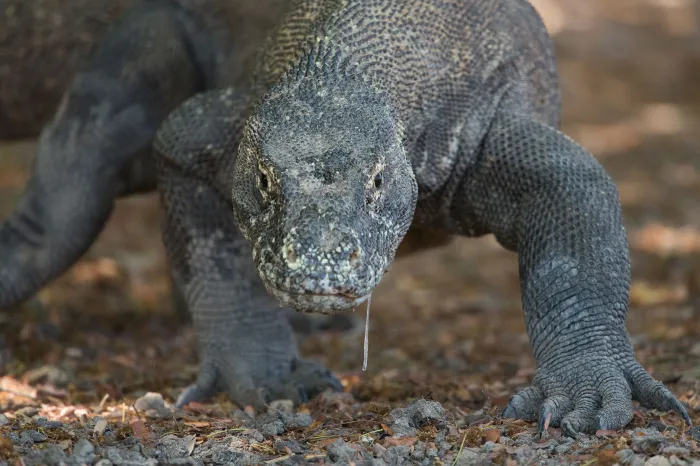
The Komodo dragon is the largest living lizard on Earth, known for its strength and hunting prowess. One of its most notable traits is its bite force, which is incredibly powerful for a reptile. But what exactly is the bite force of a Komodo dragon? And why does it matter?
Understanding Bite Force
Bite force measures how much pressure an animal can apply when it bites down. It helps us understand how well an animal can catch and subdue prey or defend itself. In the case of the Komodo dragon, this force is surprisingly strong given its reptilian nature.
How Strong Is a Komodo Dragon’s Bite?
Research shows that a Komodo dragon’s bite force can reach up to about 1,000 pounds per square inch (psi). To put this into perspective, this is roughly comparable to the bite force of some big cats like lions and tigers. This strength allows the Komodo dragon to crush bones and tear through tough flesh with ease.
Anatomy Behind the Power
Several factors contribute to this impressive bite. The Komodo dragon has large, muscular jaws designed to clamp down hard. Its teeth are sharp and serrated, similar to those of sharks, which help it slice through meat effectively. Additionally, their skull structure supports strong muscle attachments that generate this force.
Why Is This Bite Force Important?
The powerful bite plays a critical role in hunting and feeding. Komodo dragons primarily prey on large animals such as deer, pigs, and water buffalo. Their strong jaws enable them to deliver fatal bites that weaken or kill prey quickly. Moreover, their saliva contains toxic bacteria and venom-like proteins that assist in subduing victims.
Hunting Strategy
When hunting, a Komodo dragon often bites its target and then follows it until the animal weakens from blood loss or infection caused by bacteria in the dragon’s mouth. The combination of mechanical force and biological factors makes their bite extremely effective.
Comparisons with Other Predators
While not as powerful as some crocodiles or large mammals like bears, the Komodo dragon’s bite force stands out among reptiles. It balances strength with agility, allowing these lizards to dominate their environment on Indonesian islands where they live.
Conclusion
The bite force of a Komodo dragon is one of nature’s remarkable adaptations. Reaching up to 1,000 psi, their jaws provide them with the ability to take down large prey efficiently. This strength, combined with sharp teeth and toxic saliva, makes them formidable predators in their habitat.
FAQs
How does the Komodo dragon’s bite compare to other reptiles?
Its bite is stronger than most lizards but less than large crocodiles. However, its combination of strength and venom makes it uniquely effective.
Can a Komodo dragon’s bite be fatal to humans?
Yes. While attacks are rare, their bite can cause serious injury due to both mechanical damage and bacterial infection.
What role does venom play in their bite?
Recent studies show that venom-like proteins help lower blood pressure and cause shock in prey, aiding in capture.
Do young Komodo dragons have as strong a bite as adults?
No. Juveniles have weaker bites but still use sharp teeth for catching smaller prey until they grow stronger.