
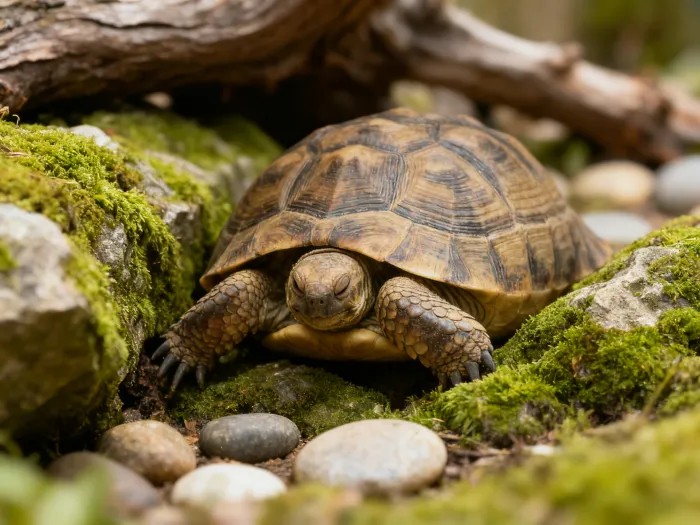
Hermann’s tortoises, one of the most beloved reptiles among enthusiasts, are famous for their gentle nature and distinctive yellow-and-black shells. But as winter approaches, a core question emerges: do Hermann’s tortoises hibernate? If you’ve ever watched your shelled companion slow down as the temperature drops, you might wonder if it’s gearing up for a long winter nap. Let’s dive into the fascinating world of reptile hibernation and see what makes Hermann’s tortoises so special. Awesome discoveries await!
What Is Hibernation in Reptiles?
Hibernation is like hitting the pause button on life. For many reptiles, including some tortoises, it means slowing down their bodies to save energy when food is scarce and temperatures are cold. Think of it as putting your phone on battery saver mode – everything still works, but at a much slower pace.
In scientific terms, hibernation in reptiles is called “brumation.” Unlike mammals who sleep deeply during hibernation, reptiles like Hermann’s tortoises remain semi-awake but extremely sluggish. Their hearts beat slower, they breathe less, and they hardly eat at all.
Do Hermann’s Tortoises Hibernate?
Yes – but with a twist! Hermann’s tortoises (Testudo hermanni), native to southern Europe, are well-adapted to seasonal changes. In the wild, these reptiles experience cold winters and naturally enter brumation to survive. When temperatures drop below 10°C (50°F), you’ll notice your tortoise becoming less active and eating less. It’s preparing for brumation!
Imagine your pet tortoise as a car that needs to park in the garage during icy weather. The tortoise slows down and finds a safe spot underground or under leaves, where it remains until spring warms things up again.
Why Do Hermann’s Tortoises Hibernate?
Hibernation isn’t just about surviving the cold – it helps regulate their bodies and health. By resting during winter, Hermann’s tortoises conserve energy, avoid harsh conditions, and reset their biological clocks. In fact, many experts say that skipping brumation can cause health problems or stress for these reptiles (Highfield, 2015).
Just like how we feel refreshed after a good night’s sleep, Hermann’s tortoises emerge from hibernation ready to eat and explore. Some seasoned reptile keepers even share stories of their tortoises waking up hungry and energetic after months of quiet rest.
How Do You Know Your Hermann’s Tortoise Is Ready to Hibernate?
Here’s where things get interactive! If you notice your Hermann’s tortoise eating less, digging more often, or spending extra time in cool corners of its enclosure, it might be preparing for brumation. These behavioral changes are signals from nature – don’t miss them!
Think of it like seeing someone put on a thick coat when winter arrives; your tortoise is instinctively getting ready for its seasonal rest.
Caring for Your Hermann’s Tortoise During Brumation
If you’re keeping a Hermann’s tortoise as a pet, safe brumation is key. Here are some simple steps:
- Check Health First: Only healthy tortoises should hibernate.
- Gradual Cooling: Lower the temperature slowly; sudden chills can be dangerous.
- Provide Shelter: Use leaf litter or soil so your reptile can burrow safely.
- Monitor Regularly: Weigh your tortoise before and after; too much weight loss may signal problems.
- Hydration Matters: Offer water before brumation begins.
Many experienced keepers compare preparing for brumation to prepping a car for winter storage: check fluids (hydration), ensure no mechanical issues (health checks), and park somewhere safe (a burrow or hide).
Common Mistakes to Avoid
Don’t rush! Some beginners mistakenly force their Hermann’s tortoises into hibernation before they’re ready or skip crucial health checks. Remember: every reptile is unique. Consult with a reptile vet if you’re unsure – it pays to be cautious!
Anecdotes From Real Keepers: The Brumation Experience
One enthusiastic keeper shared: “My Hermann’s tortoise dug down into his outdoor pen just as the first frost hit. He stayed buried until March – when he popped up hungry for dandelions!” Stories like this remind us how closely these reptiles follow nature’s rhythms.
Another keeper noted: “I was nervous at first but learned that monitoring weight and keeping humidity steady made all the difference.” These real-life experiences echo expert advice (Rossi & Rossi, 2006).
Conclusion: Unlocking Nature’s Secrets With Hermann’s Tortoise Hibernation
Hermann’s tortoises are fascinating reptiles with remarkable adaptations for surviving winter through hibernation or brumation. Understanding this process not only keeps your pet healthy but also deepens your appreciation for their natural behaviors. Just like watching flowers bloom after winter frost, seeing your Hermann’s tortoise wake up in spring is truly rewarding.
So next time you notice your shelled friend slowing down as temperatures fall, remember – it’s not laziness; it’s nature’s awesome way of helping reptiles thrive! Stay attentive to their needs during hibernation, and you’ll unlock the secrets of one of nature’s most resilient species.
Related topics: