
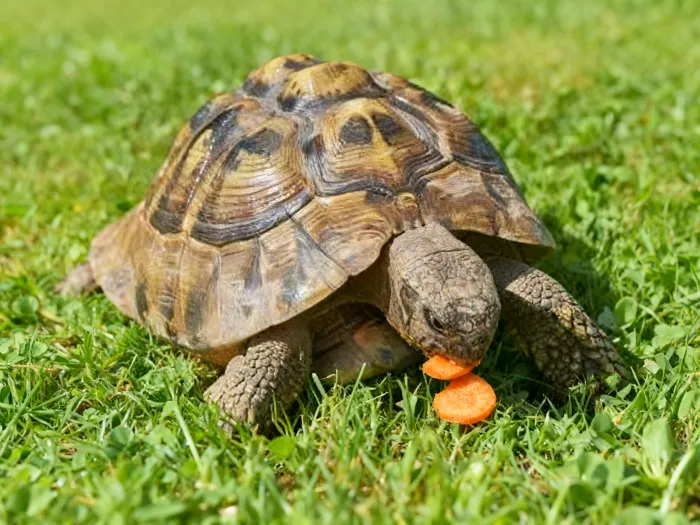
When you’re caring for a Hermann’s tortoise (Testudo hermanni), it’s natural to wonder: can these charming reptiles enjoy carrots as part of their diet? This question isn’t just about satisfying your tortoise’s curiosity—it’s crucial for their long-term health. Let’s dive into the facts, with simple explanations, practical analogies, and expert-backed advice.
Meet the Hermann’s Tortoise: An Iconic European Reptile
Hermann’s tortoises are small to medium-sized reptiles native to southern Europe. These slow-moving creatures, protected by a hard shell, are often compared to little tanks—resilient, yet surprisingly sensitive when it comes to diet. Their natural habitats range from Mediterranean meadows to bushy hillsides, where they forage for a variety of wild plants.
Natural Diet: What Does Testudo hermanni Eat in the Wild?
In their natural environment, Hermann’s tortoises feed mostly on leafy greens, wildflowers, and weeds. Think of them as nature’s lawnmowers—they keep the undergrowth tidy by munching on dandelions, plantains, and thistles. Occasionally, they might nibble on fruit or other available plants, but these treats are rare in their native diets.
Carrots and Tortoises: The Nutritional Breakdown
So, what about carrots? Carrots are root vegetables rich in beta-carotene (which your body turns into vitamin A). For humans, carrots are a healthy snack. But for Hermann’s tortoises, things are a bit different.
Carrots contain more sugar than most leafy greens and have a lower fiber content. Imagine feeding a child candy instead of whole grains—while tasty in moderation, too much can cause health issues. The same logic applies to tortoises: carrots should be an occasional treat rather than a staple.
Why Moderation Matters: Risks of Too Many Carrots
Feeding your Hermann’s tortoise too many carrots can lead to:
- High sugar intake: Just like people can get cavities from too much sugar, tortoises can develop digestive problems.
- Imbalanced nutrition: Carrots lack the calcium-to-phosphorus ratio that reptiles need for healthy shell and bone growth (Bonin et al., 2006).
- Vitamin A overload: While rare, excessive beta-carotene can sometimes cause issues in reptiles if not balanced with other nutrients.
How to Offer Carrots Safely: Simple Tips
If you want to treat your Testudo hermanni with carrots:
- Use carrots as an occasional treat, not a daily food.
- Offer thin slices or grated pieces, making it easier for your tortoise to chew and digest.
- Mix with high-fiber greens, like dandelion leaves or clover.
- Avoid feeding carrot tops in large amounts, as they also contain oxalates which can interfere with calcium absorption (Ernst et al., 1997).
A real-life example: One experienced keeper from Spain noticed her Hermann’s tortoise would eagerly eat carrot slices but began refusing leafy greens when offered too many sweet treats. She adjusted the diet back to mostly wild greens—her tortoise became more active and its shell health improved. Awesome!
Alternatives: What Should Be the Core of Their Diet?
For optimal health, focus on feeding your Hermann’s tortoise:
- Leafy greens (e.g., dandelion, plantain, endive)
- Edible weeds and flowers (e.g., clover, hibiscus)
- Occasional fruits (like strawberries), but only in tiny amounts
Think of carrots as dessert—nice once in a while but not every day!
Special Considerations: Age, Health & Habitat
Young or growing tortoises require extra calcium for their shells. Overfeeding sugary vegetables like carrots can upset this balance. Adult Hermann’s tortoises are more resilient but still need a diet rich in fiber and low in sugar to mimic their wild lifestyle.
If your reptile lives indoors or doesn’t have access to natural sunlight, make sure you provide proper UVB lighting and supplement their diet with calcium powder. This helps prevent shell deformities and supports metabolic health.
Conservation Note: Why Responsible Feeding Matters
Hermann’s tortoises are listed as Vulnerable by the IUCN. Responsible captive care—including proper diet—plays a role in conservation by ensuring captive populations remain healthy and genetically viable.
Conclusion: Treats Are Fine—Balance Is Better!
To sum up: Yes, Hermann’s tortoises can eat carrots—but only occasionally and in small amounts. The bulk of their diet should be leafy greens and edible weeds that reflect their natural foraging habits. By providing balanced nutrition, you’ll help your Testudo hermanni thrive for years—and maybe even decades—to come.
Don’t miss it: A well-fed Hermann’s tortoise is an active, happy reptile—and that’s something every keeper wants to see!
Related topics: