
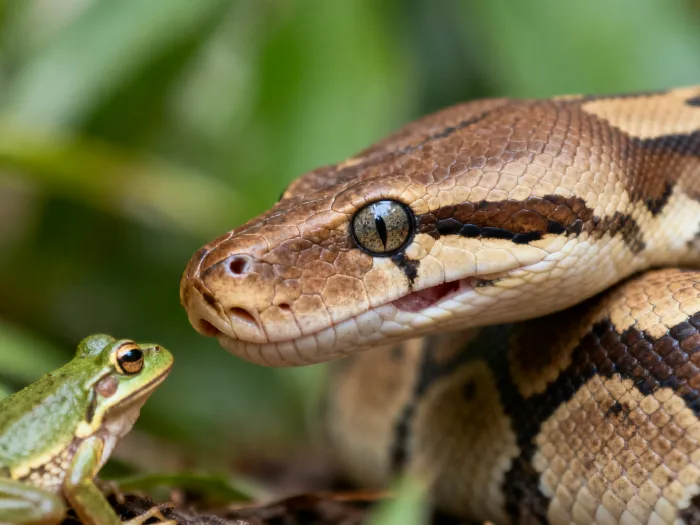
Have you ever wondered if your ball python could eat frogs? This question pops up often among reptile owners and enthusiasts. With ball pythons being one of the most beloved pet snakes globally, their diet becomes a crucial topic. Let’s dive into the science and experience to answer this core question—can ball pythons eat frogs, and is it safe or recommended?
Understanding Ball Pythons: The Basics
Ball pythons (Python regius) are among the most popular pet snakes in the world. Native to West and Central Africa, these reptiles are famous for their gentle nature and manageable size, usually growing up to 3-5 feet. If you’re new to reptile keeping, think of a ball python as the golden retriever of the snake world—friendly, reliable, and easy to care for with the right knowledge.
Ball pythons are carnivores, meaning they only eat other animals. In the wild, their menu consists mainly of small mammals like mice, rats, and sometimes birds. Their slow metabolism means they eat less frequently than many pets—a fact that surprises many new owners.
Just as you wouldn’t feed a cat lettuce, choosing the right food for your snake is essential for its health. This brings us back to our main question: where do frogs fit in?
Natural Diets: Do Ball Pythons Eat Frogs in the Wild?
It’s natural to wonder if ball pythons encounter frogs in their African habitats. In reality, most field studies and expert observations show that wild ball pythons rarely eat amphibians. Their preferred prey are rodents like gerbils and rats that nest on the ground or in burrows.
Why is this? Frogs have moist skin that secretes chemicals called toxins. These toxins can be harmful or even deadly to some predators, including reptiles. Ball pythons evolved to hunt mammals that don’t have these defenses. Imagine being at a buffet where half the food might make you sick—you’d probably stick to what’s familiar and safe!
There are occasional reports of ball pythons eating amphibians when other food is scarce, but these are rare exceptions rather than the rule.
Frogs as Food: What Science Tells Us
Let’s get specific: can ball pythons safely eat frogs?
Most reptile experts recommend against feeding frogs to ball pythons. Here’s why:
- Toxins: Many frog species produce chemicals on their skin that can cause digestive upset or poisoning in snakes.
- Nutrition: Frogs offer a different nutritional profile than rodents. While they contain protein, they lack certain fats and minerals crucial for python health.
- Digestibility: Frogs’ bodies contain more water and less muscle compared to rodents, which can make them harder for snakes to process efficiently.
A study from the University of Florida found that snakes fed non-standard prey (including amphibians) had higher risks of digestive issues and slower growth rates. So while it’s technically possible for a ball python to eat a frog without immediate harm—especially if the frog is non-toxic—it’s not ideal for long-term health.
Risks of Feeding Frogs: Real-Life Stories from Owners
Experienced reptile keepers have shared stories online about trying frogs as an alternative meal for their ball pythons. Some report temporary digestive upset—such as regurgitation or refusal to eat future meals—while others note no problems with certain frog species. However, these accounts are inconsistent and mostly anecdotal.
One owner on a major reptile forum described how his young ball python became lethargic after eating a wild-caught frog. After consulting a vet, he learned that mild poisoning was likely. The snake recovered after returning to its usual diet of mice—but it was a stressful experience for both pet and owner!
This shows why sticking with proven foods is best. When in doubt, consult with a reptile vet or zoologist before introducing new prey items.
Safer Alternatives: What Should You Feed Your Ball Python?
If frogs aren’t recommended, what should you feed your ball python?
- Rodents: Mice and rats are ideal—they’re nutritionally balanced and easy to find at pet stores.
- Chicks: Occasionally used by advanced keepers but should be offered sparingly due to different fat content.
- Frozen/Thawed Prey: This reduces risk of parasites or disease compared to live food.
Think of this like choosing healthy snacks for yourself—you want variety but also balance! Feeding rodents ensures your snake gets all necessary nutrients without risking illness from unfamiliar prey like frogs.
What If Your Ball Python Accidentally Eats a Frog?
Accidents happen! If your python eats a frog (especially one found outdoors), watch closely for signs of illness:
- Lethargy or unusual hiding behavior
- Refusal to eat subsequent meals
- Vomiting or regurgitation (a sign something didn’t sit well)
- Swelling or redness around the mouth (rare)
If any symptoms appear, contact an exotic animal veterinarian immediately. Most cases resolve if handled quickly—but prevention is always better than cure!
Expert Advice: Zoologists Weigh In
As a zoologist specializing in reptiles, I advise against using frogs as routine food for ball pythons. Scientific consensus supports mammals (especially rodents) as optimal prey. Amphibians pose unnecessary risks—both toxicological and nutritional—that could compromise your snake’s health over time.
When designing a diet plan for any reptile, always consider its natural history and biology. Ball pythons thrive on what nature intended: small mammals!
Conclusion: Making Informed Choices About Your Reptile’s Diet
So can ball pythons eat frogs? Technically yes—but it’s not recommended by professionals or experienced owners alike. The risks outweigh potential benefits, especially when safer alternatives exist.
For the healthiest pet snake possible, stick with rodents as your primary food source. If you’re ever unsure about what’s best for your ball python—or any reptile—reach out to experts in herpetology or exotic animal medicine.
By understanding your pet’s needs and respecting its biology, you’ll enjoy many years together with your amazing reptilian companion!
Related topics: