
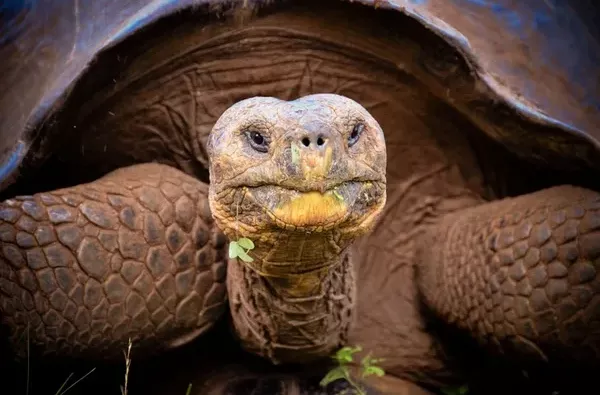
Floreana Island’s giant tortoise, lost to extinction nearly two centuries ago, is on the road to recovery as conservationists push forward with ambitious restoration plans.
For over 20 years, scientists, conservationists, and local communities have been working to revive one of the Galápagos’ most iconic creatures: the giant tortoise. Once considered extinct on Floreana Island, efforts are now underway to reintroduce the Floreana tortoise, a subspecies lost to over-exploitation and invasive threats.
Daniel Bennett, writing from the Galápagos, recounts his journey on San Cristóbal Island, where the restoration of tortoise populations is a success story years in the making. As he walks through the arid terrain, the sounds of wildlife, including mockingbirds and the occasional sighting of giant tortoises, serve as a testament to the recovery of these slow-moving reptiles.
Decades of careful intervention, including the eradication of invasive species like rats, goats, and cats, have helped increase the population of San Cristóbal’s tortoises from a mere 600 individuals in the 1970s to an estimated 7,000 today. Despite their slow reproductive rates, these tortoises have been a key species in maintaining the island’s ecosystem, dispersing seeds and preventing woody vegetation from overtaking the land.
Floreana’s Struggle and the Return of the Tortoise
But not all islands in the archipelago have experienced such recovery. Floreana Island, located south of San Cristóbal, remains a conservation battleground. With 54 species on the IUCN Red List and 12 extinct species, the island’s ecosystem is under threat. The last wild Floreana tortoise died in the 1850s, just a few decades after Charles Darwin’s visit to the Galápagos aboard the Beagle.
Historical records reveal that early explorers and whalers valued tortoises as a food source. The animals were often captured in large numbers, leading to rapid population decline. Over the centuries, invasive species further disrupted the delicate balance of the island’s ecosystem. Floreana’s wildlife now faces a dire situation, prompting a radical intervention through the Restoring Floreana project.
The project aims to remove invasive species, restore native plant life, and reintroduce species lost to the island, including the Floreana tortoise. The goal is for the restoration efforts to bear fruit by 2025.
Science Meets History: Bringing the Floreana Tortoise Back
The challenge of bringing back a tortoise subspecies that has been extinct for nearly 200 years might seem insurmountable. However, a surprising clue has emerged in the form of tortoises found on Isabela Island. These tortoises, with their saddleback-shaped shells, were initially thought to be an anomaly, but genetic testing revealed they share considerable DNA with the Floreana tortoise. This discovery suggests that the Floreana tortoise may not have been entirely wiped out. Some individuals likely survived, breeding with other tortoises on neighboring islands.
In 2008, scientists began studying these hybrid tortoises and, in subsequent years, worked to collect individuals with Floreana DNA. In 2015, a major effort to transport 30 tortoises believed to be of Floreana descent began. These tortoises were intended to become breeding pairs to kickstart the return of the Floreana subspecies.
Though genetic research and breeding efforts have been met with challenges—ranging from unexpected mating behaviors to genetic bottlenecks—the project has seen success. Around 500 tortoise hatchlings have been born, and while the goal is not to recreate a “pure” Floreana tortoise, the focus is on creating a healthy and genetically diverse population that can thrive on the island.
Restoring Floreana: More Than Just Tortoises
The restoration of Floreana goes beyond simply bringing back an iconic species. It is part of a broader ecological rehabilitation effort. Scientists like Heinke Jäger are working to restore the island’s plant life, focusing on species like Scalasia, a rare tree vital to local insect populations and birds like the vermilion flycatcher. Efforts to remove invasive plants like blackberry bushes are also crucial, as these disrupt the natural food sources for native wildlife.
Conservation manager Paula Castaño, who has been working on Floreana since 2013, notes the growing presence of native wildlife and the positive changes observed by the local community. Rodent populations have dwindled, and native species such as land snails, crabs, and finches have become more common, further supporting the ecological recovery of the island.
For Castaño, the success of the project is not just measured by the return of the Floreana tortoise, but by the way it empowers the island’s residents to take charge of their environmental future. Local involvement has been key, and Castaño hopes that future generations will witness the revival of species like the vermilion flycatcher, which holds deep significance for the island’
Related topics